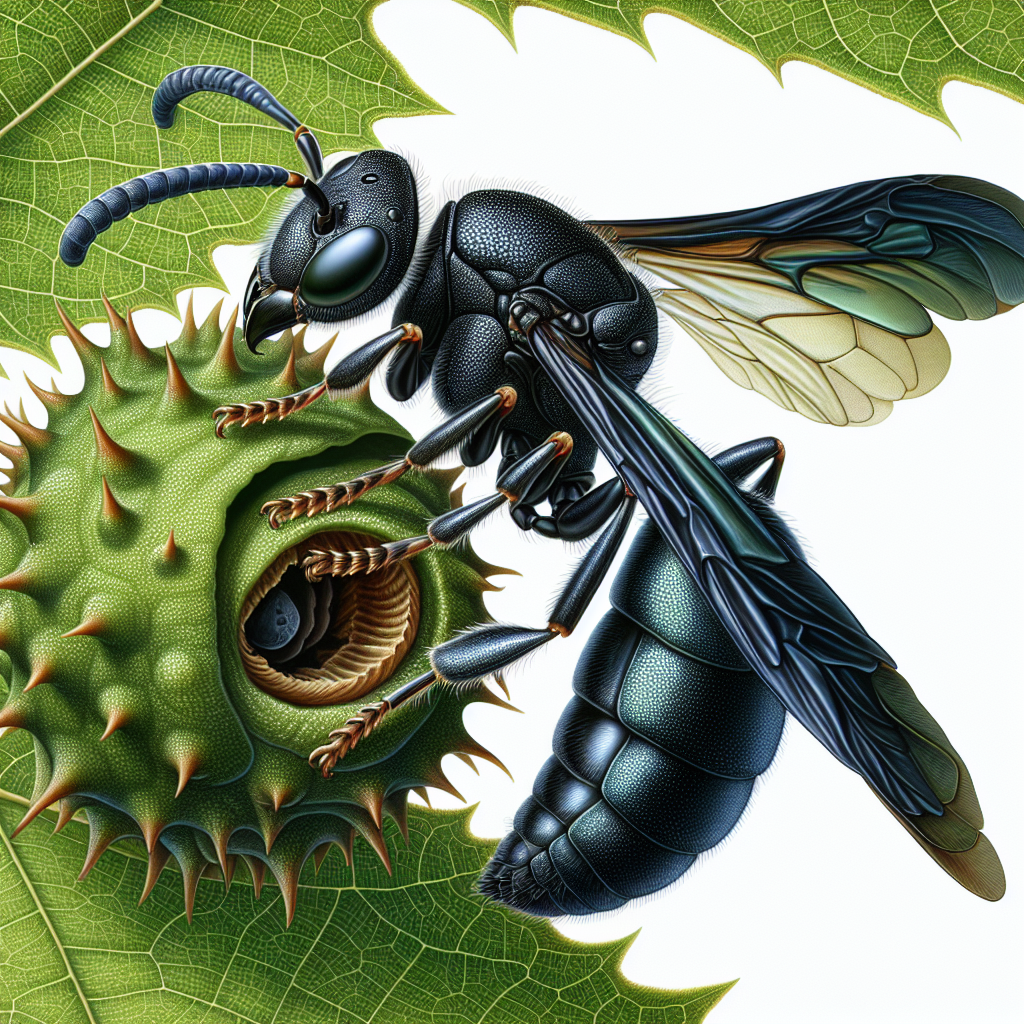
Introduction to Torymus
Torymus wasps, particularly Torymus sinensis, belong to the family Torymidae within the order Hymenoptera. Native to Asia, this tiny parasitic wasp (2-3 mm in length) was introduced to Europe and North America as a biological control agent against the oriental chestnut gall wasp (Dryocosmus kuriphilus). While highly effective in controlling that invasive pest, Torymus can occasionally become a secondary concern for growers when it hyperparasitizes native parasitoids or induces galls on non-target hosts like oaks, chestnuts, and related trees.
In agricultural contexts, Torymus is rarely a primary pest but can disrupt integrated pest management (IPM) programs by competing with or parasitizing beneficial insects. Symptoms often mimic those of gall wasps, with small, round galls appearing on leaves, buds, or stems. Early identification is crucial, as unchecked populations can reduce photosynthesis and weaken host plants over multiple seasons. This guide equips farmers, orchardists, and horticulturists with professional-grade diagnostics and management tools to handle Torymus effectively. For more on chestnut pests, see the chestnut gall wasp entry.
Understanding Torymus requires knowledge of its dual role: ally against gall wasps yet potential disruptor in diverse ecosystems. In small farms and orchards, monitoring is key to balancing its benefits against risks. With climate change expanding its range, proactive strategies are essential for sustainable agriculture.
Identifying Symptoms & Damage
Torymus damage is subtle but distinctive. Primary signs include small, spherical galls (1-5 mm diameter) on leaves, petioles, or buds, often green turning brown. Unlike primary gall wasps, Torymus galls contain parasitized larvae rather than healthy wasp progeny. Look for exit holes (0.5 mm) on gall surfaces in late summer, indicating adult emergence.
Affected leaves curl or drop prematurely, reducing photosynthetic capacity by 20-30% in severe infestations. On chestnut trees, galls cluster on midribs, stunting growth and predisposing plants to secondary issues like powdery mildew. Bud infestations cause dieback, with blackened tips and reduced flowering the following spring.
Diagnostic tips:
- Visual inspection: Use a 10x hand lens to spot mummified larvae inside galls.
- Timing: Galls appear in spring; adults emerge July-September.
- Differentiation: Torymus galls are smoother than Dryocosmus galls; dissect to confirm parasitoid presence.
Yield impacts vary: light infestations (<10% leaf area) cause minimal loss, but heavy attacks on young trees reduce vigor by 15-25%. Combine with monitoring for aphids or mites, as Torymus may exacerbate outbreaks by disrupting predators. For AI-assisted pest ID, check this blog on misidentifying plants.
Lifecycle and Progression of Torymus
Torymus sinensis completes 1-2 generations annually, synchronized with host gall wasps. Adults (shiny black, metallic sheen) emerge from overwintering galls in early summer (June-July). Females lay eggs (0.2 mm, white) into first-instar larvae of primary gall wasps using a slender ovipositor.
Eggs hatch in 5-7 days; larvae (cream-colored, crescent-shaped) feed as hyperparasitoids, consuming the host larva and forming a hardened pupa by late summer. Pupation lasts 2-3 weeks, with adults emerging through neat exit holes. Overwintering occurs as diapausing larvae in galls.
Progression stages:
- Spring: Gall formation on host plants.
- Summer: Egg-laying and larval development (peak July).
- Fall: Pupation and adult emergence.
- Winter: Diapause in galls.
Temperature drives phenology: optimal 20-28°C; below 10°C halts development. High humidity (>70%) favors egg survival. In non-target hosts like oak or hazel, it may complete additional generations, amplifying damage.
Environmental Triggers & Risk Factors
Torymus thrives in temperate climates (USDA zones 5-9), preferring elevations 200-1000m. Key triggers include:
- Host availability: Proximity to infested chestnuts or oaks.
- Temperature fluctuations: Warm springs accelerate gall wasp cycles, boosting Torymus.
- Humidity: Wet conditions enhance larval survival.
Risk factors:
- Monocultures: Dense chestnut orchards lack diversity.
- Poor sanitation: Unremoved galls harbor overwintering stages.
- Refuge absence: Lack of flowering understory reduces parasitoid diversity.
- Climate shifts: Warmer winters increase overwinter survival by 30%.
Soil pH 6.0-7.5 and moderate fertility support host vigor, indirectly aiding Torymus. Avoid excessive nitrogen, which promotes tender flush attractive to gall wasps.
Organic Control & Treatment Plans
Organic management emphasizes IPM: monitoring, cultural, biological, and targeted mechanical controls.
1. Monitoring: Scout weekly from budbreak; use sticky traps for adults (yellow pan traps effective, 10-20% capture rate).
2. Cultural controls:
- Prune and destroy galled branches before adult emergence (e.g., July).
- Enhance biodiversity with yarrow and thyme to attract native parasitoids.
- Mulch to regulate soil moisture, reducing stress.
3. Biological controls:
- Encourage native Torymidae predators.
- Release Eurytoma tibialis (specific hyperparasitoid antagonist).
- Avoid broad-spectrum organics disrupting natural enemies.
4. Organic treatments:
- Neem oil (0.5%): Suppresses egg-laying (70% reduction); apply at peak flight.
- Insecticidal soap: Targets crawlers on galls.
- Kaolin clay: Repels oviposition (50% efficacy).
Treatment timeline:
| Stage | Action | Frequency |
|---|---|---|
| Budbreak | Scout | Weekly |
| Egg-laying | Neem/soap | 7-10 days |
| Larval | Prune galls | Once |
| Adult | Traps/kaolin | Biweekly |
Threshold: Treat if >5 galls/leaf or 10% bud infestation. Rotate treatments to prevent resistance. For spring strategies, see Spring Pest Patrol.
Preventing Torymus in the Future
Prevention focuses on breaking the lifecycle and reducing host suitability:
- Sanitation: Remove and incinerate galls pre-winter (95% reduction in next generation).
- Resistant varieties: Plant Castanea sativa hybrids tolerant to gall wasps.
- Barrier methods: Fine mesh (1mm) over buds during oviposition.
- Habitat management: Interplant with clover for ground cover, diversifying predators.
- Soil health: Maintain via cover crops; healthy trees resist better.
Long-term: Scout adjacent woodlands; collaborate regionally for area-wide management. Annual audits reduce incidence by 80% over 3 years.
Crops Most Affected by Torymus
Torymus primarily targets trees in Fagaceae:
- Chestnut (Castanea spp.): 70% of infestations; galls on leaves/buds.
- Oak (Quercus spp.): Secondary host; petiole galls.
- Hazelnut (Corylus spp.): Emerging concern in orchards.
Orchard impacts: Reduced nut yield (10-20%) in chestnut; weakened hazelnut scaffolds. Rare on walnut or pecan. Monitor high-value plantings first.