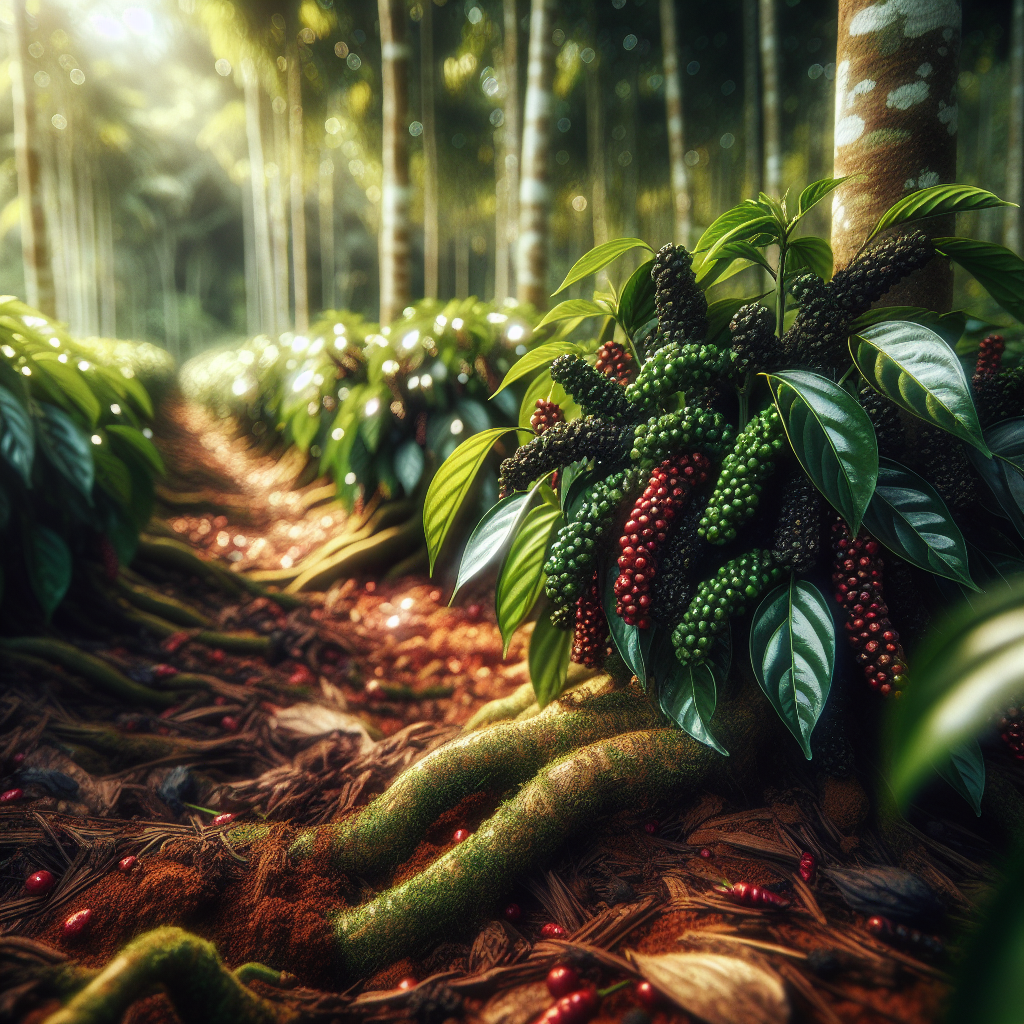
Introduction to Tellicherry Black Pepper
Regarded as one of the finest black peppers in the world, this premium pepper is less a separate species than a distinguished trade grade and regional expression of Piper nigrum grown under favorable conditions and harvested at a more mature stage. The name traces to Thalassery, historically anglicized as Tellicherry, a port on India’s Malabar Coast that became famous in the spice trade for exporting especially bold, well-developed peppercorns. In commercial grading, Tellicherry pepper typically refers to larger, denser berries screened to a larger size than standard black pepper, often with superior aroma and a more layered flavor profile.
For growers, producing pepper of Tellicherry quality is not simply a matter of cultivar identity. It depends on site selection, vine health, balanced nutrition, proper shade, timely harvest, careful drying, and post-harvest sorting. When managed well, vines produce long spikes of berries that develop strong piperine content and essential oils, leading to peppercorns with deep wrinkling, a rich dark color, and the characteristic citrusy, woody, resinous, and warming notes sought by specialty markets.
Black pepper is a perennial climbing vine native to the humid tropics of South India. In professional production systems it is grown on live standards or dead supports, often in mixed tropical agroforestry. It is not a quick crop. Establishment takes patience, and economic yields usually begin in the third year, with productive life often extending 12-20 years or more under good management. The reward is a high-value spice crop with strong market demand and excellent fit in diversified tropical farms.
Botanical Profile of Tellicherry Black Pepper
This crop belongs to the family Piperaceae. It is a woody perennial climber with a shallow but active feeder-root system concentrated largely in the upper soil profile, especially the top 30 cm. That root architecture explains why mulching, moisture stability, and avoidance of root-zone compaction are so important.
The vine produces several types of shoots. Orthotropic shoots are the main climbing stems that attach to supports by adventitious roots at the nodes. Plagiotropic lateral branches arise from the main stem and are especially important because they bear the inflorescences and fruiting spikes. Ground runners may also form near the base, and these are commonly used for vegetative propagation. Leaves are simple, alternate, glossy, heart-shaped to ovate, with pronounced venation and a leathery texture adapted to humid environments.
Inflorescences are pendulous spikes bearing many tiny flowers. Black pepper is largely self-fertile, though fruit set can be influenced by humidity, temperature, vine vigor, and floral biology. The fruits are drupes, commonly called berries or peppercorns. During development they progress from green to yellowish and then reddish at full ripeness. For black pepper production, spikes are usually harvested when one or a few berries on the spike begin turning red, rather than waiting for full ripening.
What distinguishes Tellicherry-grade pepper in the market is berry size and maturity. Larger berries generally come from healthy vines with strong carbohydrate reserves, good pollination and fruit set, balanced nutrient supply, and harvest timed toward fuller maturity. Overcropped, nutrient-starved, drought-stressed, or heavily shaded vines tend to produce smaller, lighter peppercorns with lower market value.
Professional growers should also understand the vine’s phenology. In many tropical regions, vegetative flush follows rainfall or irrigation recovery, flowering is linked to seasonal moisture patterns, and berry filling requires uninterrupted access to soil moisture and potassium. Any severe stress during spike initiation or berry filling can reduce spike length, cause berry drop, and diminish final grade.
For a broader species overview, see Black Pepper.
Soil, pH, and Climate Requirements for Tellicherry Black Pepper
This crop performs best in deep, friable, well-drained loams rich in organic matter. Lateritic soils, forest loams, and red loams can all work if drainage is excellent and the root zone remains biologically active. The ideal soil pH is about 5.5 to 6.5. It tolerates slightly more acidic conditions, but below pH 5.0, nutrient availability, root vigor, and microbial balance often decline unless corrected with careful liming. In alkaline soil above about pH 7.0, micronutrient deficiencies, especially iron and zinc, become more likely.
Drainage is non-negotiable. Pepper roots are highly sensitive to stagnant water and poor aeration. A site that stays saturated for more than 24-48 hours after heavy rain invites root rot, Foot rot, and general decline. If you dig a test hole 45 cm deep and water remains perched after a day, the site needs raised basins, drainage channels, or should be avoided altogether.
A practical target is moist but aerated soil with approximately 60-80% field capacity during active growth and berry development. In the field, that means the topsoil should feel cool and lightly moist when squeezed, forming a weak ball that breaks apart easily. Overly dry soil becomes dusty at the surface and hard below mulch, often causing leaf droop in midday that does not fully recover by evening. Overwatered soil smells sour, may show algae or moss in the basin, and often leads to yellowing leaves, blackened feeder roots, and slow new growth.
Temperature preferences are distinctly tropical. Optimal growth usually occurs around 23-32°C. Growth slows below 18°C, and prolonged exposure below 12-15°C can cause severe stress. Frost is usually fatal. Relative humidity above 60%, and ideally 70-90%, supports healthy growth, aerial root attachment, and flowering. Annual rainfall of 1,500-3,000 mm is favorable when well distributed, though excessive rain without drainage becomes a liability.
Filtered light is ideal. Pepper is not a deep-shade crop, nor does it thrive in full, scorching exposure in hot lowland tropics. A moderate shade regime, often around 30-50%, tends to support balanced vegetative growth and berry filling. Too much shade reduces flowering and encourages disease due to poor air movement. Too little shade can scorch leaves, overheat the root zone, and reduce spike retention in dry periods. In mixed systems, Coconut often serves as a canopy component and support framework in tropical spice gardens.
Wind protection matters. Strong dry winds desiccate leaves, reduce humidity around the vine, damage spikes, and impair establishment. Shelterbelts or multi-tier agroforestry layouts are preferable to exposed sites.
Step-by-Step Planting & Propagation
Vegetative propagation is the standard for quality pepper production because it preserves the performance of selected mother vines. Seed propagation is rare for commercial use due to variability and delayed bearing.
1. Select elite mother vines. Choose disease-free, high-yielding vines known for good spike length, berry size, regular bearing, and strong vine architecture. Avoid plants showing yellowing, patchy decline, short internodes due to stress, or any history of Foot rot.
2. Prepare cuttings. The most common material is runner shoot cuttings with 2-3 nodes. Some growers use rooted cuttings from serpentine layering or bamboo split methods. Each cutting should be taken from healthy, moderately mature tissue, not overly tender and not too woody.
3. Root in nursery conditions. Plant cuttings in polybags or nursery containers filled with a porous medium such as composted coir pith, sand, and rich topsoil or leaf mold. Maintain high humidity, light shade, and uniform moisture. The medium should be moist, never soggy. Successful rooting often takes 6-10 weeks depending on temperature and management.
4. Harden seedlings. Before field planting, gradually reduce shade and space irrigations slightly farther apart so the rooted cuttings develop sturdier tissues. Hardened plants transplant better and suffer less shock.
5. Install supports before planting. Pepper must climb. Live standards such as gliricidia, erythrina, silver oak, or existing tree systems can be used, provided they do not create excessive shade or root competition. Dead supports like concrete or wooden poles work too, but live standards often improve microclimate and long-term sustainability.
6. Prepare planting pits. Dig pits roughly 50 cm x 50 cm x 50 cm, adjusting to soil conditions. Refill with topsoil mixed with 10-15 kg well-rotted farmyard manure or compost, plus neem cake if available. In acidic soils needing correction, incorporate agricultural lime several weeks before planting rather than placing concentrated lime directly against roots.
7. Plant at the correct season. The best time is usually early rainy season or post-monsoon in regions where irrigation is available. Soil should be moist enough for establishment but not waterlogged. Set 2 rooted plants per support if local practice favors insurance against mortality, later thinning to the stronger vine if both establish vigorously.
8. Position carefully. Plant 20-30 cm away from the support, not directly at its base where competition and water flow can be problematic. Angle the cutting gently toward the support.
9. Mulch immediately. Apply 5-10 cm of organic mulch around the basin, leaving a small gap around the stem to prevent collar rot. Good mulch materials include leaf litter, dried grass, or composted pruning residue.
10. Tie and train. As shoots elongate, loosely tie them to the support using soft biodegradable material. Early training determines future architecture and ease of harvest.
Typical spacing depends on support species and system intensity, but many farms use about 2-3 m between vines/supports. Denser planting can increase early yield per area but raises disease pressure if airflow is compromised.
Care & Maintenance regimes for Tellicherry Black Pepper
Irrigation should maintain consistent root-zone moisture without saturation. Young vines need frequent light irrigation during dry spells, while established vines benefit more from deeper, less frequent watering. A useful field rule is to wet the top 30-45 cm of soil, then allow slight drying before the next irrigation. In sandy soils this may mean watering every 2-3 days in dry hot weather; in loams it may be every 4-7 days. Drip irrigation is ideal because it keeps moisture steady and foliage drier.
Signs of underwatering include dull leaves, reduced vine extension, smaller leaves, poor spike emergence, berry drop, and a dry mulch layer with powdery soil beneath. Signs of overwatering include persistent yellowing, edema-like blistering, reduced root vigor, fungal growth at the collar, sour-smelling soil, and sudden wilt despite wet ground due to root dysfunction.
Nutrition must support both vine growth and fruiting. Pepper responds strongly to organic matter and balanced mineral nutrition. Mature bearing vines generally require regular inputs of nitrogen for vegetative vigor, phosphorus for root support, potassium for berry filling and quality, and calcium, magnesium, sulfur, zinc, and boron in smaller but important amounts. Excess nitrogen, especially under heavy shade, can produce lush susceptible growth with poor fruiting. Potassium deficiency often appears as weak berry filling, marginal leaf scorching on older foliage, and reduced pungency and size.
A practical annual organic program may include split applications of compost or well-rotted manure, neem cake, and mineral supplements based on soil test results. Apply major nutrients in 2-3 splits timed around the onset of rains, pre-flowering, and post-fruit set. Keep fertilizers in a ring around the active root zone rather than piled against the stem.
Pruning and training are central to yield stability. Remove weak, diseased, or unproductive shoots. Maintain 2-3 strong main leaders during establishment, then encourage a manageable fruiting framework. Periodically trim excessive height so harvesting remains practical and the vine does not become top-heavy. On live standards, manage the support tree’s canopy aggressively enough to maintain filtered light and airflow.
Mulching should be renewed regularly. A stable organic blanket conserves moisture, buffers soil temperature, suppresses weeds, feeds soil organisms, and reduces splash dispersal of pathogens. Keep mulch 5-10 cm away from the collar to avoid creating a humid disease pocket.
Weed management should be shallow and careful because pepper roots are near the surface. Hand weeding, mulch suppression, or light hoeing is preferable to deep cultivation. Root disturbance can reduce vine performance for weeks.
In high-performing spice gardens, tissue and soil testing are worthwhile. They allow nutrient programs to be tuned for berry size and quality rather than guessed. For broader fertility planning ideas, see soil health tips.
Pests, Diseases & Organic Management
The most serious disease in many pepper-growing regions is Foot rot or Quick wilt, commonly associated with Phytophthora species. Early symptoms include leaf yellowing, sudden drooping, black lesions near the collar, and rapid vine collapse during wet conditions. Prevention is far more effective than rescue. Ensure drainage, avoid waterlogging, keep mulch off the stem, improve airflow, sanitize tools, and use disease-free planting material. In organic systems, preventive drenching with approved biologicals such as Trichoderma spp. around the root zone can help suppress soil-borne pathogens.
Slow decline is a complex syndrome often linked to root damage, Nematodes, nutritional imbalance, and opportunistic pathogens. Affected vines show stunting, sparse foliage, shortened spikes, and gradual yield loss. Improve organic matter, use neem cake, encourage beneficial soil biology, and remove severely affected vines if decline progresses.
Pollu beetle can damage berries, causing hollow or malformed peppercorns and black puncture marks. Monitor spikes regularly, especially during berry development. Sanitation, removal of infested spikes, habitat diversification, and botanical sprays such as neem-based products can reduce pressure when applied at the correct life stage.
Scale insects, Mealybugs, and Aphid-like sap feeders may colonize stems and leaves, especially in overly shaded or nitrogen-rich systems. They weaken vines and can encourage sooty mold. Prune to open the canopy, wash off localized colonies where feasible, conserve natural enemies, and use horticultural soaps or neem formulations with careful coverage.
Nematodes, especially root-knot species, can seriously impair pepper by reducing feeder roots and predisposing plants to decline. Symptoms include poor vigor, uneven growth, leaf chlorosis, and inadequate response to fertilizer. Organic suppression includes heavy compost use, neem cake, marigold rotations nearby before planting where possible, and biocontrol fungi or bacteria suitable for local regulations.
Anthracnose and Leaf spot diseases increase under persistent humidity and poor airflow. Remove badly infected tissue, avoid overhead irrigation, and manage shade intelligently. Copper-based organic fungicides may be used preventively where allowed, but cultural control should remain the foundation.
The best organic strategy is integrated: clean nursery stock, raised or drained sites, biologically active soil, moderate shade, mulching, regular scouting, and rapid removal of diseased material. Pepper rarely rewards neglect; small early issues become major yield losses if ignored through a rainy season.
Harvesting, Curing & Optimal Storage
Harvest timing has a direct effect on Tellicherry quality. Spikes intended for premium black pepper should be picked when the berries are fully developed and a few begin turning from green to orange-red. Harvesting too early gives smaller, lighter peppercorns with less aroma and lower recovery. Harvesting too late increases losses from shattering, birds, uneven drying, and disease.
Pick whole spikes by hand, preferably in dry weather after dew has evaporated. Handle gently to minimize berry detachment and contamination. Separate damaged, diseased, or immature spikes before processing.
Thresh the berries from the spikes promptly. Some producers briefly blanch berries in hot water for about 1 minute before drying. This can clean the surface, accelerate uniform browning, and improve final appearance, but water temperature and duration must be controlled to avoid cooking the berries.
Drying is the critical curing stage. Spread berries thinly on clean mats, trays, or raised drying surfaces in full sun with protection from night moisture and unexpected rain. Turn them several times daily for even drying. Depending on weather, drying may take 3-7 days. Mechanical dryers can be used where humidity is high, typically at moderate temperatures to preserve volatile oils.
The target final moisture is generally around 10-12%. Above that, mold risk rises sharply in storage. Below that, brittleness and unnecessary weight loss can occur. Well-dried peppercorns should be hard, black to dark brown, deeply wrinkled, and should not dent easily under fingernail pressure. If a handful sealed overnight in a dry jar shows condensation, the lot is still too wet.
After drying, grade by size and density. Tellicherry-grade pepper is associated with larger screen size, so sorting is essential if you are targeting specialty buyers. Remove pinheads, shriveled berries, foreign matter, and stalk fragments.
Store in clean, dry, food-safe sacks or lined containers in a cool, low-humidity room away from sunlight, strong odors, and insects. Ideal storage conditions are below about 25°C and under 60% relative humidity. Pepper readily absorbs odors, so never store near fuels, chemicals, onions, or strongly aromatic produce. For premium culinary markets, whole peppercorns retain quality far longer than ground pepper.
Companion Planting for Tellicherry Black Pepper
In tropical spice gardens, the most useful companions are those that improve microclimate, diversify income, reduce soil erosion, or help maintain organic matter without creating intense competition. The best companions are structural and ecological, not just ornamental.
Banana is widely used in young pepper systems to provide temporary filtered shade, humidity buffering, rapid biomass, and early farm income while the pepper vines establish. It is especially helpful in the first 1-3 years, but spacing and water management must be careful because bananas are heavy feeders and drinkers.
Ginger fits well as a shallow-rooted intercrop in the early years when pepper canopies are still open. It offers additional cash flow, living ground cover, and good use of humid partially shaded conditions. Maintain enough distance from the pepper basin to prevent root-zone congestion and to preserve airflow near the vine base.
Turmeric is another strong intercrop in humid tropical spice systems. It suppresses some weed pressure, adds diversity, and occupies the lower story without climbing into the pepper canopy. As with ginger, keep fertilization localized so the pepper root zone is not forced into excessive competition.
Where living standards are used, companion planning should focus on layered productivity. The support tree, temporary shade crop, and low intercrop must all be managed so pepper remains the priority. Avoid aggressive vines, dense mat-forming groundcovers around the collar, or crops requiring frequent soil disturbance near the roots. The best companion design is one that preserves airflow, root health, and drainage while creating a stable humid microclimate.