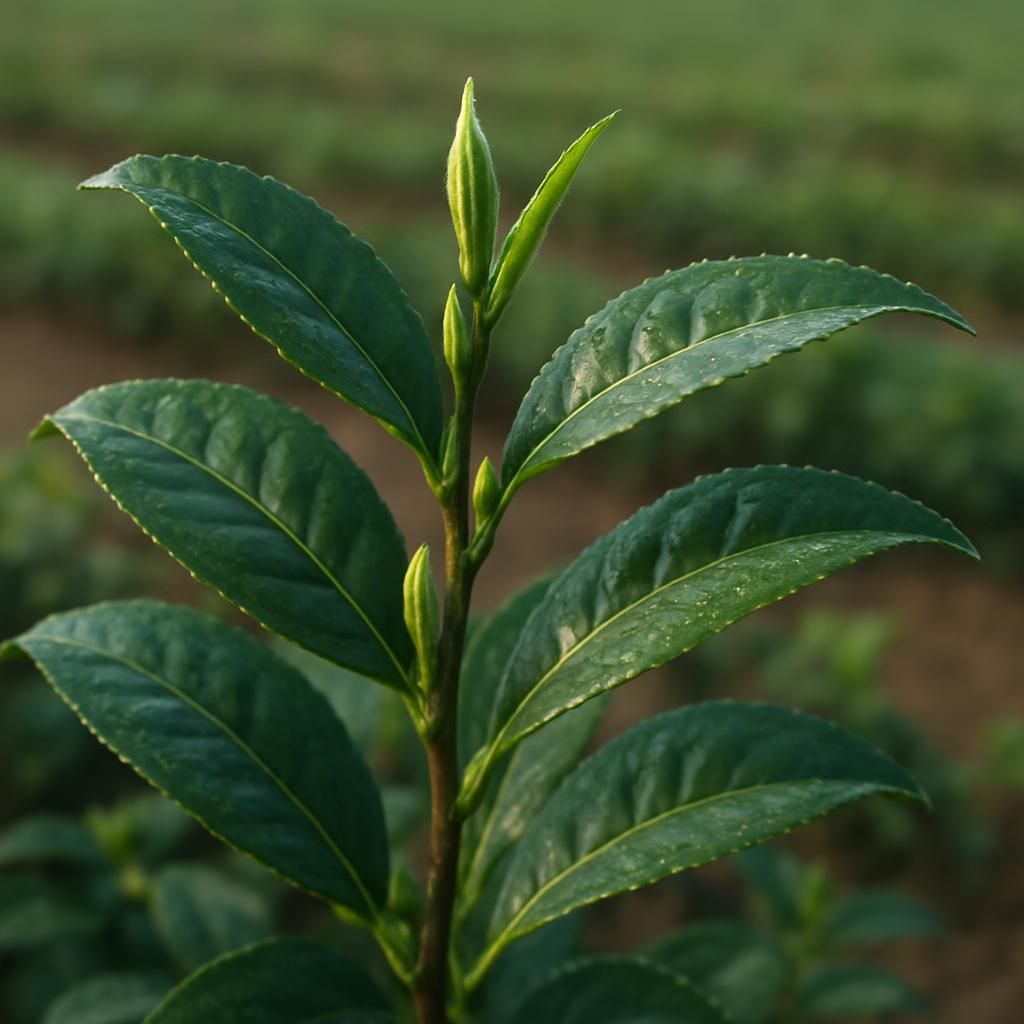
Introduction to Tea (Oolong - Tie Guan Yin)
Tie Guan Yin, one of the most celebrated Oolong teas, originates from Anxi County in Fujian Province, China. This semi-oxidized tea (typically 20-40% oxidation) is renowned for its distinctive orchid-like fragrance, creamy mouthfeel, and complex flavor profile that evolves through multiple infusions. Professional cultivation of this cultivar demands precise environmental control, skilled pruning, and careful post-harvest processing to achieve the signature "Yin" character that distinguishes it from other Oolongs.
Growing Tie Guan Yin commercially requires understanding its specific varietal needs, which differ from black tea or green tea cultivars. The plant thrives in subtropical highland conditions with well-drained acidic soils and moderate temperatures. Successful growers focus on terroir expression, timing harvest cycles to coincide with optimal leaf chemistry, and implementing rigorous organic management protocols.
Botanical Profile of Tea (Oolong - Tie Guan Yin)
Camellia sinensis var. sinensis is an evergreen shrub belonging to the Theaceae family. Tie Guan Yin plants typically reach 1.5-2 meters in height when maintained for plucking, featuring small, glossy, dark-green leaves with serrated margins and prominent venation. The cultivar produces white, fragrant flowers with five to seven petals and numerous stamens. Root systems are shallow and fibrous, making the plants sensitive to soil compaction and waterlogging.
The leaves contain high levels of polyphenols, caffeine (2-4%), theanine, and volatile aromatic compounds that develop during withering and partial oxidation. Tie Guan Yin is a small-leaf variety adapted to cooler climates compared to Assam-type teas. Mature bushes can remain productive for 30-50 years with proper management.
Soil, pH, and Climate Requirements for Tea (Oolong - Tie Guan Yin)
Tie Guan Yin demands well-structured, acidic soils with excellent drainage. The cultivar performs best in volcanic or granitic-derived soils rich in organic matter. Avoid saline or alkaline conditions that cause leaf chlorosis and stunted growth.
| Parameter | Ideal Range | Notes |
|---|---|---|
| Soil pH | 4.5 - 5.5 | Below 4.0 risks aluminum toxicity |
| Soil Texture | Loamy to sandy loam | 20-30% clay maximum for drainage |
| Organic Matter | 3-6% | Incorporate 5-10 cm compost annually |
| Temperature Range | 15-25°C daytime | Frost below -5°C damages new growth |
| Annual Rainfall | 1,200-2,500 mm | Even distribution preferred |
| Relative Humidity | 70-85% | Essential for leaf quality |
| Elevation | 300-1,200 m | Higher elevations enhance aroma |
| Sunlight | 4-6 hours direct | Partial shade beneficial in tropics |
Step-by-Step Planting & Propagation
Propagation is achieved through semi-hardwood cuttings taken from high-yielding mother plants in late spring. Select 10-15 cm cuttings with 3-4 leaves, treat with 0.3% IBA rooting hormone, and plant in a 1:1:1 mix of perlite, peat, and coarse sand under 80% shade with bottom heat at 24°C. Rooting occurs in 8-12 weeks.
Transplant rooted cuttings at 18-24 months into the field during the rainy season. Prepare planting holes 60 cm wide by 60 cm deep, incorporate 5 kg well-rotted compost and 200 g rock phosphate per hole. Space plants 1.2 m × 1.5 m (approximately 5,500 plants/ha). Water thoroughly and apply 5 cm organic mulch immediately after planting.
Care & Maintenance regimes for Tea (Oolong - Tie Guan Yin)
Consistent cultural practices are essential for maintaining bush vigor and leaf quality. Focus on balanced nutrition, moisture management, and timely pruning.
| Operation | Schedule | Details |
|---|---|---|
| Irrigation | 25-30 mm/week during dry periods | Drip irrigation preferred; avoid overhead wetting after 3 pm |
| Fertilizer (N-P-K) | 4 applications/year | 180-220 kg N/ha split; use 4-2-1 ratio with organic amendments |
| Compost/Organic Matter | 2 applications/year | 10-15 tons/ha in early spring and post-pruning |
| Pruning - Light | Every 4-6 months | Remove 10-15 cm top growth after every 3-4 plucking rounds |
| Pruning - Medium | Annually (after main harvest) | Cut back to 40-50 cm height to rejuvenate frame |
| Pruning - Heavy | Every 5-7 years | Rejuvenation prune to 20-25 cm; rest bush 6-8 months |
Monitor leaf nutrient levels annually. Maintain soil organic matter above 3% through regular mulching with pruned tea branches and legume cover crops.
Pests, Diseases & Organic Management
Tie Guan Yin is susceptible to several key pests and diseases. Implement integrated pest management emphasizing cultural, biological, and organic controls.
Common pests include Tea Mosquito Bug, Aphids, Thrips, and Spider mites. Monitor weekly and release predatory mites or apply neem oil (0.5%) at first signs of infestation. Scale insects can be managed with horticultural oil during dormant periods.
Major diseases include Anthracnose, Root rot, and Blister blight (though less common than in India). Improve airflow through proper spacing and pruning. Apply copper-based fungicides only as a last resort during prolonged wet periods. Maintain healthy soil biology with compost teas to suppress soil-borne pathogens.
Harvesting, Curing & Optimal Storage
Harvest young shoots consisting of two leaves and a bud when they reach 30-40% of mature size. Pluck every 7-10 days during peak season (April-June and September-November in subtropical regions). Avoid harvesting during heavy rain or extreme heat.
Post-harvest processing is critical for Oolong quality. Wither leaves 4-6 hours under controlled humidity (65-75%), followed by bruising/shaking 3-5 times to initiate partial oxidation. Stop oxidation by pan-firing at 200-220°C for 5-8 minutes, then roll and dry at 90-110°C to 3-5% moisture. Store finished tea in airtight, light-proof containers at 15-20°C with <60% humidity. Properly stored Tie Guan Yin retains peak flavor for 12-18 months.
Companion Planting for Tea (Oolong - Tie Guan Yin)
Strategic companion planting enhances biodiversity, improves soil fertility, and provides natural pest suppression. Leguminous cover crops such as Clover and Hairy vetch fix nitrogen and protect soil between tea rows.
Plant Marigold and Nasturtium as border crops to repel nematodes and attract beneficial insects. Thyme and Rosemary provide aromatic barriers against Tea Mosquito Bug. Avoid planting shallow-rooted vegetables that compete for surface moisture. Maintain a 1-meter buffer zone between tea and any heavy-feeding companion species.
For deeper insights on building resilient small-farm systems, see The Truth About Weather Patterns and Small Farm Resilience.