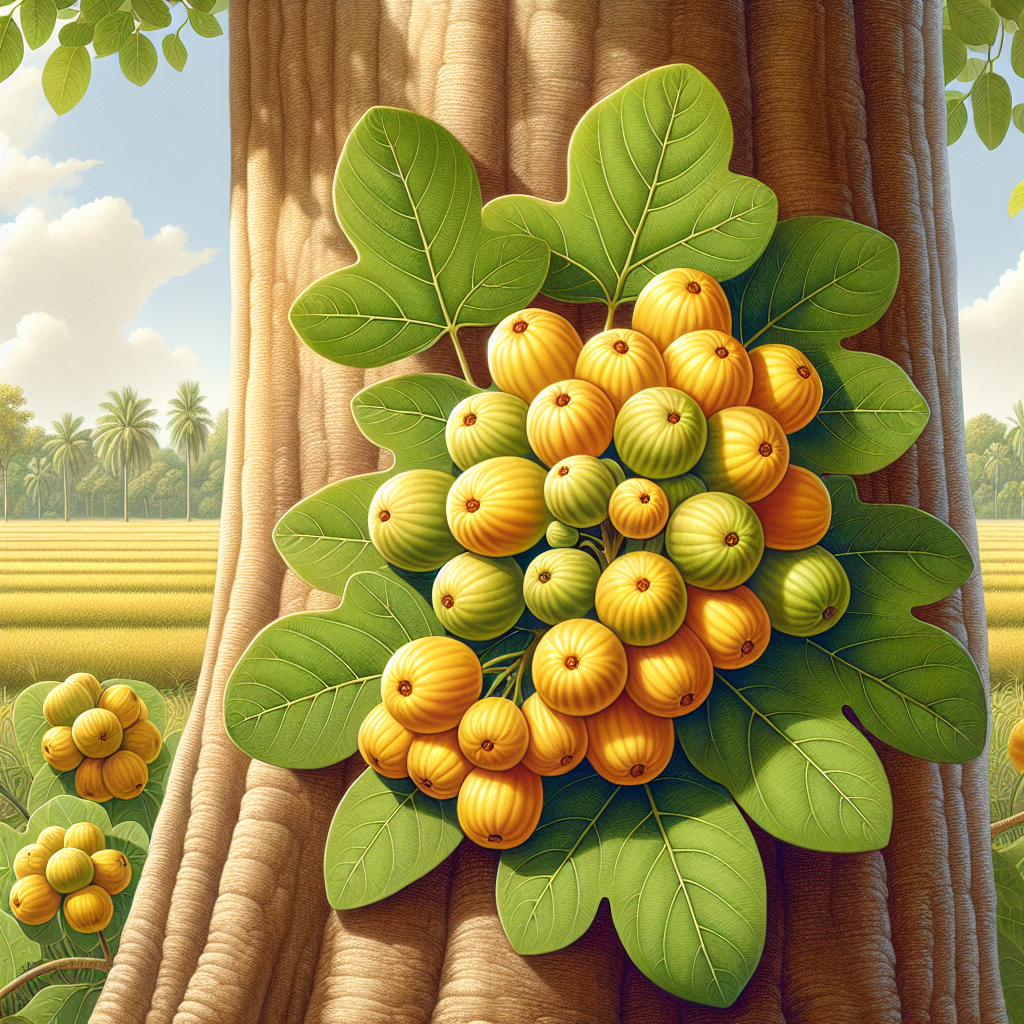
Introduction to Sycamore Fig (Ficus sycomorus)
The Sycamore Fig, scientifically known as Ficus sycomorus, stands as one of Africa's most iconic trees, often called the "sycamore" of biblical fame. This semi-evergreen giant can reach heights of 20-30 meters with a spreading canopy up to 30 meters wide, providing vital shade, wildlife habitat, and abundant fruit. Native to the Middle East and sub-Saharan Africa, it thrives in riverine forests, savannas, and arid regions, playing a crucial role in traditional agroforestry systems.
For modern growers, Ficus sycomorus offers multiple benefits: its pear-shaped syconia (figs) are edible when ripe, with a sweet, honey-like flavor rich in vitamins A and C, fiber, and minerals. The tree's latex yields rubber, leaves serve as fodder, and its wood is used for timber. In permaculture and sustainable farming, it excels as a nitrogen-fixing pioneer species, improving soil fertility while supporting biodiversity. Unlike common Fig varieties like Brown Turkey or Mission, the Sycamore Fig is adapted to hotter, drier conditions, making it ideal for regenerative agriculture in tropical and subtropical zones.
Commercial cultivation is emerging in East Africa and parts of the Middle East, where yields can reach 200-500 kg of fruit per mature tree annually. This guide delivers professional-grade protocols for propagation, care, and harvest, optimized for small farms and orchards. For deeper insights into companion planting, which enhances Sycamore Fig performance, see our related resources.
Botanical Profile of Sycamore Fig (Ficus sycomorus)
Ficus sycomorus belongs to the Moraceae family, closely related to the edible fig (Ficus carica). It's a keystone species in African ecosystems, supporting over 100 insect species and numerous birds and mammals. The tree features a stout, fluted trunk with smooth gray bark that peels in patches, revealing yellowish underlayers. Leaves are large (10-30 cm long), glossy green, heart-shaped with entire margins, and arranged alternately on long petioles.
Syconia develop directly on the trunk and older branches in pairs—a unique feature called cauliflory—ripening from green to yellow-orange or red. Each fig measures 2-4 cm in diameter, containing hundreds of tiny seeds dispersed by birds, bats, and monkeys. Unlike parthenocarpic figs, Sycamore Figs require pollination by the specific wasp Ceratosolen arabicus for seed production, though fruit develops without it and remains edible.
Growth is rapid in youth (1-2 m/year), slowing after 10-15 years. Lifespan exceeds 100 years, with peak productivity from 20-60 years. Root system is extensive and shallow, aiding drought tolerance but requiring space. In cultivation, dwarf selections are rare, but pruning manages size for orchards. Pollinator dependency limits yields in non-native areas without introduced wasps, emphasizing its role in biodiversity-focused farming.
Soil, pH, and Climate Requirements for Sycamore Fig (Ficus sycomorus)
Sycamore Fig thrives in deep, fertile loams with good drainage, tolerating a wide range including sandy, clayey, and alluvial soils. Optimal pH is 6.0-7.5, slightly acidic to neutral; it handles alkalinity up to pH 8.5 common in African savannas. Avoid waterlogged sites to prevent root rot. Incorporate organic matter like compost to boost fertility, targeting 2-5% soil organic matter for best growth.
Climate-wise, it's a tropical pioneer, requiring average temperatures of 20-35°C (68-95°F) and frost-free conditions. It endures brief dips to 5°C but suffers below 0°C. Annual rainfall of 500-2000 mm suits it, with drought tolerance once established via deep roots accessing groundwater. In semi-arid zones, supplemental irrigation during dry spells (first 2-3 years) ensures vigor. Full sun (6+ hours daily) is essential; partial shade reduces fruiting.
USDA zones 10-12 are ideal, with proven success in similar climates to mango or avocado regions. Mulch heavily (10-15 cm) with wood chips or straw to retain moisture and suppress weeds. Soil testing every 2 years guides amendments: add gypsum for sodic soils, lime for acidity below 6.0. For heatwave resilience, reference strategies in Why Summer Heatwaves Are Silently Killing Small Farm Yields—applicable to this heat-loving species.
Step-by-Step Planting & Propagation
Propagation Methods
Seed Propagation: Collect ripe syconia, extract seeds via fermentation (macerate in water 2-3 days). Sow fresh seeds (viability drops after 1 month) in seed trays with 1:1:1 sand-compost-perlite mix. Cover lightly, keep at 25-30°C with bottom heat. Germination: 10-20 days. Prick out seedlings at 10 cm to pots.
Cuttings: Semi-hardwood cuttings (15-20 cm) from healthy branches in spring/summer. Dip in 3000 ppm IBA rooting hormone, plant in perlite:vermiculite (1:1). Mist under shade cloth (50% shade), root in 4-8 weeks at 25-28°C.
Air Layering: For mature trees, girdle branch, apply rooting hormone, wrap in moist sphagnum moss and plastic. Roots form in 6-12 weeks; sever and pot.
Planting Guide
- Site Prep: Space trees 10-15 m apart (or 8 m for hedgerows). Dig 1x1x1 m pits, fill with topsoil + 20 kg compost + 500 g rock phosphate.
- Timing: Plant at wet season onset (rainy season start) for root establishment.
- Planting: Set root collar at soil level, water deeply (50 L/tree). Stake if windy.
- Initial Care: Irrigate weekly first year (40-60 L/week), mulch 2 m radius. Fertilize at 3 months: 100 g NPK 10-20-10/tree. Success rate: 80-90% with cuttings in humid conditions.
Care & Maintenance regimes for Sycamore Fig (Ficus sycomorus)
Watering: Deep, infrequent—mature trees need 1000-2000 L/month in dry periods. Drip irrigation optimizes use.
Fertilization: Annual: 1-2 kg balanced NPK (10-10-10) + 500 g micronutrients (Zn, Fe). Foliar spray urea (2%) monthly during growth.
Pruning: Annually post-harvest: remove deadwood, water sprouts, shape canopy for light penetration. Tip prune young trees for bushiness.
Weed Control: Mulch + mow understory; organic herbicides like vinegar for spots.
Monitoring: Track growth (target 1 m/year young trees), leaf color (chlorosis signals deficiencies). Integrated regimes yield 20-30% higher fruit set.
Pests, Diseases & Organic Management
Pests: Aphids cluster on new growth—blast with water, neem oil (2 ml/L). Scale insects on bark: horticultural oil. Fruit flies attack ripening syconia—bagging or traps. Birds love figs—netting essential.
Diseases: Powdery mildew in humid areas: sulfur spray. Anthracnose causes fruit rot—prune for airflow, copper fungicide. Root rot from overwatering: improve drainage, Trichoderma drench.
Organic IPM: Introduce predatory wasps/beetles. Companion with marigolds repels nematodes. For advanced tactics, explore Why 90% of Small Farms Fail at Pest Management—proven on figs.
Harvesting, Curing & Optimal Storage
Harvest when syconia yellow and soften (squeeze test), 6-9 months post-pollination. Pick by hand ladders, 2-3 times/week peak season (up to 50 kg/tree/week). Yield peaks years 10+.
Curing: Ripen off-tree in shaded crates 2-5 days at 25°C. Storage: Fresh: 7-10 days at 10-15°C, 85% RH. Dried: sun-dry slices, store airtight cool/dark (6-12 months). Process into jams, dried fruit, or fodder.
Companion Planting for Sycamore Fig (Ficus sycomorus)
Pair with nitrogen-fixers like pigeon pea or clover under canopy for soil enrichment. Thyme and marigold deter pests. Avoid water-hungry crops near roots. Legumes like chickpeas thrive in partial shade, boosting biodiversity. Enhances Fall Companion Planting Guide strategies.