Introduction to Sunrise Bumble Bee Tomato
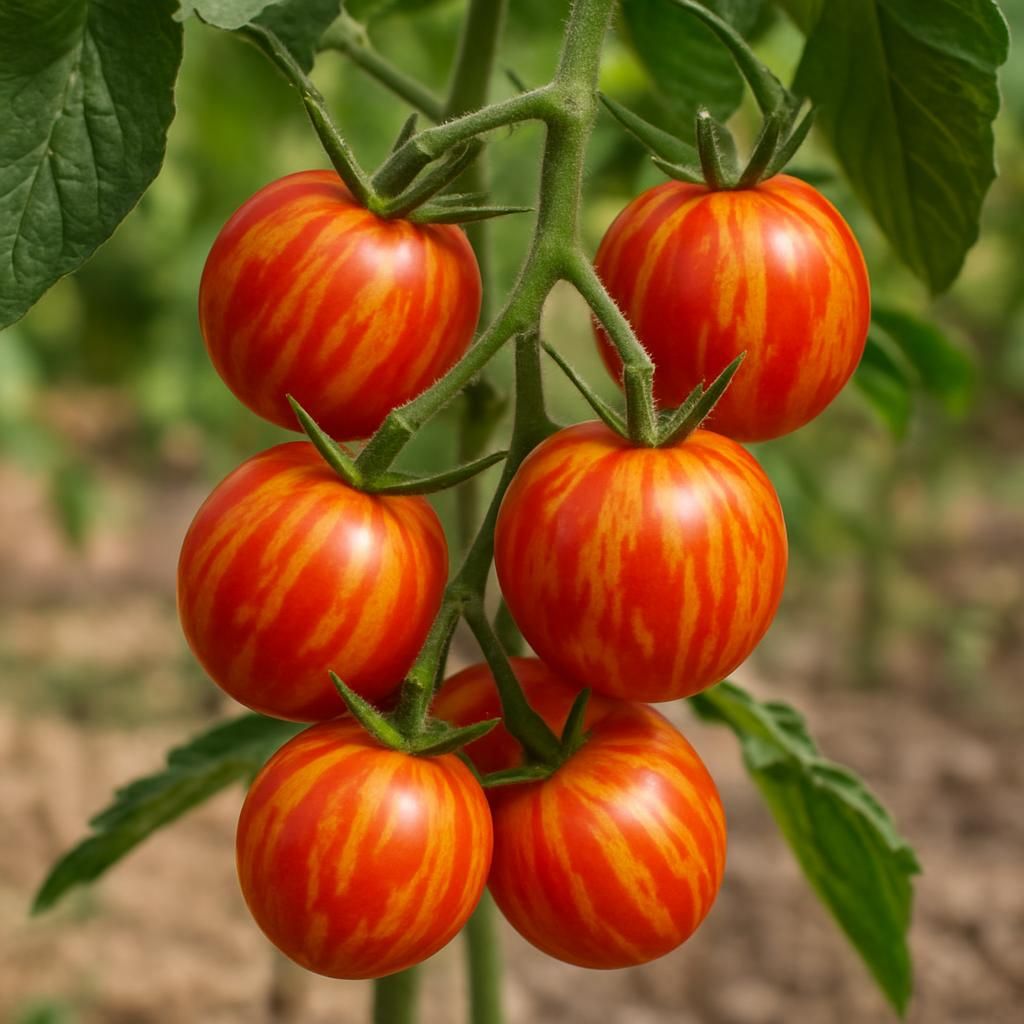
Sunrise Bumble Bee Tomato stands out among cherry tomato cultivars for its vivid striped pattern and balanced sweet-tart flavor. This indeterminate variety produces continuous clusters of bite-sized fruits throughout the growing season, making it a favorite for fresh eating, salads, and market sales. Its compact fruit size and vigorous vines suit both container culture and traditional in-ground beds. Growers appreciate its resistance to cracking and strong performance in warm climates.
Botanical Profile of Sunrise Bumble Bee Tomato
Sunrise Bumble Bee belongs to the nightshade family, Solanaceae, and is botanically classified as Solanum lycopersicum. The plants exhibit indeterminate growth, reaching 5–7 feet in height with proper support. Leaves are compound and slightly serrated, typical of most tomatoes. Flowers are self-pollinating and yellow, forming in racemes that develop into oval to slightly elongated cherry fruits weighing 15–20 grams each. The distinctive bicolor pattern features bright yellow-orange stripes contrasting against a red background. Like other Tomato cultivars, it contains lycopene and other antioxidants.
Soil, pH, and Climate Requirements for Sunrise Bumble Bee Tomato
Successful cultivation begins with well-drained, fertile soil enriched with organic matter. The variety performs best in full sun with at least 8 hours of direct light daily. Warm temperatures promote rapid growth and fruit set, while consistent moisture prevents blossom end rot. Avoid planting in areas prone to strong winds without windbreaks.
| Parameter | Ideal Range | Notes |
|---|---|---|
| Soil Type | Loamy, well-drained | Incorporate compost for structure |
| Soil pH | 6.2–6.8 | Test annually; adjust with lime if needed |
| Temperature (Day) | 70–85°F (21–29°C) | Optimal for fruit set |
| Temperature (Night) | 60–70°F (15–21°C) | Protect below 55°F |
| Spacing | 18–24 inches between plants | Rows 4–5 feet apart |
| Sun Exposure | Full sun (8+ hours) | Morning sun preferred |
Step-by-Step Planting & Propagation
Start seeds indoors 6–8 weeks before the last expected frost. Sow seeds ¼ inch deep in sterile seed-starting mix and maintain soil temperature at 75–80°F. Transplant seedlings outdoors once soil reaches 60°F and all danger of frost has passed. Harden off plants for 7–10 days prior to planting. Space seedlings 18–24 inches apart in rows 4–5 feet wide. Install stakes, cages, or trellises at planting time to support indeterminate vines. Water immediately after transplanting and apply a 2–3 inch layer of organic mulch to conserve moisture and suppress weeds.
Care & Maintenance regimes for Sunrise Bumble Bee Tomato
Consistent care maximizes yield and fruit quality. Monitor soil moisture daily during peak summer heat. Side-dress with balanced organic fertilizer every 3–4 weeks after fruit set begins. Remove suckers below the first flower cluster to direct energy into fruit production. Prune lower leaves that touch the soil to reduce disease risk.
| Task | Frequency | Details |
|---|---|---|
| Watering | 1–2 inches per week | Deep watering 2–3 times weekly; avoid foliage wetting |
| Fertilizer | Every 3–4 weeks | Balanced organic (5-5-5 or 4-6-4); increase potassium during fruiting |
| Pruning | Weekly | Remove suckers; trim lower leaves touching soil |
| Mulching | Once at planting | 2–3 inches organic mulch around base |
| Support | At planting & as needed | Stakes, cages, or Florida weave system |
Pests, Diseases & Organic Management
Common pests include aphids, hornworms, and spider mites. Scout plants weekly and use insecticidal soap or neem oil for early infestations. Handpick hornworms and destroy egg masses. Diseases such as early blight, late blight, and septoria leaf spot can be managed through crop rotation, resistant rootstocks, and proper spacing for airflow. Apply copper-based fungicides preventively during humid periods. Remove and destroy infected foliage promptly.
Harvesting, Curing & Optimal Storage
Harvest Sunrise Bumble Bee Tomatoes when fruits reach full color with slight give when gently squeezed. Pick every 2–3 days during peak production to encourage continued flowering. For longer storage, harvest at the breaker stage (showing first color) and ripen indoors at 65–70°F. Avoid refrigeration, which diminishes flavor. Store ripe fruits at room temperature for up to one week or process into sauces and preserves for extended use.
Companion Planting for Sunrise Bumble Bee Tomato
Pair Sunrise Bumble Bee with aromatic herbs such as Thai Basil and rosemary to deter pests. Marigold planted nearby repels nematodes and attracts beneficial insects. Avoid planting near fennel or walnuts, which can inhibit tomato growth. Nasturtium serves as a trap crop for aphids. Interplanting with onion and garlic may reduce fungal pressure through natural antimicrobial compounds.