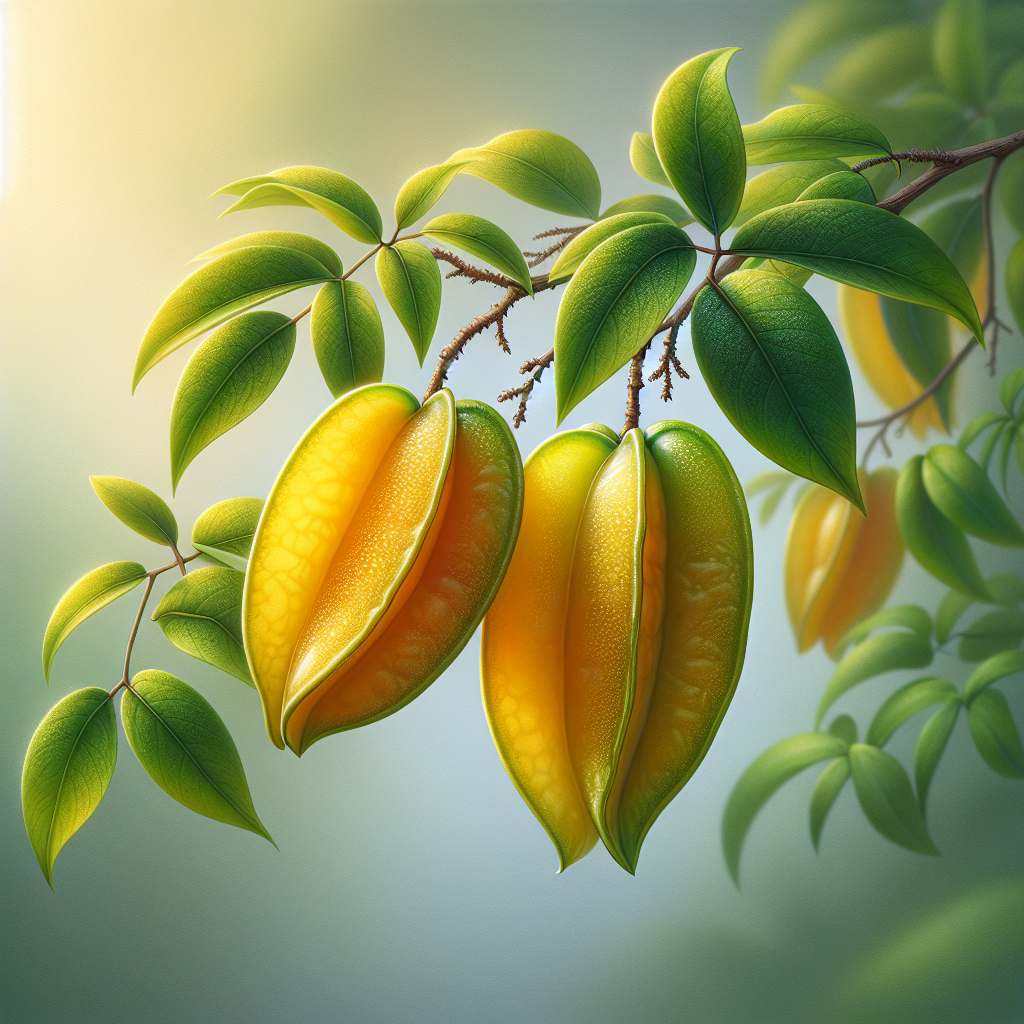
Introduction to Starfruit (Fwang Tung)
Starfruit (Fwang Tung), scientifically known as Averrhoa carambola 'Fwang Tung', is a premium Thai cultivar renowned for producing exceptionally large, sweet star-shaped fruits with minimal seeds and high juice content. Native to Southeast Asia, this evergreen tree has gained global popularity among growers for its ornamental appeal, nutritional value, and year-round productivity in suitable climates. The fruits, averaging 12-20 cm in length, boast a perfect balance of sweetness and tartness, making them ideal for fresh eating, juicing, salads, and even pickling.
Fwang Tung stands out from common starfruit varieties due to its superior size, flavor profile, and disease resistance, yielding up to 100-200 fruits per tree annually under optimal conditions. Rich in vitamin C, antioxidants, and fiber, it offers health benefits like improved digestion and immune support. This guide provides professional-grade advice for small farms and home gardeners, drawing on decades of tropical horticulture expertise. Whether you're in Florida, Hawaii, or a subtropical greenhouse, mastering Fwang Tung cultivation can transform your orchard into a profitable venture. For heat management tips during peak production, check this Why Summer Heatwaves Are Silently Killing Small Farm Yields - And 7 Organic Strategies to Fight Back.
Growers appreciate its low-maintenance nature once established, with trees reaching 6-10 meters tall but easily pruned to 4-5 meters for easier harvesting. Commercial yields can hit 20-50 kg per tree, with fruits fetching premium prices in niche markets. Success hinges on precise site selection, irrigation, and pest vigilance—key factors we'll explore in depth.
Botanical Profile of Starfruit (Fwang Tung)
Averrhoa carambola 'Fwang Tung' belongs to the Oxalidaceae family, characterized by its glossy, pinnate leaves (5-11 leaflets per leaf) that fold at night or during stress, a nyctinastic behavior aiding predator deterrence. The tree's smooth gray bark and drooping branches create a picturesque, umbrella-like canopy, perfect for agroforestry systems. Flowers are small (6-8 mm), waxy, and clustered in panicles, blooming intermittently year-round in tropics but peaking in dry seasons.
Fruits develop 3-5 months post-bloom, featuring five pronounced ribs forming the iconic star shape when sliced. Fwang Tung fruits weigh 300-600g, with golden-yellow skin at maturity and translucent, amber flesh surrounding a minimal central core. Seedlessness (or few soft seeds) enhances marketability. The tree's shallow, spreading root system (up to 3x canopy width) demands wide spacing: 6-8m between trees for mature specimens.
Pollination is primarily by bees and other insects, though self-fertile—hand-pollination boosts yields in low-bee areas. Lifespan exceeds 20-30 years with proper care, with peak production from years 5-15. Compare its growth to related tropicals like Guava (crop) for intercropping ideas. Nutritionally, 100g provides 31 calories, 91% water, 6.7g carbs, and trace minerals like potassium and magnesium.
Soil, pH, and Climate Requirements for Starfruit (Fwang Tung)
Fwang Tung demands well-drained, fertile loamy soils rich in organic matter—avoid heavy clays prone to waterlogging, which invite root rot. Ideal pH is 5.5-6.5 (slightly acidic); test and amend with dolomite lime if below 5.0 or sulfur if above 7.0. Incorporate 20-30% compost or aged manure pre-planting to enhance microbial activity and nutrient retention.
Climate-wise, it's a USDA zones 10-11 tropical/subtropical star, thriving at 24-32°C (75-90°F) daytime temps. It tolerates brief dips to 4°C but suffers leaf drop below 10°C; frost kills young trees. Annual rainfall of 1500-2500mm is optimal, with distinct wet/dry seasons promoting flowering. High humidity (60-80%) aids growth, but excellent drainage prevents fungal issues. In marginal areas, use frost cloth or greenhouses.
Soil preparation: Deep till to 60cm, incorporating 10-15 kg/m² organic matter. Mulch with 10-15cm wood chips or coconut husk to retain moisture and suppress weeds. For salinity tolerance (moderate, up to 2 dS/m), flush with fresh water periodically. Similar to Mango (crop), it benefits from raised beds in flood-prone zones.
Step-by-Step Planting & Propagation
Propagation: Air-layering yields 80-90% success for mature clones; root cuttings in spring. Seeds germinate in 10-14 days at 25-30°C but produce variable offspring—graft Fwang Tung scions onto seedling rootstocks for uniformity.
- Site Prep: Select full sun (6-8+ hours), wind-sheltered spots. Dig 60x60x60cm pits, fill with topsoil:compost:sand (50:30:20).
- Planting Time: Early wet season (April-June in tropics) for root establishment.
- Planting: Space 6-7m apart. Place grafted saplings (30-50cm tall) at soil line, stake for stability. Water deeply post-planting.
- Initial Care: Mulch heavily; irrigate weekly until established (6-12 months). Apply balanced NPK 10-10-10 at 50g/tree monthly.
Grafted trees fruit in 2-3 years vs. 5+ for seedlings. Prune at planting to encourage bushiness.
Care & Maintenance regimes for Starfruit (Fwang Tung)
Irrigation: Drip systems deliver 40-60L/tree/week, reducing to biweekly in rains. Deficit irrigation (dry spell pre-bloom) enhances fruit quality.
Fertilization: Annual regime: Jan-Mar (N-heavy for growth), Apr-Jun (P-K for bloom/fruit), Jul-Sep (micronutrients). Use 1-2kg/tree slow-release 12-6-18 + Mg, Zn, Fe chelates. Foliar sprays biweekly during fruiting.
Pruning: Annual post-harvest: Remove deadwood, water sprouts, thin canopy for light penetration. Train to central leader or open vase.
Weed Control: Mulch + shallow cultivation; cover crops like Clover (crop) suppress competitors.
Monitor EC/salinity; adjust with gypsum if needed. Trees need 200-400 chill-free hours annually.
Pests, Diseases & Organic Management
Pests: Aphids, mealybugs, fruit flies top threats. Neem oil (2-3ml/L) weekly; introduce ladybugs. Bait traps for flies; copper tape on trunks deters ants.
Diseases: Anthracnose causes fruit rot—ensure airflow, apply potassium bicarbonate. Phytophthora root rot: Improve drainage, use biofungicides like Trichoderma.
Organic IPM: Scout weekly; release predatory mites for spider mites. For detailed strategies, see Why 90% of Small Farms Fail at Pest Management - And 8 Organic Fixes That Actually Work. Avoid overhead watering to curb powdery mildew.
Integrated Approach: Companion herbs like basil deter pests; reflective mulches confuse flies. Biologicals: Bacillus thuringiensis for caterpillars.
Harvesting, Curing & Optimal Storage
Harvest at full yellow (Brix 10-14°)—twist or clip with shears. Yield peaks 3-4x/year. Cool to 10-15°C immediately post-harvest to extend shelf life (4-6 weeks at 10°C, 85-90% RH).
No curing needed; waxing optional for gloss. Store unripe green fruits at 13°C for 3 months. Market as-is or slice for stars. Avoid ethylene exposure near Banana (crop).
Companion Planting for Starfruit (Fwang Tung)
Pair with nitrogen-fixers like pigeon pea for soil enrichment. Thai Basil repels flies; Marigold nematodes. Avoid deep-rooted Potato. Intercrop young trees with ginger or pineapple. Benefits: Pest diversion, microclimate moderation, diversified income.