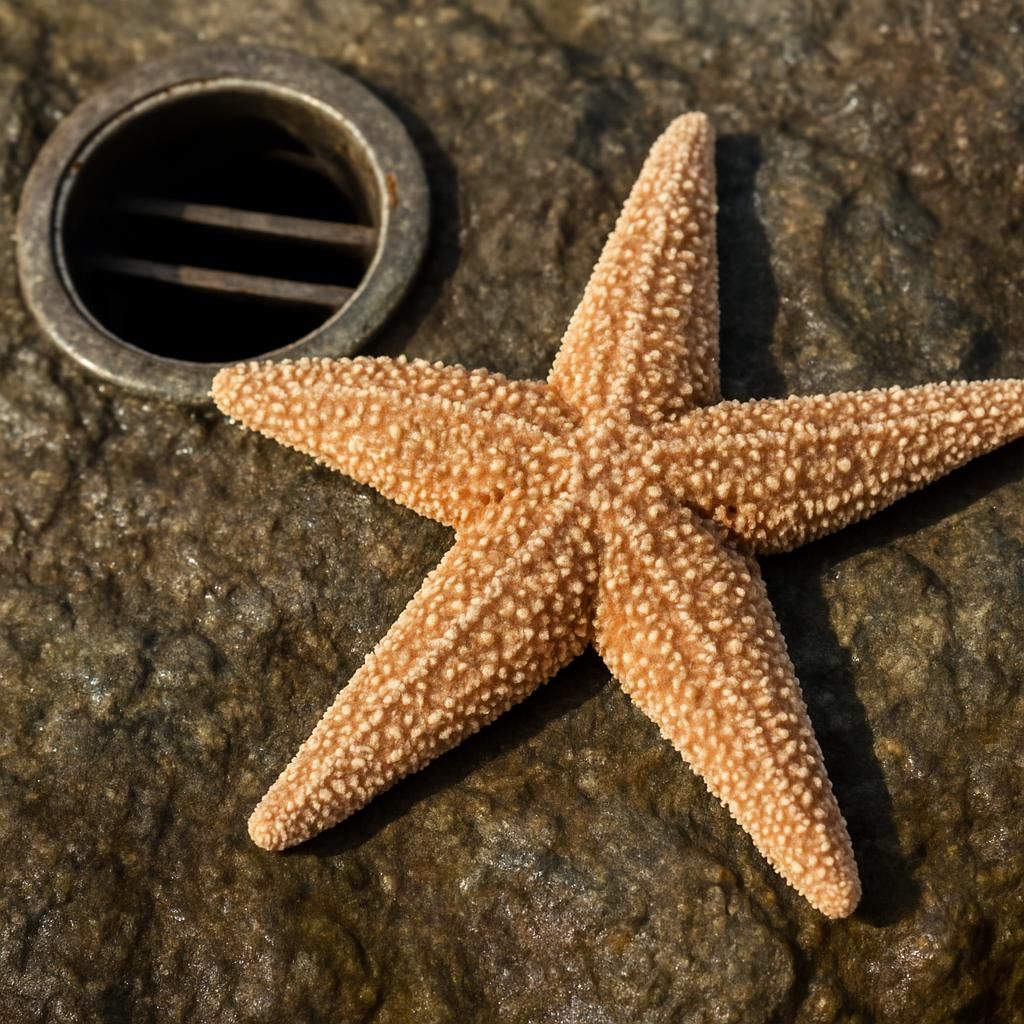
Introduction to starfish
Starfish, also known as sea stars, belong to the class Asteroidea within the phylum Echinodermata. In agricultural contexts, they are primarily a concern in coastal regions where seawater intrusion or brackish irrigation water introduces marine organisms into fields, greenhouses, or hydroponic systems. Although starfish are not herbivorous pests, their physical presence and associated salinity can indirectly harm crops by altering soil chemistry and damaging irrigation infrastructure.
Professional growers near shorelines or using tidal-influenced water sources should monitor for starfish introduction. Early detection prevents both direct mechanical damage to root zones and secondary issues such as increased soil salinity that can stunt plant growth. This guide provides diagnostic criteria and proven management protocols tailored to agricultural operations.
Identifying Symptoms & Damage
Starfish damage in agricultural settings manifests primarily through indirect effects rather than direct feeding. Key symptoms include:
- Wilting and leaf margin burn on salt-sensitive crops due to elevated soil salinity.
- Physical obstruction of drip emitters and irrigation filters by starfish bodies or ossicles.
- Root zone disturbance where starfish settle in moist, saline microhabitats.
- Secondary fungal or bacterial infections entering wounds created by abrasive starfish tube feet.
Crops showing unexplained salt stress symptoms in proximity to coastal water intakes should be inspected for starfish presence. Regular monitoring of irrigation intakes and sediment traps is essential.
Lifecycle and Progression of starfish
Starfish exhibit a complex lifecycle involving both sexual and asexual reproduction. The progression from larva to adult can span several months depending on water temperature and food availability.
| Stage | Description | Duration | Key Characteristics |
|---|---|---|---|
| Fertilized Egg | Microscopic zygote released into water column | 1–3 days | High vulnerability to predation and environmental stress |
| Bipinnaria Larva | Free-swimming planktonic form | 2–6 weeks | Bilateral symmetry; feeds on phytoplankton |
| Brachiolaria Larva | Advanced larval stage with attachment structures | 1–4 weeks | Develops adhesive disk for substrate settlement |
| Juvenile | Settled pentaradial form | 1–3 months | Begins ossicle formation; small size (1–5 cm) |
| Adult | Sexually mature individual | 1–5+ years | Full radial symmetry; capable of regeneration and spawning |
Understanding these stages helps time interventions, particularly during the vulnerable larval and juvenile phases when starfish are most susceptible to environmental controls.
Environmental Triggers & Risk Factors
Several environmental conditions increase the likelihood of starfish introduction and establishment in agricultural systems:
| Factor | Optimal Range for Starfish | Agricultural Implication |
|---|---|---|
| Water Salinity | 20–35 ppt | Brackish irrigation sources heighten risk |
| Temperature | 10–25 °C | Mild coastal climates favor survival |
| pH | 7.5–8.5 | Alkaline irrigation water supports development |
| Nutrient Load | Moderate organic matter | Eutrophic conditions boost larval food supply |
| Substrate | Rocky or structured surfaces | Irrigation infrastructure provides attachment sites |
Proximity to marine environments, use of untreated seawater for irrigation, and poor filtration of intake water are primary risk factors. Climate change-driven sea-level rise may further expand the geographic range of concern.
Organic Control & Treatment Plans
Integrated management combines physical exclusion, mechanical removal, and biological controls. Below is a structured treatment matrix:
| Treatment Option | Application Method | Frequency | Notes |
|---|---|---|---|
| Fine-mesh intake screens (1 mm) | Install at all seawater or brackish water intakes | Continuous | Prevents larval entry; inspect monthly |
| Manual removal | Hand collection from irrigation channels and sediment traps | Weekly during peak season | Dispose of specimens away from fields |
| Salinity flushing | Flush systems with low-salinity fresh water for 48 hours | As needed after detection | Reduces adult survival and egg viability |
| Predatory fish introduction | Stock compatible fish species in open reservoirs | Seasonal | Consult local regulations before introduction |
| UV sterilization | Install UV units on irrigation lines | Continuous | Effective against planktonic larvae |
| Organic acid treatment | Apply food-grade citric acid to lower pH temporarily | Quarterly | Monitor crop tolerance before widespread use |
Combine multiple methods for best results. Always verify local regulations regarding biological controls and water treatment chemicals.
Preventing starfish in the Future
Long-term prevention focuses on source water management and infrastructure design:
- Source irrigation water exclusively from freshwater aquifers or treated municipal supplies when possible.
- Install multi-stage filtration (sand, cartridge, and membrane) on all coastal water intakes.
- Design irrigation channels with smooth, non-porous surfaces to reduce attachment sites.
- Maintain buffer zones of salt-tolerant vegetation between fields and marine shorelines.
- Conduct annual audits of water quality and infrastructure integrity before planting seasons.
Adopting these practices significantly reduces the probability of future starfish incursions.
Crops Most Affected by starfish
While starfish do not feed on plants, salinity stress and infrastructure damage can severely impact sensitive species. The following crops are most vulnerable when grown in coastal agricultural zones:
Salt-sensitive leafy greens and fruiting vegetables experience the most pronounced yield reductions. Root crops may also suffer from compromised irrigation delivery.
For further reading on coastal salinity management, see the Stop Treating Tomato Blight Like a Spray Problem: Here Is What Works Better post.