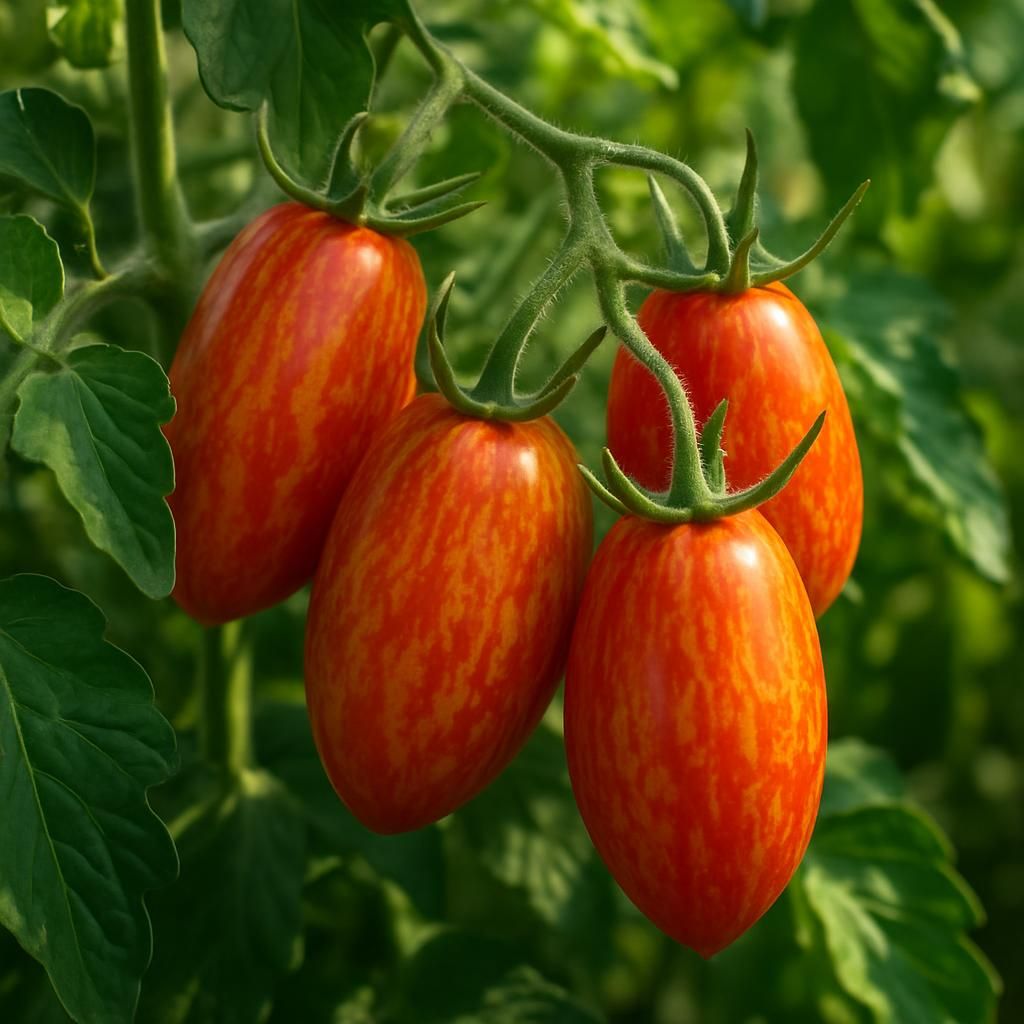
Introduction to Speckled Roman Tomato
Speckled Roman Tomato is an elongated, paste-style heirloom that combines striking visual appeal with exceptional culinary performance. Developed from traditional Roma-type genetics, it produces 4–6 inch fruits featuring a vibrant red base overlaid with irregular orange speckles. The variety is indeterminate, continuing to set fruit throughout the season until frost, and is valued by small-scale growers for its disease tolerance and high yields of meaty, low-moisture tomatoes.
Its flavor profile balances bright acidity with subtle sweetness, making it versatile for fresh salsa, roasting, and concentrated sauces. Because the fruits have fewer seeds and less gel than round slicing tomatoes, they cook down quickly into thick pastes and ketchups. Gardeners and market farmers appreciate the variety’s visual uniqueness, which commands premium prices at farmers’ markets.
Botanical Profile of Speckled Roman Tomato
Speckled Roman Tomato belongs to the nightshade family, Solanaceae, sharing the same species as all cultivated tomatoes. Plants reach 5–7 feet in height when properly supported and exhibit vigorous, sprawling growth with medium-green, serrated foliage. Flowers are typical yellow tomato blooms that self-pollinate, though wind and insect activity improve fruit set.
The fruit is classified as a plum or paste tomato with an elongated, slightly tapered shape. The distinctive speckled coloration develops as the fruit ripens, caused by uneven distribution of carotenoid pigments. Average fruit weight ranges from 3–5 ounces, with clusters of 6–10 fruits per truss. Seeds are small and flat, typical of the species, and remain viable for 4–5 years when stored properly.
Soil, pH, and Climate Requirements for Speckled Roman Tomato
Speckled Roman Tomato performs best in fertile, well-drained loam or sandy loam soils. Consistent moisture without waterlogging is critical to prevent Blossom End Rot. The variety tolerates a wide range of climates but yields optimally in warm, sunny conditions with daytime temperatures between 70–85 °F.
| Parameter | Ideal Range | Notes |
|---|---|---|
| Soil Type | Loam or sandy loam | High organic matter improves structure |
| Soil pH | 6.2 – 6.8 | Slightly acidic; avoid below 5.5 |
| Temperature (Day) | 70–85 °F (21–29 °C) | Optimal fruit set; above 90 °F reduces set |
| Temperature (Night) | 55–70 °F (13–21 °C) | Cooler nights improve flavor |
| Sunlight | Full sun, minimum 8 hours | Insufficient light causes leggy growth |
| Spacing (Indeterminate) | 18–24 inches between plants | 4–5 ft between rows with trellis support |
| Frost Tolerance | None; protect below 50 °F | Transplant after last frost |
Step-by-Step Planting & Propagation
Start seeds indoors 6–8 weeks before the last expected frost. Sow seeds ¼ inch deep in sterile seed-starting mix at 75–80 °F soil temperature. Germination occurs in 5–10 days. Once seedlings develop their first true leaves, transplant into 4-inch pots and grow under bright lights or in a greenhouse.
Harden off plants for 7–10 days before transplanting outdoors. Choose a site with full sun and well-prepared soil amended with aged compost. Install sturdy trellises, cages, or Florida-weave systems at planting time. Space plants 18–24 inches apart in rows 4–5 feet apart. Water thoroughly after transplanting and apply a 2–3 inch layer of organic mulch to conserve moisture and suppress weeds.
Care & Maintenance regimes for Speckled Roman Tomato
Consistent cultural practices maximize yield and fruit quality. Mulch heavily, water deeply but infrequently, and provide balanced nutrition without excess nitrogen once fruiting begins.
| Growth Stage | Watering Schedule | Fertilizer Application | Pruning & Training |
|---|---|---|---|
| Transplant–Flowering | 1–1.5 inches per week; keep soil moist but not soggy | Side-dress with ½ cup balanced organic fertilizer (5-5-5) per plant at 2 weeks | Remove lower suckers; tie main stem to trellis |
| Flowering–Fruit Set | Deep watering 2–3× weekly; reduce frequency as fruit ripens | Apply high-phosphorus fertilizer (e.g., 2-5-3) every 3–4 weeks | Continue removing basal suckers; thin interior foliage for airflow |
| Fruit Ripening | 0.75–1 inch per week; allow slight dry-down between waterings | Light potassium-rich feed (0-0-5) once at first color break | Maintain single or double leader; remove diseased leaves promptly |
Pests, Diseases & Organic Management
Common tomato pests include Aphids, Hornworms, and Spider Mites. Scout weekly and use insecticidal soap or neem oil for soft-bodied insects. Handpick hornworms and destroy egg masses.
Major diseases are Early Blight, Septoria Leaf Spot, and Tomato Spotted Wilt Virus. Rotate crops on a 3–4 year cycle, avoid overhead irrigation, and space plants for airflow. Apply copper-based fungicides preventively during humid periods. Remove and destroy infected plant material at season’s end.
Harvesting, Curing & Optimal Storage
Harvest when fruits show full color with slight softening at the blossom end. For sauce production, allow fruits to ripen fully on the vine for maximum sugar content. Cut stems with pruners rather than pulling to avoid plant damage.
Store ripe fruit at 55–60 °F for up to 7–10 days. For longer storage, process into sauce or freeze whole. Green fruit can be ripened indoors in a paper bag with an apple or banana to accelerate ethylene exposure. Avoid refrigeration, which causes flavor loss and mealy texture.
Companion Planting for Speckled Roman Tomato
Pair Speckled Roman Tomato with aromatic herbs such as Thai Basil and Rosemary to deter pests. Marigold and Nasturtium repel nematodes and aphids while attracting beneficial insects. Avoid planting near Fennel or walnuts, which inhibit tomato growth. Lettuce and Carrot make excellent understory companions when given adequate light.