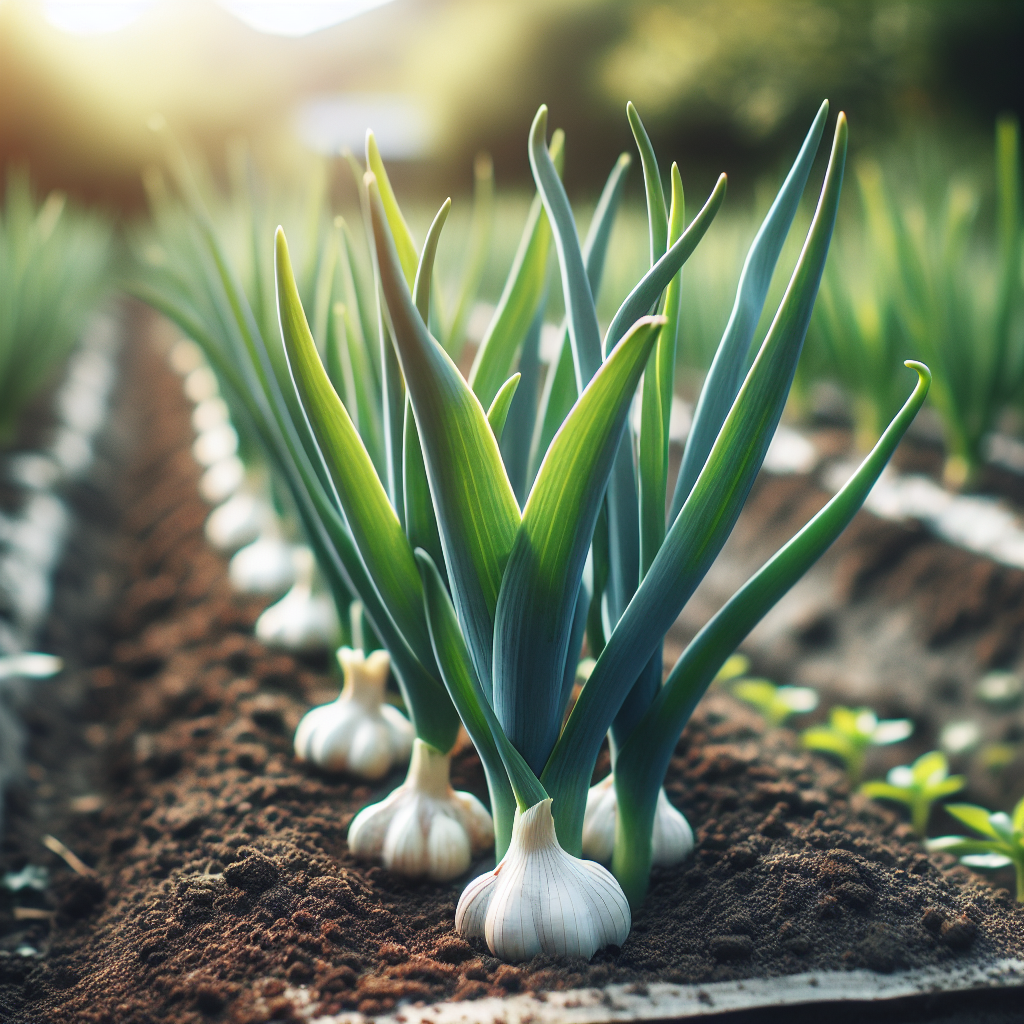
Introduction to Softneck Garlic (Silver White)
A long-storing, widely adaptable garlic type, this cultivar belongs to the softneck group most commonly grown for commercial braiding, retail presentation, and dependable pantry performance. Silver White strains are typically artichoke softnecks with tight, bright white outer wrappers, numerous cloves arranged in several layers, and a pliable neck that remains flexible after curing. That pliability is one reason softneck garlic became historically associated with Mediterranean and Californian production systems, where bulbs were often hung in braided strings for storage and transport.
Compared with hardneck garlic, Silver White generally produces smaller to medium bulbs but often carries more cloves per bulb, frequently 10-20 depending on growing conditions, strain selection, and planting stock size. Flavor is usually assertive when raw, with a clean sulfurous bite, yet mellows to a sweet, rounded allium depth when roasted or slowly sautéed. It rarely forms a flower stalk under normal conditions, so more of the plant's energy remains directed into bulb sizing rather than scape production.
For growers, its major advantages are consistency, long shelf life, and tolerance of warmer winter conditions where some hardneck types underperform. In colder regions it can still do very well, but bulb differentiation is most reliable when cloves receive enough chilling after planting. For a broader background on bulb development and allium culture, see the general Garlic guide. Silver White is especially attractive for fresh market growers who need bulbs that clean well, hold firm in storage, and present a uniform bright-white appearance.
Botanical Profile of Softneck Garlic (Silver White)
This crop is a bulb-forming perennial grown as an annual. It is classified within the Amaryllidaceae family, alongside onions, leeks, and chives. Botanically, the bulb is composed of multiple cloves, each wrapped in a papery tunic and attached to a basal plate from which roots emerge. Above ground, the plant produces narrow, flat to slightly keeled leaves with a waxy cuticle that helps reduce water loss.
Softneck types differ from hardnecks in the structure of the central stalk. In Silver White, the neck remains soft because the plant usually does not produce a stiff flowering scape. Internally, the bulb lacks the hard woody central stem typical of hardneck types. Cloves are arranged in concentric layers, with larger outer cloves and smaller inner cloves. This layered structure is a defining commercial characteristic: outer cloves are often preferred for replanting because they are more vigorous and produce larger bulbs.
Mature plant height typically ranges from 30-60 cm depending on fertility, spacing, and season length. Rooting is fibrous and relatively shallow, with most roots concentrated in the upper 15-20 cm of soil. That shallow rooting pattern explains why garlic is sensitive to both drought stress and waterlogging. The crop has only moderate capacity to forage for nutrients from subsoil, so precise topsoil management matters more than it does for deeper-rooted field crops.
Silver White often shows excellent wrapper retention if grown under moderate nitrogen and cured correctly. Wrapper retention is important not only cosmetically but also physiologically, because intact wrappers reduce moisture loss and protect cloves from mechanical abrasion and pathogen entry during storage. Bulb skin color is predominantly white, though environmental stress, sulfur nutrition, and curing conditions can influence how bright and clean the final cured bulb appears.
Soil, pH, and Climate Requirements for Softneck Garlic (Silver White)
This garlic performs best in loose, friable, well-drained loam or sandy loam with high organic matter and excellent aggregation. The ideal soil should crumble easily in the hand, allowing roots to penetrate and bulbs to expand without distortion. Heavy clay can produce misshapen bulbs, increase disease pressure, and make harvest difficult, especially in wet springs. If clay soil is unavoidable, raised beds 15-20 cm high are strongly recommended to improve drainage and aeration.
The preferred soil pH is 6.2-6.8, though acceptable production can occur from about 6.0-7.0. Below pH 6.0, nutrient availability begins to shift unfavorably, particularly for phosphorus, calcium, and magnesium, while some root diseases become more problematic. At pH above 7.0, micronutrient lockout may reduce vigor, especially on calcareous soils. A pre-plant soil test is worth the effort because garlic is a relatively high-value crop that responds clearly to corrected fertility.
Good soil organic matter, ideally 3-6%, improves moisture buffering without creating stagnant conditions. Avoid fresh manure before planting; it may encourage excessive vegetative growth, increase bulb staining, and raise disease risk. Instead, use well-finished compost incorporated several weeks before planting. A target of moderate but not lush fertility is ideal. Too much nitrogen early can cause rank top growth that later delays maturation or yields soft bulbs with poor skins.
Climatically, Silver White is best adapted to temperate and Mediterranean-type conditions with cool establishment, steady spring growth, and a warm, relatively dry finish at bulb maturation. It is one of the best garlic categories for regions with mild winters because it needs less intense vernalization than most hardneck types. In very warm climates, growers often chill planting stock for 4-6 weeks at around 4-10°C before planting to improve uniform sprouting and clove differentiation.
Optimal root growth occurs in cool soil, roughly 9-18°C, while strong leaf growth is favored by 13-24°C air temperatures. Bulbing is triggered by increasing day length and warming temperatures in spring. Excessive heat above 30°C during bulbing can shorten the filling period, resulting in undersized bulbs. Prolonged wet weather near harvest increases the risks of basal plate rot, bulb staining, and wrapper breakdown.
Soil moisture should remain consistently moist but never saturated through establishment and active spring growth. A practical target is about 60-80% of field capacity in the root zone. In field terms, when you squeeze a handful of soil from 10 cm depth, it should feel cool and hold together lightly, then crumble with a tap. If water drips or the soil smears into a dense ribbon, it is too wet. If it is dusty and will not cohere at all, it is too dry. Garlic stressed by drought during leaf expansion forms fewer and smaller leaves, and since each healthy leaf corresponds roughly to a bulb wrapper layer, fewer leaves often mean smaller bulbs and weaker storage quality.
Step-by-Step Planting & Propagation
Propagation is almost always vegetative, using individual cloves rather than true seed. Select certified, disease-free planting stock whenever possible. Do not plant grocery-store bulbs unless there is no alternative; many are treated, carry latent diseases, or are poorly adapted to local conditions.
Choose the planting date carefully. In most temperate climates, plant in autumn 4-6 weeks before the ground freezes hard. The goal is root establishment before winter without producing excessive top growth. In mild-winter climates, planting from late autumn into early winter is common. In cold regions, planting too early can produce lush leaves vulnerable to winter damage; planting too late reduces root mass and spring vigor.
Prepare beds thoroughly. Remove perennial weeds, loosen soil to at least 20-25 cm, and incorporate mature compost plus any phosphorus or potassium recommended by soil testing. Raised beds improve bulb uniformity and simplify irrigation management.
Break bulbs into cloves just before planting. Separate gently to avoid damaging the basal plate. Keep papery skins on each clove. Plant only firm, healthy cloves; discard any soft, discolored, shriveled, or moldy ones. Favor large outer cloves for the best bulb size potential.
Optional pre-plant sanitation. Small-scale organic growers sometimes soak cloves briefly in diluted biological or mineral solutions to reduce surface inoculum, but this should be done carefully to avoid injury. If you use any treatment, dry cloves before planting and avoid prolonged soaking that can trigger rot.
Plant at the right depth and spacing. Set cloves upright, basal plate down, pointed tip up. Cover with 3-5 cm of soil in milder climates and 5-7 cm in colder zones where winter heaving is a risk. Space cloves 10-15 cm apart within rows, with 20-30 cm between rows. For premium large bulbs, use wider spacing. Dense planting increases yield per bed but often reduces average bulb size.
Mulch after planting. Apply 5-10 cm of clean straw, shredded leaves, or similar airy mulch after the soil cools. Mulch moderates freezing-thawing cycles, suppresses weeds, and preserves moisture. In wet climates, avoid overly dense mulch that traps excessive surface moisture against stems.
Spring management. As growth resumes, pull mulch back slightly if soils remain cold and soggy. Keep enough cover to suppress weeds but allow sunlight and airflow around emerging plants.
Because Silver White rarely produces viable scapes or top sets suitable for routine propagation, clove selection is the practical way to maintain or improve a planting line. Over several seasons, save bulbs from the healthiest, most uniform plants with strong wrapper retention and good storage performance.
Care & Maintenance regimes for Softneck Garlic (Silver White)
Once plants are established, the focus is steady growth without stress peaks. Garlic has a relatively small root system and poor competition against weeds, so careful, low-disturbance management pays off.
Irrigation: During autumn rooting and spring leaf expansion, maintain even moisture in the top 15-20 cm of soil. A general benchmark is 2.5 cm of water per week from rainfall plus irrigation on lighter soils, less on heavier soils. However, fixed schedules are less useful than observing the root zone. If leaves lose gloss, fold inward slightly during cool morning hours, or show pale blue-green stress color, the crop may be too dry. Overwatering signs include yellowing lower leaves unrelated to maturity, stunted growth despite moist soil, sour-smelling beds, algae or moss on the surface, and cloves showing translucent, water-soaked tissue when examined. Reduce irrigation as bulbs near maturity, and stop almost completely 10-14 days before harvest unless extreme heat threatens plant collapse.
Fertility: Garlic needs nitrogen early and mid-season, then less as bulbing advances. A common professional approach is to apply part of the nitrogen pre-plant and the remainder in 1-3 topdressings from late winter through early spring. Total nitrogen needs often fall in the range of 60-120 kg/ha depending on soil reserves and organic matter mineralization. Stop nitrogen feeding once bulbing is underway or when plants have nearly reached full leaf count, because late nitrogen can delay curing and reduce storage life. Sulfur is particularly important for flavor development and allium aroma compounds; sulfur-deficient garlic may taste flat and grow weakly.
Weed control: Keep beds weed-free from planting through bulbing. Early weed competition can reduce bulb size dramatically because garlic canopy closure is weak. Hand weeding, shallow wheel hoeing between rows, and mulching are the safest methods. Avoid deep cultivation; roots are shallow and easily pruned.
Mulch and temperature moderation: In cold climates, winter mulch protects against frost heaving. In spring, moderate mulch stabilizes soil moisture and reduces splashing that can spread disease. In humid regions, however, too much mulch can keep the neck area wet and favor fungal issues.
Bolting and off-types: Although Silver White is softneck, occasional stress-induced pseudo-scaping or off-type plants may appear. Rogue out any abnormal plants with weak vigor, distorted leaves, or suspect disease symptoms so they do not become seed-stock sources.
For growers building resilient beds and long-term fertility, principles in soil health strategies are particularly relevant to garlic because of its shallow root zone and sensitivity to compaction.
Pests, Diseases & Organic Management
The biggest problems in garlic are usually disease-related rather than insect-related, especially where rotations are short or drainage is poor. Prevention is far more effective than rescue treatment.
Onion thrips: These tiny rasping insects feed on leaves, causing silvery streaks, tip dieback, and reduced photosynthesis. Damage is often worst in hot, dry weather. Encourage natural predators, avoid excessive nitrogen that creates lush tissue, and use reflective mulches or organic-approved sprays like insecticidal soap only when populations exceed tolerable levels. Good coverage is essential because thrips hide in leaf folds.
Bulb mites and Nematodes: These can distort plants, stunt growth, and degrade bulbs in storage. The Stem and bulb nematode is particularly destructive in alliums, causing swollen, misshapen tissue and soft bulbs. Prevention depends on clean planting stock and long rotations of at least 4 years away from alliums.
White rot (Sclerotium cepivorum): One of the most serious garlic diseases. Symptoms include yellowing, wilting, root decay, and white fluffy fungal growth with tiny black sclerotia near the bulb base. Once established, it can persist in soil for many years. Do not move contaminated soil or tools between beds. Remove infected plants immediately and never compost them.
Fusarium basal rot: Often enters through the basal plate or wounds and is favored by warm soils and poor handling. Affected bulbs may show brown rot at the base, root death, and storage breakdown. Avoid bruising, overwatering, and late harvest in hot wet conditions.
Rust: Orange pustules on leaves reduce vigor, especially under humid conditions with poor airflow. Space appropriately, avoid overhead irrigation late in the day, and remove heavily infected debris after harvest.
Botrytis neck rot: Frequently appears after harvest rather than in the field, especially if bulbs are harvested immature, cured poorly, or stored warm and humid. Tight neck closure and proper drying are critical for Silver White because storage is one of its main strengths only when curing is done correctly.
Organic management should rely on an integrated system:
- Use certified disease-free cloves.
- Rotate out of alliums for 3-4 years minimum, longer if disease has appeared.
- Maintain excellent drainage and avoid compacted beds.
- Sanitize tools, crates, and curing racks.
- Remove cull piles from near production areas.
- Harvest only in dry weather when possible.
- Cure promptly with good airflow.
Because many garlic pathogens are carried invisibly in planting stock, selection discipline is essential. Never save bulbs for seed from plants that matured early from stress, showed yellow streaking, had weak roots, or developed poor wrappers.
Harvesting, Curing & Optimal Storage
Harvest timing determines much of final quality. Silver White should be lifted when the plant has partially senesced but still retains enough green tissue to protect wrapper integrity. A common practical indicator is when about one-third to one-half of the leaves have browned from the bottom upward, while the upper leaves remain green. If harvested too early, bulbs may be small and immature with loose cloves. If harvested too late, wrappers split, cloves separate, and storage life declines sharply.
Loosen soil with a fork or undercutter rather than pulling plants directly by the neck, which can cause stem breakage and basal damage. Harvest in dry weather if possible. Shake off loose soil gently but do not wash bulbs intended for long storage. Keep harvested plants out of direct sun; sunscald can bleach or cook outer tissues.
Curing should begin immediately. Tie in small bundles, lay on racks, or hang in a shaded, airy structure with strong ventilation. Ideal curing temperatures are around 24-30°C with low to moderate humidity and continuous airflow for 2-4 weeks. The goal is to dry neck tissue thoroughly, tighten wrappers, and reduce bulb moisture without overheating. In humid climates, fans are often essential. Poorly cured softneck garlic may feel firm at first but later collapses in storage from latent neck rot or internal moisture retention.
Once cured, trim roots close to the basal plate and either braid the necks or cut stems to a few centimeters above the bulb. Braiding is both practical and traditional for Silver White because the neck remains flexible when properly dried but not overly brittle.
For storage, aim for cool, dry, dark, well-ventilated conditions. The classic target is 0-4°C with 60-70% relative humidity for long-term holding, or around 15-18°C in very dry ambient spaces if refrigeration is unavailable. Avoid storing at warm room temperatures with high humidity, which favors sprouting, mold, and softening. Also avoid sealed containers; garlic needs air exchange.
Under proper conditions, Silver White often stores 8-12 months, sometimes longer than many hardneck cultivars. Inspect monthly and remove any bulbs showing soft spots, clove separation, mold, or sour odors. Seed stock should be stored separately from culinary stock so only the best bulbs are replanted.
Companion Planting for Softneck Garlic (Silver White)
This garlic is highly valued in companion systems because its pungent foliage and sulfur compounds can help confuse or deter certain pests around susceptible crops, though companion effects should be viewed as supportive rather than magical. The best companions are plants that enjoy similar moisture levels during the cool season, do not heavily shade garlic, and occupy different root or canopy niches.
Carrot is one of the strongest partners. It occupies a different root profile and may benefit from garlic's presence in systems where carrot Rust fly pressure is a concern. Garlic, in turn, does not seriously compete with carrots when rows are spaced sensibly.
Lettuce works well as a quick, shallow-rooted intercrop in wider beds, especially early in the season before bulbs expand. Its short lifecycle allows harvest before garlic reaches maximum demand for space and light.
Beet is another useful companion in diversified gardens and market beds. It tolerates similar cool conditions and can fit into alternating row systems where fertility is balanced but not excessive.
Strawberry is a traditional pairing in some gardens because garlic may help reduce certain pest pressures around berry plantings while occupying edge spaces efficiently. However, ensure that irrigation for strawberries does not keep garlic beds too wet near bulb maturation.
Avoid pairing with vigorous legumes in dense mixed plantings if they create too much shade or keep soil overly moist. Also avoid crowding garlic under sprawling cucurbits later in the season. The best companion design keeps airflow high, preserves sun exposure, and allows harvest access without disturbing neighboring roots.