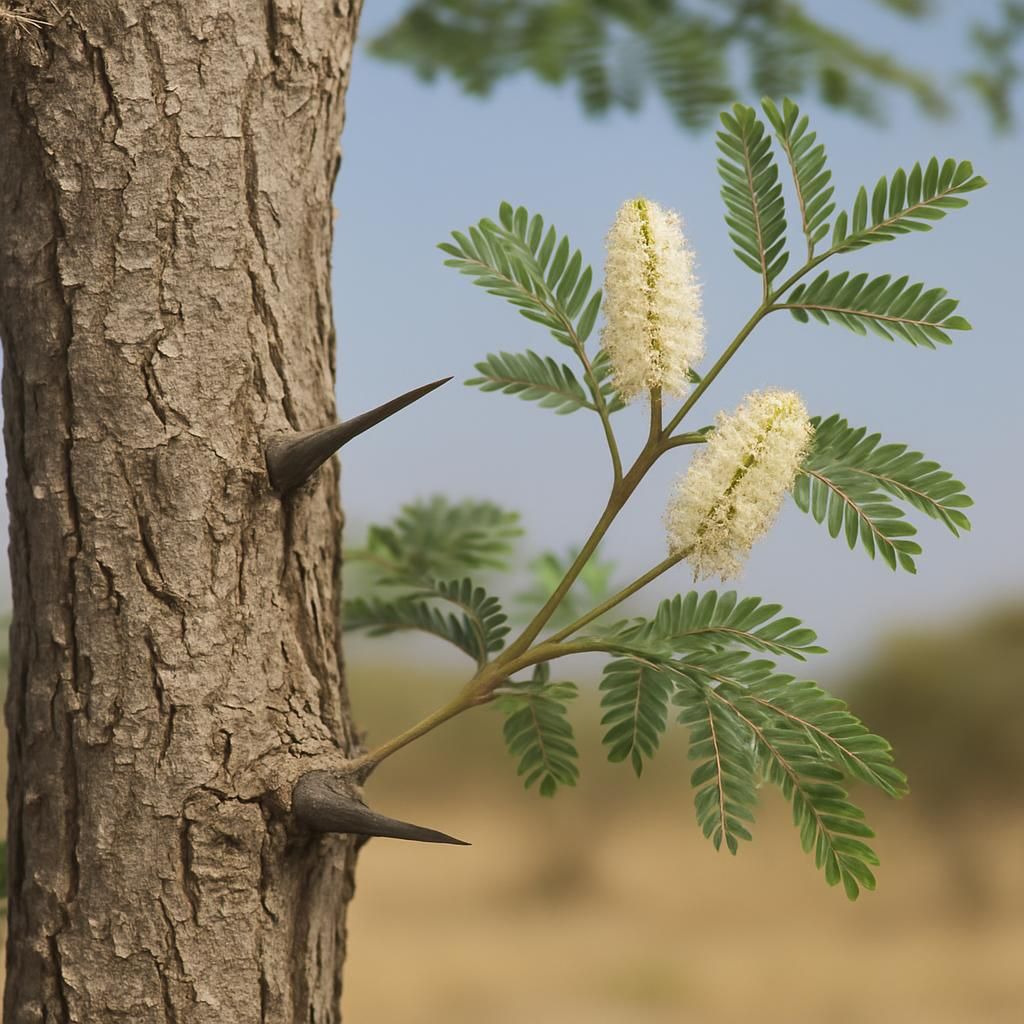
Introduction to Senegalia senegal
Senegalia senegal, formerly classified as Acacia senegal, is a cornerstone species in Sahelian agroforestry and a primary commercial source of gum arabic. Farmers across Senegal, Sudan, Niger, and Chad cultivate this multipurpose tree for its resin, fodder, fuelwood, and nitrogen-fixing capabilities that restore degraded soils. The tree's deep taproot enables survival in regions receiving as little as 200 mm of annual rainfall, making it an essential crop for climate-resilient farming in semi-arid zones.
Commercial gum arabic production from Senegalia senegal supports rural economies while providing ecological services such as windbreak establishment and biodiversity corridors. Recent initiatives promote its integration into parkland systems alongside staple cereals to combat desertification and enhance household income diversification.
Botanical Profile of Senegalia senegal
Senegalia senegal belongs to the Fabaceae family and exhibits a small to medium-sized tree habit, typically reaching 2–6 m in height with a spreading crown. The bark is greyish-brown and fissured, while young branches bear paired straight spines up to 5 cm long. Bipinnate leaves consist of 3–6 pairs of pinnae, each with 8–18 pairs of small leaflets. Creamy-white, fragrant flowers appear in axillary spikes, followed by flat, dehiscent pods containing 3–6 hard seeds.
The species displays significant genetic variation across its range, with three recognized varieties differing in spine length, gum yield, and drought tolerance. Its ability to fix atmospheric nitrogen through symbiotic rhizobia contributes 30–100 kg N ha⁻¹ yr⁻¹, improving fertility for associated crops.
Soil, pH, and Climate Requirements for Senegalia senegal (MUST INCLUDE A MARKDOWN TABLE OF IDEAL CONDITIONS)
Senegalia senegal thrives on well-drained sandy loam to loamy sand soils with low fertility. It tolerates alkaline conditions and moderate salinity but performs poorly on heavy clays or waterlogged sites. Optimal growth occurs in semi-arid climates with distinct wet and dry seasons.
| Parameter | Ideal Range | Notes |
|---|---|---|
| Soil Texture | Sandy loam to loamy sand | Excellent drainage essential |
| Soil pH | 6.5–8.5 | Tolerates mild alkalinity |
| Annual Rainfall | 200–800 mm | Survives prolonged dry periods |
| Temperature Range | 20–38 °C | Frost sensitive below 5 °C |
| Altitude | 0–1 500 m | Prefers lowland savanna |
| Soil Organic Matter | 0.5–2 % | Benefits from organic amendments |
Step-by-Step Planting & Propagation
- Seed Collection and Pre-treatment: Harvest mature pods at the end of the dry season. Soak seeds in hot water (80 °C) for 24 hours or scarify mechanically to break dormancy.
- Nursery Establishment: Sow treated seeds 1–2 cm deep in polybags filled with a 3:1 sand-to-compost mix. Maintain 60–70 % shade and water twice weekly.
- Seedling Care: Seedlings reach transplant size (30–40 cm) in 3–4 months. Inoculate with appropriate rhizobial strains to enhance nodulation.
- Field Preparation: Clear competing vegetation and dig planting pits 40 × 40 × 40 cm. Incorporate 2–3 kg well-rotted manure per pit.
- Transplanting: Plant at the onset of rains with 5 × 5 m or 6 × 6 m spacing for gum production systems. Water immediately after transplanting.
- Direct Seeding Alternative: In areas with reliable early rains, direct seed 3–4 seeds per pit at 2 cm depth and thin to one vigorous seedling after 4 weeks.
Care & Maintenance regimes for Senegalia senegal (MUST INCLUDE A MARKDOWN TABLE OF WATER, FERTILIZER, AND PRUNING SCHEDULES)
During the first two years, supplemental irrigation and weeding are critical. Once established, the tree requires minimal inputs. Pruning begins in year three to shape the crown and stimulate gum exudation.
| Operation | Frequency | Details |
|---|---|---|
| Watering | Year 1–2: 10 L/week per tree | Reduce to zero after canopy closure |
| Fertilizer | Year 1: 50 g NPK 15-15-15 at planting | Year 3 onward: 100 g rock phosphate every 2 years |
| Pruning | Year 3: formative prune | Remove lower branches to 1.5 m; thin crown by 20 % every 3 years |
| Weeding | 3× per year for first 3 years | Maintain 1 m weed-free radius around stem |
Pests, Diseases & Organic Management
Common insect pests include Aphids, Termites, and Bruchids. Fungal issues such as Root rot and Powdery mildew occur under prolonged humidity. Implement integrated management combining cultural, biological, and minimal chemical interventions.
- Cultural: Remove and burn infected plant parts; avoid over-irrigation.
- Biological: Release predatory beetles against aphids; apply neem-based sprays.
- Soil Health: Maintain organic matter to suppress soil-borne pathogens.
Harvesting, Curing & Optimal Storage
Gum tapping begins when trees reach 5–7 years. Make shallow incisions on the trunk during the dry season (October–March). Collect hardened gum tears every 7–10 days over a 3–4 month period. Sun-dry collected gum on clean mats for 3–5 days until moisture content falls below 12 %. Store in woven sacks or jute bags in cool, dry warehouses; maintain relative humidity under 65 % to prevent mold.
Average yields range from 200–400 g of clean gum per mature tree annually, with peak production between years 8–15.
Companion Planting for Senegalia senegal
Intercropping Senegalia senegal with drought-tolerant cereals such as Sorghum and Pearl Millet improves overall system resilience. The tree provides partial shade and nitrogen while the cereals suppress weeds. Leguminous understory species like Cowpea further enhance soil fertility. Avoid planting under the canopy of heavy feeders such as Maize that compete for moisture during establishment. Summer Companion Planting: 10 Organic Pairings to Boost Small Farm Resilience offers additional strategies adaptable to Sahelian parkland systems.