Introduction to Sclerotinia drop
Sclerotinia drop, caused by the soilborne fungus Sclerotinia sclerotiorum, is a widespread and economically damaging disease affecting numerous crops worldwide. Known also as white mold or drop, it targets over 400 plant species, with severe impacts on vegetable and field crops during cool, wet periods. This guide provides professional-grade diagnostic criteria, lifecycle insights, and proven organic management strategies to help farmers protect yields and sustain soil health.
The pathogen survives as sclerotia—hard, black resting structures—in soil or crop debris for up to 8-10 years, germinating under favorable conditions to infect plants via mycelial growth or ascospores. Symptoms often appear suddenly, causing rapid plant collapse and significant harvest losses, sometimes exceeding 50-100% in unmanaged fields. Early identification and integrated prevention are crucial for minimizing damage, especially in high-value organic production systems. For more on related fungal threats, see Sclerotinia stem rot.
Understanding Sclerotinia drop is essential for crop rotation planning, as reinfestation from sclerotia can plague successive seasons. This disease favors dense canopies and poor air circulation, making it a persistent challenge in intensive farming. By mastering diagnostics and controls, growers can reduce reliance on synthetic fungicides and enhance long-term farm profitability.
Identifying Symptoms & Damage
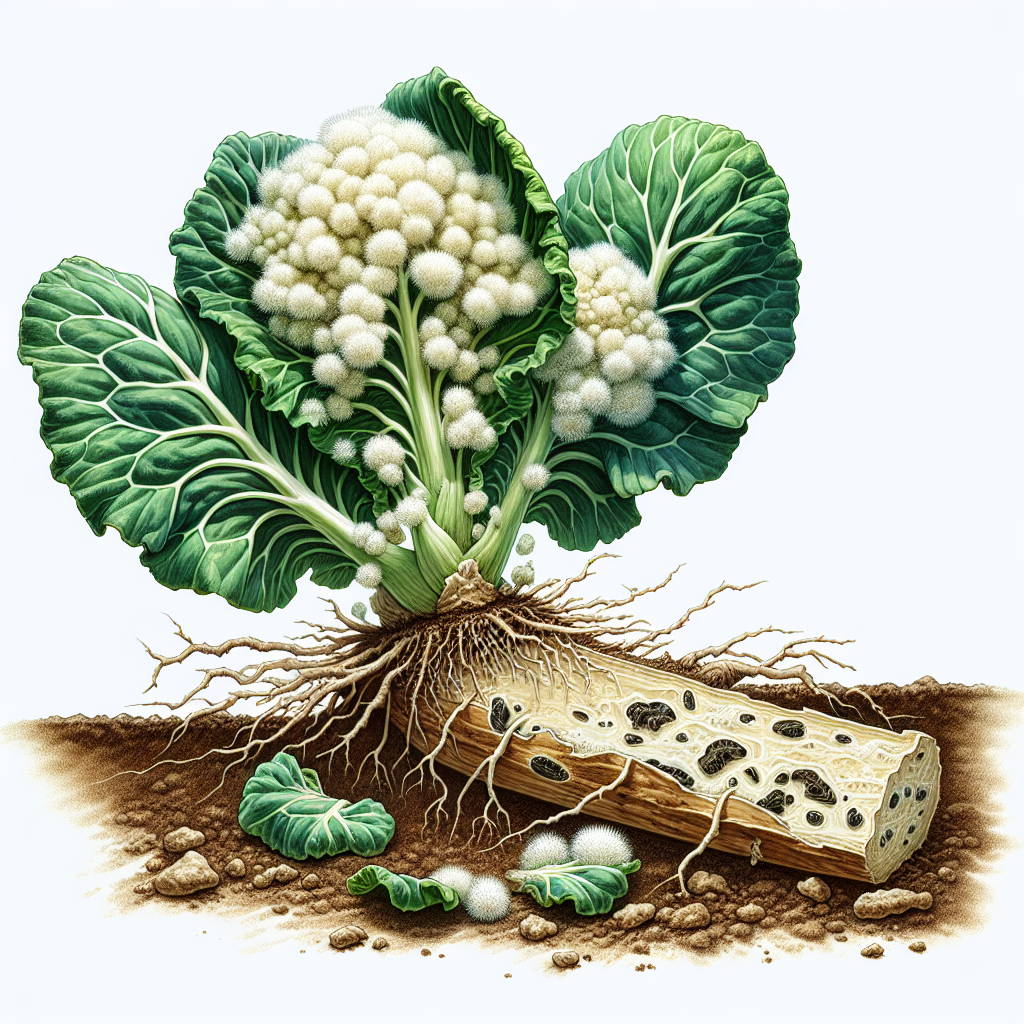
Sclerotinia drop manifests through distinct symptoms that progress rapidly under humid conditions. Initial signs include water-soaked lesions on lower stems, petioles, or leaf bases, often appearing 2-4 weeks after transplanting or during flowering. Affected tissues turn tan to light brown, developing a fluffy white mycelial growth under high humidity, which produces black sclerotia (1-10 mm) resembling mouse droppings or rat poison pellets.
Infected plants exhibit sudden wilting of leaves and shoots, leading to 'drop' where entire branches or plants collapse without yellowing. Cut stems reveal internal white mycelium and sclerotia in the pith or vascular tissue. On cabbage and related brassicas, heads fail to form properly, rotting from the base. Secondary symptoms include a bleach-white appearance on pods or stems, often confused with Botrytis blight, but sclerotia confirm Sclerotinia.
Damage assessment shows yield losses from 10-90%, depending on crop density and moisture. Scout fields weekly during bloom, checking 20-50 plants per acre. Use a hand lens to spot apothecia (small, tan mushroom-like structures) on soil surface, indicating active spore release. Differentiate from Phytophthora by sclerotia presence and cooler temperature preference (45-75°F). Economic thresholds: >5% infection at flowering warrants immediate action.
Lifecycle and Progression of Sclerotinia drop
Sclerotinia sclerotiorum has a complex polycyclic lifecycle starting with sclerotia in soil germinating myceliogenically or carpogenically. In spring (50-77°F, moist soil), mycelial germination directly penetrates roots or stems of susceptible crops. Under prolonged wetness (>48 hours), carpogenic germination produces apothecia, releasing millions of ascospores dispersed by wind or rain up to 1 km.
Ascospores germinate on senesced petals or wounded tissue, colonizing via oxalic acid suppression of plant defenses. Infection peaks during 80-100% humidity at flowering, when petals lodge in axils creating microclimates. Hyphae spread systemically, forming sclerotia in plant tissue within 7-14 days. New sclerotia drop to soil, incorporating at 1-2 cm depth, viable for 3-10 years.
Progression varies: seedling drop in direct-seeded crops; mid-season drop in transplants; late blight in dense canopies. Multiple cycles per season amplify spread. Overwintering sclerotia depth influences next-year risk—shallow ones (<2 cm) pose highest threat. For detailed lifecycle visuals, check our Soil Health Mastery blog post.
Environmental Triggers & Risk Factors
Sclerotinia drop epidemics require cool temperatures (50-70°F optimal), high humidity (>85% RH), and free moisture on tissues. Night temperatures below 60°F with daytime fog or dew favor apothecia formation. Poor drainage, compacted soils, and high residue retention elevate sclerotia survival.
Key risk factors: narrow crop rotations (<3 years), especially with brassicas, legumes, or soybeans; excessive nitrogen promoting lush growth; overhead irrigation; dense planting (>20,000 plants/acre); no-till without cover crops. Soil pH 6.0-7.5 and organic matter >3% enhance sclerotia germination. Predict outbreaks using weather data: >10 days with leaf wetness >12 hours signals high risk.
Weed hosts like clover and chickweed harbor the pathogen, bridging rotations. Climate change extends risk windows in temperate zones. Monitor via soil sampling: >4 sclerotia/kg soil = high risk.
Organic Control & Treatment Plans
Organic management integrates cultural, biological, and physical tactics, avoiding synthetic fungicides. Cultural: Rotate 4-6 years with non-hosts like corn or onion. Till to bury sclerotia >4 cm deep, promoting decay. Promote drainage with raised beds (6-8 inches).
Biological: Apply Coniothyrium minitans (Contans) at 2-5 lbs/A preplant to parasitize sclerotia (55-70°F soil). Trichoderma spp. (RootShield) as seed treatments suppress mycelial growth. Bacillus subtilis (Serenade) foliar sprays during bloom (3-5 apps, 7-day intervals).
Physical: Flooding (12-18 inches, 4-6 weeks summer) kills 90% surface sclerotia. Mustard biofumigation: grow mustard green manure, incorporate at flowering for glucosinolate release. Solarization (clear plastic, 6 weeks summer) reduces populations 70-90%.
Treatment timeline: At first symptoms, remove infected plants, destroy sclerotia. Apply biocontrols + potassium bicarbonate sprays. Threshold: Treat if >2% drop. Integrate with resistant varieties like 'Packchoi' cabbage. Yields recover 20-50% with timely action.
Preventing Sclerotinia drop in the Future
Long-term prevention builds resilient systems. Select resistant/tolerant varieties: 'Dekalb 231' lettuce, 'Green Comet' broccoli. Space plants for airflow (12-18 inches rows). Use drip irrigation, mulch to reduce splash. Cover crop with sudangrass or sorghum-sudangrass to suppress sclerotia.
Soil testing: assay sclerotia annually, amend with lime if pH <6.0. Scout using sticky traps for apothecia. Forecast models integrate temperature, moisture for spray timing. Crop rotation blueprint: Year 1 brassica, Year 2 grains, Year 3 onion/garlic, Year 4 fallow/cover.
Farm hygiene: sanitize tools, rogue volunteers. Monitor adjacent fields for inoculum. Annual deep tillage + biofumigants reduce populations 80% over 3 years. Track progress with yield mapping for ROI.
Crops Most Affected by Sclerotinia drop
Brassicas top the list: cabbage, cauliflower, broccoli suffer 50-100% losses in wet seasons. Lettuce drop devastates 30-70% in coastal California. Legumes like peas, soybeans show stem canker and pod drop. Other high-risk: sunflower, beans, carrots, potato. Moderate: tomatoes, peppers. Avoid rotation with these. Global impacts: $1B+ annual losses.