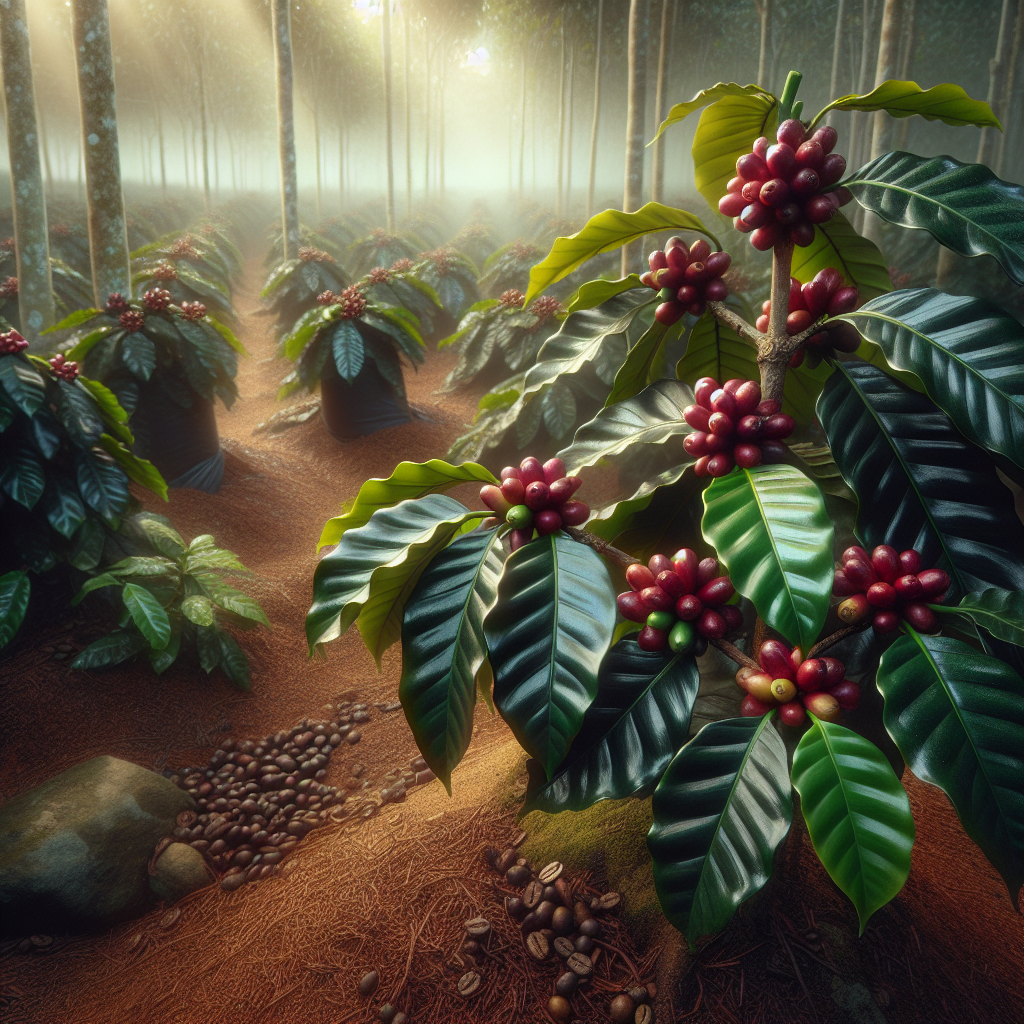
Introduction to Robusta Coffee
Native to the humid forests of central and western sub-Saharan Africa, this species became globally important as coffee cultivation expanded into hotter, wetter, and lower-elevation zones where Arabica struggled. Its commercial rise accelerated in the late 19th and early 20th centuries after severe coffee leaf rust outbreaks devastated many Arabica-growing regions, prompting growers to seek tougher alternatives. Today, it underpins a large share of global coffee supply, especially in Vietnam, Uganda, Brazil, India, Indonesia, and parts of West and Central Africa.
Compared with Arabica, Robusta generally produces a bolder, earthier cup, often with heavier body, lower perceived acidity, and greater bitterness due in part to higher caffeine and chlorogenic acid levels. Agronomically, its value lies in vigor, tolerance of high temperatures, strong productivity under humid tropical conditions, and broader adaptation to disease-prone environments. That does not mean it is an easy crop in every setting: profitable production still depends on careful canopy management, soil fertility, water balance, sanitation, and harvest discipline. For growers wanting background on the broader crop, see the general Coffee guide.
Botanical Profile of Robusta Coffee
This species belongs to the Rubiaceae family. It is typically classified as Coffea canephora, with the term “Robusta” commonly used for the cultivated commercial group. The plant is usually a large shrub to small tree, capable of reaching 8-12 meters if left unmanaged, though commercial systems usually maintain it at 1.8-3 meters for easier pruning and harvest.
Leaves are opposite, glossy, elliptical, and larger than many Arabica leaves, often 15-30 cm long under vigorous growth. Flowers are white, fragrant, and borne in clusters at leaf axils on plagiotropic branches. Flowering is usually triggered by a dry period followed by rain or irrigation. Fruits are drupes commonly called cherries, ripening from green to red, sometimes yellowish-red depending on genotype.
Several important botanical and production traits distinguish this crop:
- It is predominantly cross-pollinated, unlike Arabica, which is largely self-fertile. This means genetic diversity within plantings is useful and often necessary for better fruit set.
- It has a more extensive and vigorous root system under suitable aerated soils, helping it exploit moisture and nutrients effectively.
- Bean shape is usually rounder and smaller than Arabica, with a straighter central furrow.
- Caffeine content commonly ranges around 2.0-4.0%, significantly higher than Arabica.
- It performs best at lower elevations, typically 0-800 meters, though local adaptation can extend beyond this range.
Commercial material may be propagated from seed-selected populations or clonal lines chosen for yield, bean size, disease tolerance, and synchronized bearing. In modern plantations, elite clones are often favored because they provide more uniform architecture and ripening behavior. However, because of cross-incompatibility and pollination dynamics, clonal gardens should include compatible clone mixtures rather than monoclonal blocks.
Soil, pH, and Climate Requirements for Robusta Coffee
This crop thrives in warm, humid tropical climates with annual temperatures ideally between 22-30°C. Growth slows below about 18°C, and prolonged exposure below 15°C can cause leaf yellowing, stunting, and poor flowering. Temperatures above 34-35°C are tolerable only when humidity is adequate, root moisture is stable, and the crop has some shade buffering. Persistent hot dry wind is especially damaging, causing leaf scorch, flower abortion, and berry shrivel.
Rainfall should ideally range from 1,500-3,000 mm annually, well distributed but with a short drier interval that helps synchronize flowering. In fully rainfed systems, erratic rainfall can create staggered blooming and uneven ripening. Where dry spells exceed 6-8 weeks on light soils, supplemental irrigation is often economically justified.
Relative humidity between 70-90% supports vigorous vegetative growth, but excessive humidity combined with overcrowded canopies greatly increases fungal disease pressure. Air movement is therefore essential even in humid regions.
The best soils are deep, well-drained, friable loams or clay loams rich in organic matter. Ideal rooting depth is at least 1-1.5 meters, especially in commercial systems. Avoid shallow, compacted, hardpan-prone, or waterlogged soils. Although Robusta tolerates heavier soils better than Arabica, it still declines when roots remain in anaerobic conditions. Signs of poor drainage include dull green leaves, sparse flushes, blackened feeder roots, reduced internode extension, and sudden wilting despite wet soil.
Optimal soil pH is generally 5.2-6.3. It can survive outside that range, but nutrient efficiency drops noticeably. Below pH 5.0, aluminum and manganese toxicity may restrict root growth and phosphorus availability declines. Above pH 6.5-7.0, iron, zinc, and manganese deficiencies become more common, especially on calcareous ground. A professional soil test before land preparation is essential.
Target soil characteristics:
- Organic matter: preferably above 3%, with 4-6% highly beneficial in tropical perennial systems
- Good internal drainage with no standing water after heavy rain beyond 24-48 hours
- Bulk density low enough for feeder root proliferation
- Moderate to high cation exchange capacity for stable potassium, calcium, and magnesium supply
Mulch and cover management are especially important. A 5-10 cm mulch layer of prunings, grasses, composted husks, or leaf litter stabilizes soil temperature, reduces evaporation, feeds soil biology, and suppresses weed competition. For deeper fertility planning, growers often benefit from principles similar to those discussed in soil health strategies.
Step-by-Step Planting & Propagation
Site preparation should begin months before planting. Clear aggressive perennial weeds, map drainage pathways, and establish contour lines on sloping land. On erosion-prone sites, install contour hedges, infiltration pits, or terraces before the first rains. If planting under partial shade, establish shade trees 6-18 months earlier so they are functional but not overly competitive at coffee establishment.
Propagation can be done by seed or vegetative methods.
Seed propagation:
- Select cherries only from healthy, high-yielding mother plants with good bean size and stable bearing.
- Harvest fully ripe cherries, pulp them, wash off mucilage, and air-dry seeds briefly in shade for 1-2 days only; do not overdry.
- Sow fresh seed in sterilized sand beds or nursery trays, flat side down, 1-1.5 cm deep.
- Maintain temperatures around 24-30°C and constant but not saturated moisture.
- Germination commonly takes 4-8 weeks depending on freshness and temperature.
- Transplant at “matchstick” or early seedling stage into polybags filled with rich, well-drained nursery medium.
Vegetative propagation:
- Stem cuttings from selected orthotropic shoots can produce clonal plants true to type.
- Rooting success improves with misting, high humidity, bottom warmth, and rooting hormone treatment.
- Clonal propagation is preferred for uniform plantations but requires sound nursery hygiene and mother block management.
Nursery management is often where final field performance is won or lost. Seedlings should receive 40-60% filtered shade, regular light watering, and balanced nutrition. Overwatered seedlings become pale, soft, and disease-prone; underwatered seedlings show marginal browning, delayed leaf expansion, and hardened stems. Field-ready plants are typically 6-9 months old, 20-40 cm tall, stocky rather than elongated, with a well-developed root ball and no circling roots.
Planting is best done at the onset of reliable rains or post-monsoon where soil moisture is adequate for establishment. Dig holes about 45 x 45 x 45 cm, larger on poor soils. Mix topsoil with well-decomposed compost or manure; avoid placing raw manure directly against roots. If the site is acidic and low in calcium, apply agricultural lime several weeks before planting rather than directly in the hole on planting day.
Typical spacing depends on system:
- Intensive clonal systems: 2.5 x 2.5 m to 3 x 2 m
- Medium-density systems: 3 x 3 m
- Wider agroforestry systems with shade and intercrops: 3 x 3.5 m or more
Plant so the root collar sits level with the soil surface. Press soil firmly to eliminate air pockets, water thoroughly, mulch immediately, and provide temporary shade if the site is exposed.
Care & Maintenance regimes for Robusta Coffee
Moisture management should aim for consistently moist but aerated root zones. In practical terms, soil in the top 15-20 cm should feel cool and slightly damp, not sticky or sour. During active growth and fruit filling, severe drying cycles reduce berry size and induce premature fruit drop. On the other hand, constantly saturated soil suppresses feeder roots and promotes root disease.
Useful field signs of water imbalance:
- Underwatering: limp young leaves by midday that do not recover by evening, reduced flush size, flower abortion, small berries, excessive leaf shedding from lower branches
- Overwatering or poor drainage: yellowing without crispness, black or brown feeder roots, sour-smelling soil, edema-like leaf blistering, weak new growth despite wet conditions
Young plants generally need more frequent watering until root systems expand. Mature orchards may require irrigation during prolonged dry periods, especially on sandy or gravelly soils. Drip irrigation is ideal because it maintains stable root-zone moisture while limiting weed growth and splash-borne disease. Rather than frequent shallow watering, irrigate deeply enough to wet the main root zone, then allow slight surface drying.
Nutrition should be based on soil and leaf analysis, but Robusta is typically a heavy feeder because of its vigor and yield potential. Nitrogen drives canopy growth and berry development; potassium is essential for fruit filling, drought buffering, and overall plant resilience; calcium, magnesium, sulfur, boron, and zinc are often limiting in tropical perennial systems.
A practical nutrient program usually includes:
- Split nitrogen applications 3-5 times annually to reduce leaching losses
- Potassium supplied in proportion to expected crop load, often equal to or greater than nitrogen in high-yield systems
- Phosphorus focused at establishment and where soil tests show deficiency
- Annual organic matter additions through compost, manure, mulch, or processed coffee pulp/husk
- Foliar micronutrient sprays when deficiency symptoms or tissue analysis indicate need
Pruning is critical. If left unmanaged, plants become too tall, shade themselves, and shift production upward beyond easy reach. Common objectives are to maintain harvest height, renew fruiting wood, improve light penetration, and reduce disease-favoring humidity.
Routine pruning usually includes:
- Topping plants at 1.8-2.5 m depending on system
- Removing dead, weak, crossing, or diseased branches
- Suckering control to maintain the desired number of orthotropic stems
- Rejuvenation pruning on exhausted wood after several bearing cycles
Many growers maintain 2-4 main stems per plant in multi-stem systems. After harvest, remove unproductive laterals and open the center enough that filtered light reaches interior branches. A canopy that is too dense encourages fungal disease; a canopy that is too open can lead to sunscald and erratic moisture stress.
Shade management should be moderate, not excessive. Roughly 20-40% shade often suits humid lowland conditions, especially in hotter zones. Too little shade can raise leaf temperature and stress flowers; too much shade depresses flowering, increases black twig and leaf disease, and lowers yields. Suitable overstory associates in tropical systems may include Banana as a temporary nurse crop and Coconut in broader agroforestry designs.
Weed control is most important within the root competition zone, especially in the first 2-3 years. Keep a clean ring around young plants but avoid repeated deep hoeing that damages feeder roots. Living covers are useful between rows, provided they are managed before they compete aggressively for moisture.
Pests, Diseases & Organic Management
This crop is considered more resilient than Arabica, but it is far from immune. The most damaging problems vary by region, humidity, shade intensity, sanitation level, and cultivar choice.
Major pests include coffee berry borer, stem borers, leaf miners, mealybugs, scale insects, and nematodes. coffee berry borer is especially destructive because the female beetle bores into cherries and damages the seed directly, reducing both yield and quality. Infestation tends to rise where overripe or leftover berries remain after harvest.
Organic and low-residue berry borer management should combine:
- Strict strip picking and gleaning after harvest
- Removal of dried berries from trees and ground
- Timely harvest rounds every 7-14 days during peak ripening
- Alcohol-baited traps for monitoring and partial suppression
- Biological control with Beauveria bassiana where appropriate and locally approved
Common diseases include coffee leaf rust, Cercospora leaf spot, anthracnose, black rot, root rots, and various dieback syndromes. Robusta often shows better tolerance to rust than Arabica, but heavy disease pressure can still defoliate plants, weaken fruit fill, and predispose branches to further stress. Root diseases usually indicate drainage failure, compaction, or chronic overmulching directly against the collar.
Organic disease management rests on prevention:
- Plant adapted cultivars or clones with known local tolerance
- Maintain balanced nutrition; excessive nitrogen with low potassium often worsens soft growth and disease susceptibility
- Prune for airflow and light penetration
- Avoid overhead irrigation during periods of active disease spread
- Remove infected debris and heavily diseased branches promptly
- Keep mulch a few centimeters away from the stem base
- Use copper-based or biological protectants only where necessary and permitted
Nutrient disorders are often misread as disease. Potassium deficiency can appear as marginal scorch on older leaves and poor bean filling. Magnesium deficiency often causes interveinal chlorosis on older foliage. Iron deficiency usually shows on younger leaves, especially in high-pH soils. Good diagnosis depends on pattern, age of affected leaves, and recent weather.
Harvesting, Curing & Optimal Storage
Fruiting often begins 2-3 years after planting, with commercial yields increasing as the framework develops. Ripening may be more concentrated than in some Arabica systems when rainfall patterns are well defined, but staggered flowering can still create uneven maturity.
Harvest only ripe cherries whenever possible. Ideal cherries are full-sized, deeply colored, and firm but not hard. Under-ripe cherries reduce cup quality and processing yield; overripe cherries ferment unpredictably and invite berry borer. In quality-focused systems, multiple selective pickings are preferable to one indiscriminate strip harvest, though labor realities may dictate a mixed approach.
After harvest, process quickly. Delays beyond 12-24 hours in hot conditions increase uncontrolled fermentation and mold risk. Robusta is commonly processed by the dry or natural method, especially in large commercial areas, but washed and semi-washed methods can improve cleanliness and consistency.
Dry processing steps:
- Sort out unripe, insect-damaged, and floating cherries.
- Dry in thin layers on raised beds, patios, or mechanical dryers.
- Turn frequently for uniform moisture loss.
- Protect from rain, dew, and contamination.
- Dry to about 10-12% bean moisture before hulling.
Wet processing steps:
- Pulp ripe cherries promptly.
- Ferment or mechanically remove mucilage.
- Wash thoroughly.
- Dry parchment evenly to about 10-12% moisture.
Improper drying is one of the biggest quality failures. Beans dried too fast at excessive temperatures can case-harden, trap internal moisture, and produce uneven storage performance. Beans dried too slowly under humid, cool, poorly ventilated conditions risk mold, phenolic off-flavors, and mycotoxin issues. The safest practice is controlled, even drying with regular moisture checks.
For storage, keep hulled green beans in clean, dry, odor-free bags or food-safe bulk containers in a cool, well-ventilated room. Relative humidity should ideally remain below about 65%, and beans should be kept off the floor on pallets. Do not store near fuels, agrochemicals, spices, or any strong-smelling material because green coffee readily absorbs odors.
Companion Planting for Robusta Coffee
In tropical agroforestry, the best companions are those that moderate microclimate, protect soil, generate secondary income, and do not create excessive competition or disease carryover. Companion choices should be planned by layer: temporary shade, permanent shade, ground cover, and service plants.
Banana is among the most useful early companions because it establishes quickly, provides filtered shade to young coffee, contributes mulch from chopped pseudostems and leaves, and creates short-term cash flow. It should be thinned or managed carefully once coffee canopies mature so humidity does not remain trapped.
Coconut works in wider tropical systems where spacing allows enough light penetration. It adds vertical stratification and long-term farm diversification, but nutrient and water budgeting must be generous because both crops are hungry and productive under the same warm conditions.
Cardamom can fit into shaded, humid coffee landscapes as a valuable understory spice where disease pressure and labor availability are manageable. It suits diversified estates, though it should not crowd the coffee root zone or block air movement.
Clover or other low, manageable legumes can be used in suitable environments as living covers to suppress weeds, protect soil from heavy rain impact, and contribute some biologically fixed nitrogen. In true tropical lowland conditions, local perennial legumes may outperform clover, but the principle is the same: keep the soil covered without allowing the cover crop to dominate the coffee feeder-root area.
Good companion management means regular pruning, litter recycling, and monitoring for shared nutrient demand. The most successful coffee polycultures are not random mixtures but intentionally layered systems in which shade is adjustable, roots occupy different soil zones, and every companion has a clear function.