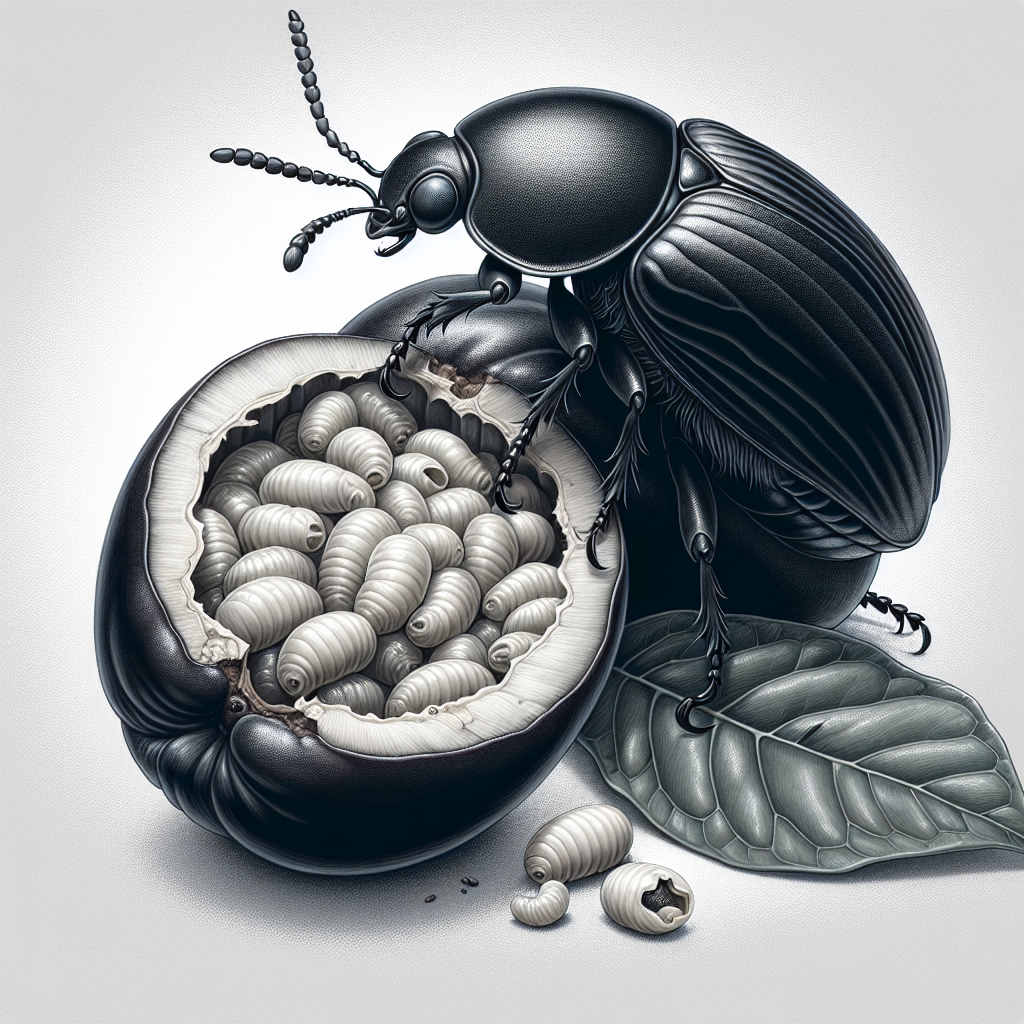
Introduction to coffee berry borer
The coffee berry borer (CBB), scientifically known as Hypothenemus hampei, stands as the primary insect pest threatening coffee production globally. Native to Africa, this tiny black beetle has spread to nearly all coffee-growing regions, inflicting annual losses estimated at $500 million USD. Female borers drill precise entry holes into coffee cherries, laying eggs inside where larvae devour the bean, rendering it unmarketable. In severe infestations, up to 80-100% of berries can be affected, drastically reducing both yield and quality.
CBB thrives in humid, warm tropical climates ideal for coffee cultivation, particularly Arabica Coffee (Typica) and Robusta Coffee. Its cryptic lifestyle—spending most of its life hidden inside the berry—makes detection and control challenging. Early identification and integrated pest management (IPM) are crucial for sustainable coffee farming. This guide equips growers with professional diagnostics, lifecycle knowledge, organic treatments, and prevention strategies to safeguard crops. For small farms battling multiple threats, tools like those in Spring Pest Patrol: Organic AI Strategies to Shield Your Crops from Common Invaders can enhance monitoring efficiency.
Identifying Symptoms & Damage
Spotting CBB damage requires keen observation during berry development stages. The hallmark sign is a small, round entry hole (0.3-0.5 mm diameter) on the berry's exocarp, often frass-covered and located near the calyx. Affected berries appear sunken or deformed, with dark, watery lesions around the entry point. Cut open infested berries to reveal:
- Larval galleries: Zigzag tunnels packed with frass inside the seed.
- Live stages: White larvae, reddish pupae, or black adults (1.2-2.5 mm long) within the endosperm.
- Secondary damage: Premature berry drop, hollowed seeds, or 'canoe-shaped' cracks from larval exit.
Damage escalates with berry maturity: green berries show minimal external signs, but ripe red cherries sink and float in water (a simple flotation test: infested berries float due to air pockets). Yield losses occur via reduced bean weight (up to 50% per berry) and poor cup quality from frass contamination. Differentiate from other borers like fruit borers by the precise, single entry hole and internal seed mining. Scout weekly from pinhead stage, using beating trays or alcohol traps to quantify adults.
Lifecycle and Progression of coffee berry borer
Understanding CBB's lifecycle is key to timing interventions. The entire cycle spans 30-45 days at 25-30°C, with 4-6 generations per crop cycle. Females (the only colonizers) enter berries 8-12 weeks after flowering when exocarp reaches 1.5-3 mm thick—optimal for drilling.
- Adult female (1.6-2.5 mm): Black, shiny, with clubbed antennae; emerges from dried berries, flies short distances to new cherries.
- Eggs (0.1 mm): 20-90 laid singly in endosperm galleries over 5-15 days.
- Larva (stages I-III): Legless, white, feeds voraciously for 10-20 days, creating frass tunnels.
- Pupa: Reddish, non-feeding, 4-7 days in pupal chamber.
- Adult: Emerges within berry or bores out, with females staying inside to produce 'brood galleries.'
Overwintering occurs in fallen or harvested berries as adults. Peak activity aligns with berry expansion (120-180 days post-bloom). Generations overlap, with 200-400 offspring per female. Monitor with brood and alcohol traps baited with methanol:ethanol (3:1).
Environmental Triggers & Risk Factors
CBB proliferation hinges on microclimate: relative humidity >70%, temperatures 22-30°C, and rainfall >1500 mm/year. Berries remain susceptible 9-12 months post-flowering. Key triggers include:
- Berry moisture: Rain softens exocarp, easing entry.
- Shade: Dense canopies retain humidity, boosting survival >90%.
- Altitude: Worst below 1200m; Arabica more vulnerable than Robusta.
- Poor sanitation: Leftover berries harbor 70% of population.
Risk amplifies with drought stress (weaker berries) or excessive nitrogen (lush growth). Proximity to infested farms spreads via flying adults (up to 2 km). Climate change extends suitable conditions, overlapping with diseases like coffee leaf rust. Mitigate by pruning for airflow and timing harvests.
Organic Control & Treatment Plans
Organic IPM emphasizes non-chemical tactics, achieving 50-80% control when layered:
- Cultural: Strip-pick all berries at harvest (manual or mechanical), destroy residues via sun-drying or burial. Prune for 40-50% shade, improve drainage.
- Biological: Release Cephalonomia stephanoderis wasps (200-500/ha) or Phymastichus coffea parasitoids. Beauveria bassiana fungi (1-2 kg/ha, 4x/season) infects 60-80% adults.
- Trapping: Deploy 32 traps/ha (brood + alcohol); refresh weekly. Ethanol-methanol lures capture 10x more females.
- Varietal resistance: Plant CBB-tolerant hybrids like Arabica Coffee (Typica) selections.
- Timing: Apply controls at 'C' stage (small green berries).
Integrated plan: Monitor (threshold: 2-5% infested), trap, release biocontrols, sanitize. Rotate tactics to prevent resistance. Track via flotation tests post-treatment.
Preventing coffee berry borer in the Future
Long-term prevention builds resilient systems:
- Sanitation protocol: 100% berry removal within 2 weeks post-harvest; mulch residues.
- Monitoring network: Trap grids (1/0.5 ha), scout 10% plants weekly.
- Resistant varieties: Hibrido de Timor, Catimor (20-50% lower infestation).
- Shade management: 30-50% canopy, selective pruning for ventilation.
- IPM certification: Follow CBB IPM standards for premium markets.
- Community action: Regional trapping reduces migration.
Annual audits and early detection keep populations below 2%. Combine with soil health practices from Soil Health Mastery: 5 Proven Strategies for Small Farms to Build Fertile Ground Without Breaking the Bank.
Crops Most Affected by coffee berry borer
CBB targets Coffea species exclusively: primarily C. arabica (70% losses) and C. canephora (Robusta, 30%). No significant damage to other crops like cacao, tea, or black pepper, though shared climates increase secondary pest risks like aphids. Arabica varieties suffer most due to thinner berry walls; robusta resists via thicker exocarp and alkaloids. Global hotspots: Latin America (80% production), Africa, Asia.