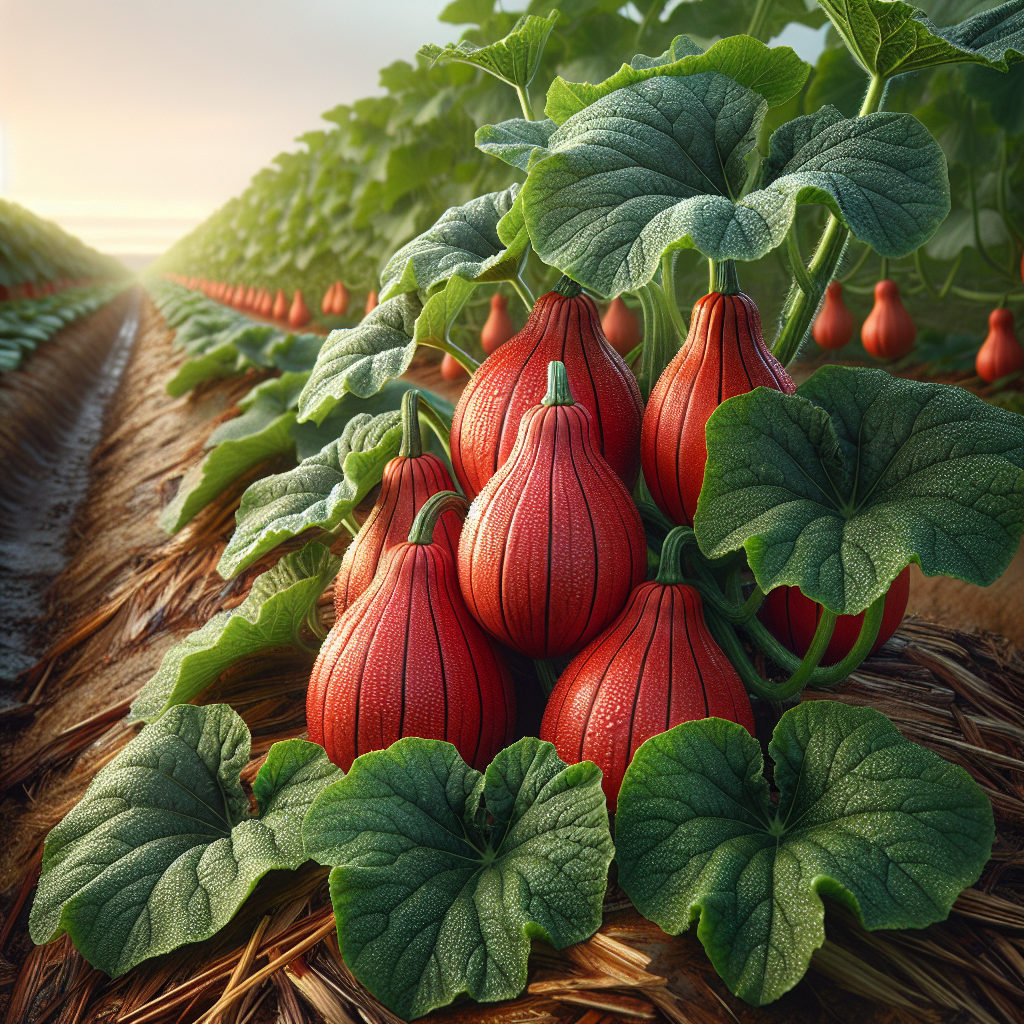
Introduction to Red Kuri Squash
Often marketed as Hokkaido squash, orange Hokkaido, or uchiki kuri, this is a compact winter squash known for its deep orange-red rind and fine-grained flesh that cooks into a smooth, velvety puree. The flavor is notably different from watery summer squash: it is dense, mildly sweet, and often described as chestnut-like, which makes it especially valuable for roasting, soups, gratins, and storage use through autumn and winter.
Historically, Red Kuri belongs to a lineage of Asian selections of Cucurbita maxima, a species that also includes kabocha and many buttercup-type squashes. Compared with large storage pumpkins, it is earlier, more manageable in size, and often better suited to smaller farms and home gardens. Fruits typically weigh 3-5 pounds, though size varies with spacing, fertility, and fruit load. Its compact fruit size is a practical advantage: fruits cure faster, fit easily into standard kitchen use, and are less prone to splitting than oversized squash when irrigation is uneven.
From a production standpoint, this is a rewarding crop because it combines strong culinary appeal with relatively good keeping quality. It is, however, still a cucurbit and therefore vulnerable to classic squash problems such as Cucumber Beetles, vine stress during drought, Powdery Mildew late in the season, and fruit rot in poorly drained soils. Success depends on getting three things right: warm soil at planting, steady vegetative growth before flowering, and uninterrupted plant health during fruit set and ripening. For broader background on related growth habits and species differences, see our Squash guide. For improving fertility and structure before planting, the practical principles in soil health strategies are especially useful.
Botanical Profile of Red Kuri Squash
This is a member of the family Cucurbitaceae, the same plant family as pumpkins, cucumbers, melons, and gourds. Within that family, Red Kuri belongs to Cucurbita maxima, a species generally characterized by round, corky peduncles, broad leaves, and excellent eating quality in many winter squash forms. Unlike some C. pepo squashes, C. maxima types are often somewhat more tolerant of cooler nights once established, though they still require warm conditions to germinate and grow vigorously.
The plant is usually semi-vining to vining, with runners commonly reaching 4-10 feet depending on fertility and water availability. Leaves are large, broad, and softly pubescent, which helps shade the soil but also creates a humid canopy if spacing is too tight. Flowers are monoecious, meaning separate male and female blossoms are borne on the same plant. Male flowers appear first, followed by female flowers identified by the miniature ovary behind the petals. Pollination is mainly by bees, particularly squash bees and honeybees, and inadequate pollinator activity is a major cause of misshapen or aborted fruit.
Red Kuri fruits are typically turbinate or onion-shaped, with a pointed blossom end and smooth to slightly ribbed skin. The rind matures from greenish juvenile tones to a saturated red-orange. The flesh is dry-matter rich compared with many carving pumpkins, which is why it roasts so well and stores as a premium culinary squash. Seeds are cream-colored, broad, and viable when fully mature, but seed saving requires isolation from other C. maxima types such as kabocha or buttercup to avoid cross-pollination.
Physiologically, the crop transitions through four critical phases: emergence and early root establishment, rapid vine and leaf expansion, flowering and pollination, and fruit fill followed by rind hardening. Yield potential is largely determined by how much healthy leaf area the plant develops before and during early flowering. Stressed plants may still set fruit, but fruits remain undersized, poorly colored, or low in dry matter.
Soil, pH, and Climate Requirements for Red Kuri Squash
This crop performs best in deep, friable, organically enriched loam with excellent drainage and strong moisture-holding capacity. Ideal soil texture is sandy loam to loam; heavy clay can work if raised beds, compost incorporation, and surface mulching are used to improve aeration and reduce standing moisture around the crown. Squash roots are vigorous but surprisingly sensitive to oxygen deprivation. If water remains in the planting zone longer than 24 hours after a heavy irrigation or rain, expect slowed growth, yellowing lower leaves, and greater root disease pressure.
The preferred pH range is 6.0-6.8, with 6.3-6.7 being especially reliable for nutrient availability. Below pH 5.8, calcium, magnesium, and phosphorus efficiency can decline, and plants may look stunted even in fertilized ground. Above pH 7.2, micronutrient issues such as iron or manganese deficiency may appear as interveinal chlorosis on younger leaves. A professional approach is to test soil several weeks before planting and correct pH in advance rather than after vines begin to run.
Red Kuri is a warm-season annual that needs a long, frost-free period, usually 90-105 days from direct sowing depending on temperature and strain. Soil temperature at sowing should be at least 65°F (18°C), with 70-95°F (21-35°C) ideal for rapid emergence. Cold soil is one of the most common causes of poor stands; seeds sitting in cool, wet ground are vulnerable to rot before they sprout. Air temperatures of 70-85°F (21-29°C) promote steady vegetative growth. When daytime highs regularly exceed 95°F (35°C), pollen viability and fruit set can decline, especially if plants are simultaneously under moisture stress.
Full sun is mandatory for top yields, meaning at least 8 hours of direct light daily. In marginal climates, choose the warmest field exposure available, preferably with good morning sun and airflow. Wind protection is useful in young plantings, but mature vines should not be crowded into stagnant, humid corners because reduced air circulation increases foliar disease. In cooler temperate regions, black biodegradable mulch or black plastic can raise soil temperature and accelerate early growth.
Nutritionally, aim for moderate nitrogen and ample phosphorus and potassium. Excess nitrogen creates lush vines at the expense of flowering and can make the canopy more disease-prone. A realistic target for fertile garden soil is incorporation of well-finished compost plus a balanced preplant organic fertilizer. Potassium matters especially for fruit size, color, rind strength, and storage life.
Step-by-Step Planting & Propagation
Start with high-quality seed less than four years old, as cucurbit germination can decline with poor storage. In warm climates, direct seeding is the standard and usually best method because squash roots dislike disturbance. In shorter-season regions, transplants can be used, but they must be grown in individual cells or biodegradable pots to minimize root shock.
Prepare the bed 2-3 weeks before planting by loosening soil to at least 10-12 inches deep. Incorporate 2-4 inches of finished compost and, if needed, adjust pH based on soil test results. Shape low hills or broad mounds if drainage is imperfect. Hills do not need to be tall cones; broad raised circles 4-6 inches high and 18-24 inches across are better because they warm quickly while still holding moisture.
For direct sowing, place 2-3 seeds per station 1-1.5 inches deep. Space stations 3-4 feet apart in rows 6-8 feet apart for vining culture. In smaller gardens where vines are gently guided, spacing can be tightened slightly, but overcrowding sharply increases mildew pressure. Once seedlings have their first true leaves, thin to the strongest single plant per station, or two plants where fertility and room are abundant.
For transplanting, sow seeds indoors 2-3 weeks before the last frost date. Keep media warm, ideally 75-85°F (24-29°C), for rapid germination. Harden plants gradually for 5-7 days before setting out. Transplant only when nights are consistently above 50°F (10°C) and the soil has warmed properly. Plant at the same depth as the seedling plug, avoiding burial of the stem, which can encourage rot under damp conditions.
Immediately after planting, water thoroughly to settle soil around the seed or root ball. The goal is even moisture in the top 4-6 inches of soil without saturation. If using drip irrigation, one deep watering after sowing followed by lighter irrigations until emergence is preferred to frequent shallow sprinkling. Seeds need a moist seed zone, not a swamp.
In commercial-style layouts, many growers use woven landscape fabric or organic mulch once the soil is warm. Mulch reduces weed competition, buffers soil moisture, and keeps fruit cleaner. Avoid placing thick mulch over cold spring soil too early, as it can slow establishment.
Pollination is essential. If bee activity is weak, plantings may benefit from nearby habitat or insectary species. Hand pollination is possible for small-scale production: collect pollen from a freshly opened male flower in the morning and transfer it to the stigma of a newly opened female flower.
Care & Maintenance regimes for Red Kuri Squash
Irrigation should be managed by growth stage rather than by a vague fixed schedule. During establishment, maintain consistent moisture in the top 3-4 inches of soil so seedlings do not pause. Once vines begin to run, roots should be encouraged deeper by watering thoroughly but less often. As a working benchmark, mature plants generally need the equivalent of 1-1.5 inches of water per week from rain or irrigation, but sandy soils and hot weather can push that higher.
The right moisture level feels like a wrung-out sponge in the root zone: cool, cohesive soil that holds together when squeezed but does not release water. Overwatered beds smell sour, stay shiny-wet below the surface, and often produce pale leaves, slowed extension growth, and sudden wilt despite wet soil due to root oxygen stress. Underwatered plants show midday wilting that does not recover by evening, dull gray-green foliage, flower drop, and fruits that stop sizing.
The most critical period is from first female bloom through early fruit expansion. Water deficits then can cause blossom abortion, incomplete pollination outcomes, and fibrous flesh later at harvest. Drip irrigation is preferred because overhead watering wets leaves and flowers, increasing disease risk and reducing bee activity during irrigation windows.
Fertility is best applied in stages. If plants are pale or slow after establishment, side-dress with a modest nitrogen source when vines begin to run. Do not push heavy nitrogen once female flowers appear. At early fruit set, a potassium-forward side-dress or fertigation supports sugar accumulation and rind quality. If leaf tissue is dark green and vigorous, additional feeding may not be needed.
Weed control matters most in the first 4-6 weeks. Once vines cover the ground, canopy shading suppresses many annual weeds. Cultivate shallowly to avoid damaging feeder roots. Mulch with clean straw or leaf mold after the soil has warmed can dramatically reduce hoeing and keep fruits off bare soil.
Pruning is usually unnecessary, but in tight spaces some growers pinch excessively long runners after several fruits have set to direct energy into ripening. This is optional and should only be done on healthy plants in dry weather to reduce wound-related disease entry. Remove damaged or severely diseased leaves promptly, but avoid excessive defoliation because fruit sweetness and storage quality depend on active foliage late into the season.
Container production is possible only in very large containers, generally 20 gallons minimum per plant, with vigilant irrigation and feeding. Even then, field or raised-bed culture is more reliable.
Pests, Diseases & Organic Management
The major early-season insect threat is Cucumber Beetle. Adults chew cotyledons and young leaves, scar stems, and can vector Bacterial Wilt in susceptible cucurbits. Use floating row cover immediately after planting to exclude beetles, but remove it at flowering unless you hand-pollinate. Clean field edges, prompt residue removal, and avoiding successive cucurbit plantings in the same bed also help reduce beetle pressure.
Squash Vine Borer is less commonly devastating in some C. maxima than in certain summer squash, but it can still occur depending on region. Watch for sudden wilting of individual runners, frass at stem bases, and tunneling. Keeping plants vigorous, rotating beds, and using row cover before flowering are the most practical organic defenses. Mounding a little soil over runner nodes can encourage secondary rooting, which sometimes helps a plant survive partial stem damage.
Squash Bugs feed by piercing leaves and vines, causing stippling, yellowing, and eventual collapse in heavy infestations. Inspect leaf undersides for bronze egg clusters and crush or remove them early. Nymphs are easier to control than adults. Straw or board traps can be used to collect hiding adults in the morning.
Aphids may colonize undersides of leaves, especially when nitrogen is excessive. Often they are manageable if beneficial insects are present. Strong water sprays, insecticidal soap, and habitat for predators can keep outbreaks below damaging levels.
Powdery Mildew is the most common late-season foliar disease. It begins as white powdery patches on leaves and petioles, reducing photosynthesis and shortening fruit maturity. Prevention is far more effective than rescue. Space plants generously, irrigate at the soil level, avoid excess nitrogen, and remove heavily infected leaves if disease appears early. Organic sulfur or potassium bicarbonate products can suppress spread when applied at first detection, but good coverage is essential.
Downy Mildew, where present, causes angular yellow lesions bounded by veins and gray-purple sporulation beneath leaves. It progresses rapidly under humid conditions. Because control is difficult once established, airflow and vigilant scouting are critical.
Fruit rots and crown rots usually trace back to poor drainage, fruit sitting on wet soil, or mechanical injury to the rind. Mulching under fruits, rotating crops for 3-4 years away from cucurbits, and harvesting before prolonged cold wet weather are strong preventive steps.
Organic management works best as a system: crop rotation, sanitation, row cover, pollinator protection, balanced nutrition, and consistent scouting 2-3 times per week rather than reaction after severe infestation.
Harvesting, Curing & Optimal Storage
Harvest when the rind has reached full deep red-orange color, the skin is hard enough that a fingernail does not easily puncture it, and the stem has begun to cork and dry. Do not rely on color alone; immature fruits can color before the interior has fully developed dry matter. If frost threatens, harvest mature or nearly mature fruits promptly because even light frost damages rind tissue and shortens storage life.
Cut fruits from the vine with pruners, leaving 2-4 inches of stem attached. Never carry fruits by the stem, as stem breakage opens the way for rot organisms. Handle gently: invisible bruises often become storage failures weeks later.
Curing improves rind toughness and wound healing. Hold fruits for 10-14 days at about 80-85°F (27-29°C) with good airflow if conditions allow. In home settings, a warm covered porch, greenhouse bench out of direct scorching sun, or airy indoor room can work. If weather is cool, even a shorter cure at slightly lower temperatures is better than none.
After curing, store at 50-55°F (10-13°C) with 50-70% relative humidity. Lower temperatures can cause chilling injury, while higher humidity without airflow encourages mold. Do not stack fruits deeply. Place them in a single layer or shallow shelving arrangement so each fruit can be inspected. Under good conditions, Red Kuri often stores 2-4 months, though it is usually best in eating quality within the first 6-10 weeks after curing when sweetness and texture are excellent.
Check stored squash every 7-10 days. Remove any fruits with soft spots, collapsed areas, or mold immediately. A healthy stored fruit remains firm, dry, and evenly colored. If the stem end becomes soft or the rind develops watery patches, use it quickly rather than attempting long storage.
Companion Planting for Red Kuri Squash
The most useful companions are those that support pollination, suppress pests, or share space without competing heavily during the squash establishment phase. Traditional intercropping with Corn works well when spacing is generous and the corn is established slightly ahead of the squash, creating a classic structural polyculture. Corn should not be planted so densely that it shades the squash canopy for most of the day.
Nasturtium is a strong companion around bed edges because it attracts pollinators and beneficial insects while also functioning as a visual trap crop for some sap-feeding pests. Radish can be used as a quick early companion because it matures before squash vines dominate the bed, helping mark rows and lightly occupy surface soil during the slow seedling stage. Clover is useful as a living pathway or adjacent groundcover rather than directly in the hill; it protects soil, supports beneficial insects, and can contribute nitrogen cycling over time.
Avoid close pairing with other sprawling cucurbits in small spaces because competition, shading, and shared pest pressure increase significantly. Likewise, keep perennial herbs or woody plants far enough away that vines can be monitored, harvested, and kept dry around the crown. The best companion system for this crop is not crowding, but intelligent layering: upright support species nearby, insectary flowers at margins, and low-growing short-duration crops that finish before the vines claim the area.