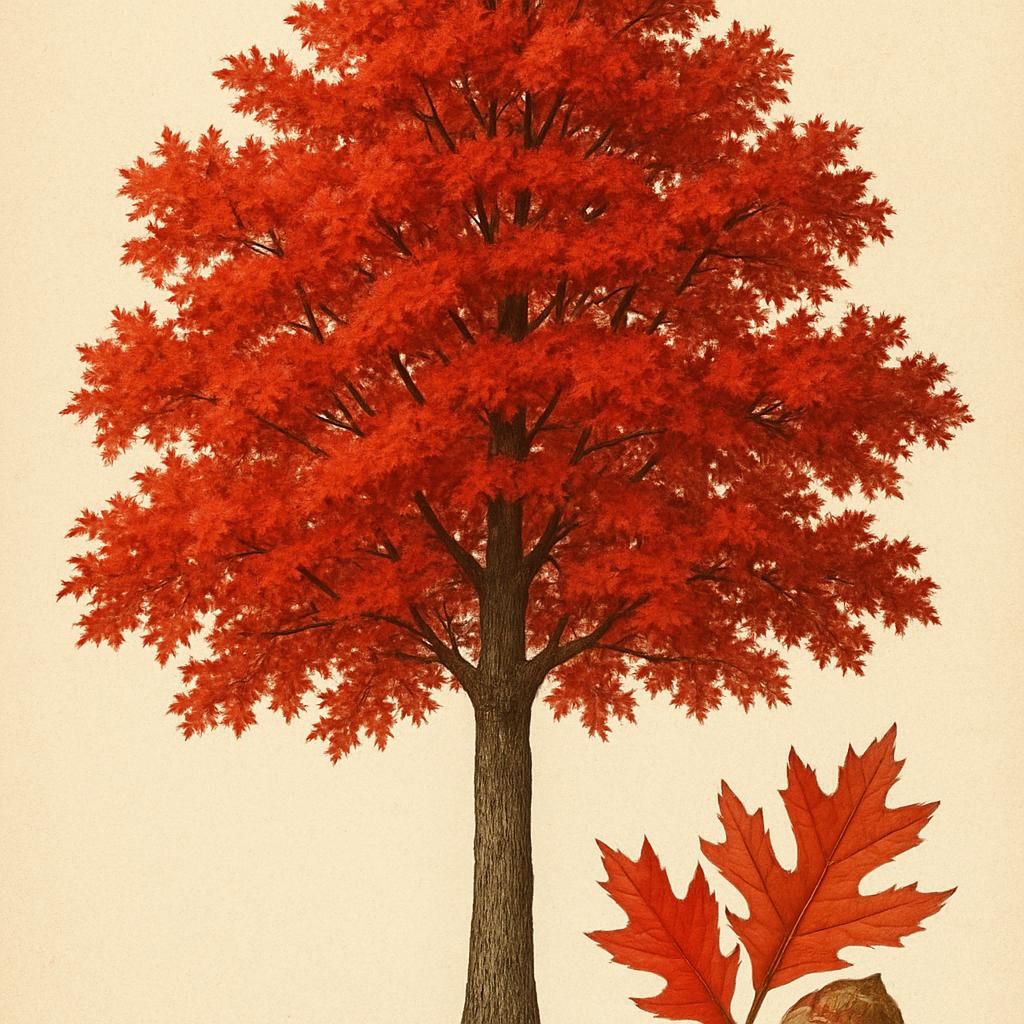
Introduction to Quercus rubra
Quercus rubra, the northern red oak, is a cornerstone species in temperate hardwood forestry and agroforestry systems. Valued for its rapid growth, straight bole, and high-quality lumber, it also provides critical wildlife habitat and seasonal aesthetic appeal with brilliant crimson autumn leaves. Professional growers recognize its importance in sustainable timber production, carbon sequestration, and long-term land stewardship programs.
Northern red oak thrives across a wide native range from Nova Scotia to Minnesota and southward to the Appalachian highlands. Its adaptability to moderately fertile, well-drained soils and tolerance of periodic drought once established make it a resilient choice for both commercial plantations and silvopasture systems. This definitive growing guide synthesizes decades of forestry research and practical field experience to deliver actionable protocols for successful cultivation.
Botanical Profile of Quercus rubra
Quercus rubra belongs to the Fagaceae family and is classified within the red oak group. Mature specimens reach 60–90 feet in height with a broad, rounded crown spanning 40–60 feet. The bark is dark gray to nearly black, developing shallow fissures and flat ridges with age. Leaves are simple, alternate, and 5–8 inches long with 7–11 pointed lobes and deep sinuses; they turn deep red to scarlet in fall.
Acorns mature in two growing seasons, measuring ¾–1¼ inches long with a shallow, saucer-shaped cup covering only the base. The tree produces both male catkins and female flowers in spring, with wind-mediated pollination. Northern red oak exhibits moderate shade tolerance as a sapling but requires full sun for optimal timber quality and mast production in maturity.
Soil, pH, and Climate Requirements for Quercus rubra
Successful establishment of Quercus rubra demands careful attention to soil texture, drainage, and nutrient status. The species performs best on deep, loamy soils with good internal drainage yet adequate moisture-holding capacity. Avoid heavy clays or sites with prolonged seasonal flooding.
| Parameter | Ideal Range | Notes |
|---|---|---|
| Soil Texture | Loam to sandy loam | Avoid compacted or heavy clay soils |
| Soil pH | 5.0–6.8 | Slightly acidic to neutral; liming rarely needed |
| Organic Matter | 3–6% | Incorporate well-rotted compost at planting |
| Drainage | Well-drained | Critical for root health; raised beds on marginal sites |
| Minimum Winter Temp | –30°F (–34°C) | Fully hardy in USDA zones 4–7 |
| Growing Season | 120–180 frost-free days | Optimal in temperate continental climates |
| Annual Precipitation | 30–50 inches | Supplemental irrigation beneficial first 2–3 years |
Step-by-Step Planting & Propagation
Site preparation begins 6–12 months prior to planting. Conduct soil tests and correct deficiencies, particularly phosphorus and potassium. Clear competing vegetation and incorporate 2–3 inches of organic matter into the top 12 inches of soil. On slopes, install contour berms to reduce erosion.
Northern red oak is primarily propagated from seed. Collect sound acorns in autumn when they turn brown and detach easily. Float-test to remove non-viable seed, then stratify at 33–38°F for 30–60 days. Sow stratified acorns 1–2 inches deep in prepared beds or directly into final positions at 8–10 foot spacing for timber production.
Bare-root or container-grown seedlings may be planted from late fall through early spring while dormant. Dig holes twice the width of the root ball and at the same depth as the nursery container. Backfill with native soil amended with aged compost, firm gently, and water thoroughly. Apply 3–4 inches of organic mulch in a 3-foot radius, keeping mulch 4 inches from the trunk.
Care & Maintenance regimes for Quercus rubra
Young northern red oaks require consistent moisture and weed suppression during the first three growing seasons. Established trees become increasingly drought tolerant but benefit from supplemental irrigation during prolonged dry spells to maintain growth rates and acorn production.
| Season | Watering Schedule | Fertilizer Application | Pruning Schedule |
|---|---|---|---|
| Spring | 1 inch per week if rainfall insufficient | 10-10-10 slow-release at ½ lb per inch trunk diameter | Remove dead or crossing branches |
| Summer | Deep soak every 10–14 days in drought | None unless deficiency symptoms appear | Minimal; tip prune only if necessary |
| Autumn | Reduce frequency; maintain soil moisture | None | Structural pruning of young trees |
| Winter | None required | None | Dormant-season corrective pruning |
Monitor leaf color and annual shoot extension to adjust fertility. Avoid high-nitrogen fertilizers that promote weak growth susceptible to pests. Maintain a 3–4 foot weed-free zone around each tree using organic mulch or shallow cultivation.
Pests, Diseases & Organic Management
Quercus rubra faces pressure from several insect pests and fungal pathogens. Aphids and scale insects can distort new growth, while gypsy moth (not in wiki list) larvae occasionally defoliate crowns. Two-lined chestnut borer targets stressed trees, creating D-shaped exit holes.
Fungal threats include oak wilt (not in wiki list), anthracnose, and powdery mildew. Maintain tree vigor through proper spacing, mulching, and irrigation to reduce susceptibility. For organic control, introduce beneficial insects such as lady beetles and lacewings; apply horticultural oil or neem during dormant or early-season infestations.
Sanitation is critical: promptly remove and destroy infected branches and fallen leaves. Avoid wounding trunks during maintenance activities, as fresh wounds provide entry points for pathogens. In high-pressure regions, plant resistant provenances and diversify species within stands.
Harvesting, Curing & Optimal Storage
Timber harvest of Quercus rubra typically occurs at 60–80 years when diameter at breast height reaches 18–24 inches. Selective thinning begins around year 20–25 to favor straight, dominant stems. Log quality is maximized by minimizing knots and reaction wood through early formative pruning.
After felling, buck logs to length and transport promptly to the sawmill to prevent checking and insect damage. Air-dry lumber under cover for 6–12 months, targeting 12–15% moisture content. Kiln drying at 140–160°F accelerates the process while sterilizing any residual pests.
Store finished boards flat, sticker-stacked, and protected from direct sun and rain. Properly cured red oak exhibits excellent stability and is suitable for flooring, furniture, and cooperage. Acorn mast, when collected, should be dried to below 10% moisture and stored in breathable containers at 35–40°F.
Companion Planting for Quercus rubra
Northern red oak integrates well into mixed hardwood plantings and silvopasture systems. Compatible understory species include blackberry, raspberry, and native ferns that tolerate partial shade. Leguminous ground covers such as clover improve soil nitrogen and reduce erosion between rows.
Avoid planting shallow-rooted competitors directly beneath the drip line. Species such as walnut may exhibit mild allelopathy, so maintain 30-foot buffers. In agroforestry designs, interplant with hazelnut or chestnut on wider spacing to create multi-layered canopies that enhance biodiversity and income diversification.
Strategic companion planting also supports beneficial insect populations that help suppress aphids and other pests. Flowering perennials such as yarrow and thyme attract pollinators and predatory insects, contributing to an integrated, low-input management regime.