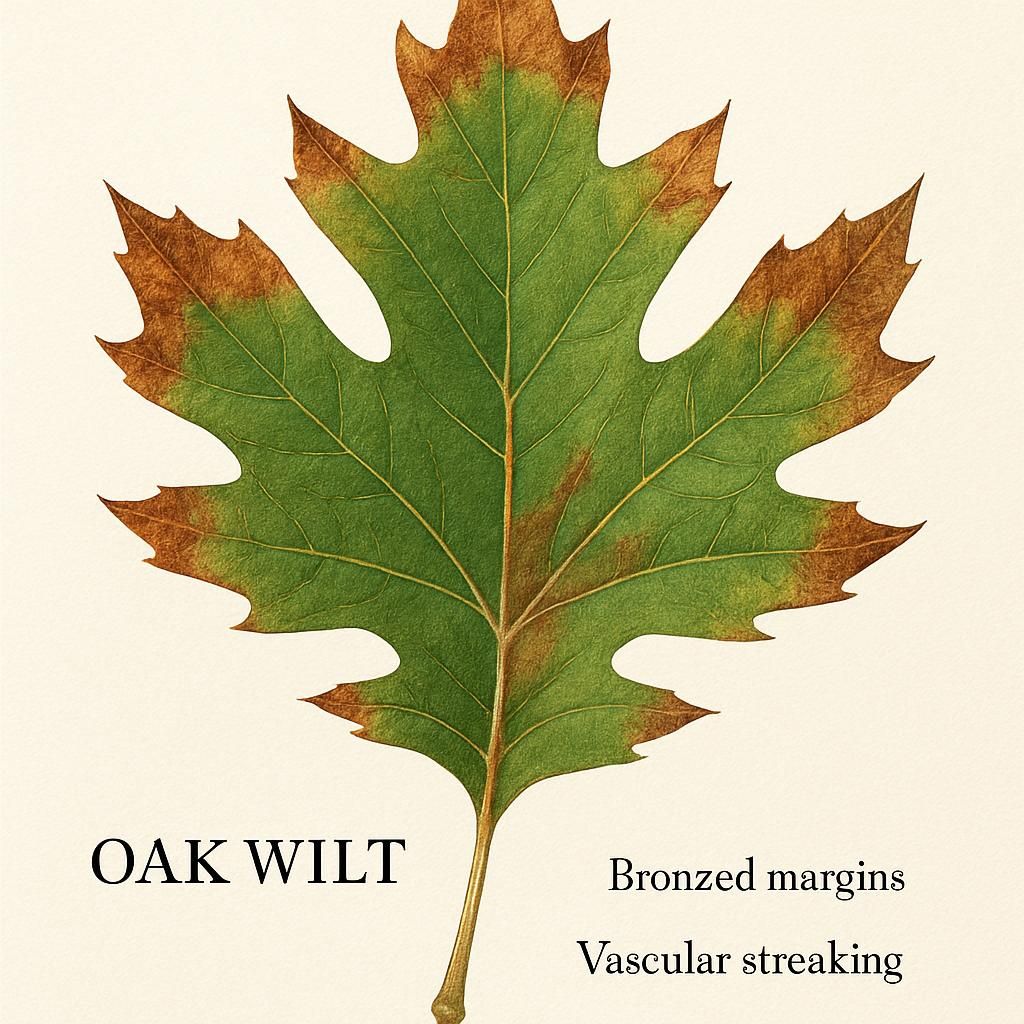
Introduction to Oak wilt
Oak wilt, caused by the fungus Bretziella fagacearum, is one of the most destructive diseases affecting oak species in North America. The pathogen invades the water-conducting vessels of trees, triggering the formation of tyloses that block vascular flow and cause rapid wilting. First identified in the 1940s, the disease has spread across the eastern and central United States and parts of Canada, impacting both urban landscapes and rural forests. Professional arborists and agricultural managers must understand its biology to implement timely interventions that protect valuable oak stands.
Identifying Symptoms & Damage
Early detection is critical because symptoms progress quickly once the fungus establishes. In red oaks (Quercus section Lobatae), leaves develop a bronzed appearance starting at the margins and progressing inward, often accompanied by premature leaf drop while green leaves remain attached. White oaks (Quercus section Quercus) typically show more localized branch dieback and slower progression. Vascular discoloration appears as dark streaking in the outer sapwood when bark is peeled back. Diagnostic confirmation requires laboratory isolation of the fungus or molecular testing because similar symptoms can be caused by drought stress or other vascular pathogens.
Lifecycle and Progression of Oak wilt
The disease cycle involves both above-ground and below-ground transmission. Overland spread occurs when nitidulid beetles carry spores from fungal mats on recently killed trees to fresh wounds on healthy oaks. Below-ground spread happens through root grafts between neighboring trees of the same species. The following table outlines the key stages:
| Stage | Description | Duration | Key Events |
|---|---|---|---|
| Spore Production | Fungal mats form under bark of dying red oaks | 2-4 weeks after tree death | Beetles attracted to mats |
| Insect Vectoring | Nitidulid beetles acquire spores while feeding | Spring through fall | Transmission to fresh wounds |
| Root Graft Spread | Fungus moves through interconnected roots | Year-round | Rapid tree-to-tree infection |
| Tree Response | Tylose formation blocks xylem vessels | Days to weeks | Wilting and vascular streaking |
| Tree Death | Complete vascular failure | 4-8 weeks in red oaks | Crown dieback and mortality |
Environmental Triggers & Risk Factors
Oak wilt outbreaks intensify during periods of high beetle activity coinciding with tree wounding. Warm spring and early summer temperatures (15-30°C) favor fungal mat formation and insect flight. Construction, pruning, or storm damage that creates fresh wounds increases susceptibility. Red oaks are significantly more vulnerable than white oaks due to faster fungal colonization. High-density oak stands with extensive root grafting facilitate underground spread. Sites with compacted soils or recent flooding stress trees, lowering natural defenses against the pathogen.
Organic Control & Treatment Plans
Integrated management focuses on sanitation, disruption of root connections, and targeted chemical intervention where organic options are insufficient. The following table summarizes treatment options and recommended frequencies:
| Treatment Option | Application Method | Frequency | Notes |
|---|---|---|---|
| Root Severance Trenching | Mechanical cut 1.2-1.5 m deep around infected trees | Once per outbreak | Prevents root graft transmission |
| Sanitation Removal | Prompt felling and chipping or burning of infected trees | Within 30 days of detection | Eliminates fungal mat sources |
| Wound Protection | Apply non-toxic wound dressings immediately after injury | As needed during high-risk periods | Reduces overland infection |
| Systemic Fungicide Injection | Propiconazole injected into root flare | Every 1-2 years in high-value trees | Provides 12-24 months protection |
| Beetle Traps & Sanitation | Deploy fermenting bait traps near infected areas | Weekly during spring/summer | Reduces vector populations |
Preventing Oak wilt in the Future
Prevention begins with avoiding wounds to oaks between April and July when beetle activity peaks. Schedule all pruning during dormant winter months and immediately paint any unavoidable wounds with wound sealant. Maintain a minimum 15-meter buffer between red oak groups by installing root severance trenches before construction projects. Educate landowners about the risks of moving firewood from infected areas. Monitor oak stands annually for early symptoms and maintain detailed records of tree health to enable rapid response.
Crops Most Affected by Oak wilt
While primarily a forest and landscape disease, oak wilt indirectly affects agricultural operations that rely on oak woodlots for windbreaks, timber, or wildlife habitat. Species most impacted include northern red oak (Quercus rubra), pin oak, black oak, and scarlet oak. White oak species exhibit greater tolerance but can still succumb under heavy inoculum pressure. No major fruit or vegetable crops listed in available references are directly affected, though loss of oak canopy can alter microclimates for adjacent plantings such as Apple orchards or Grapes.