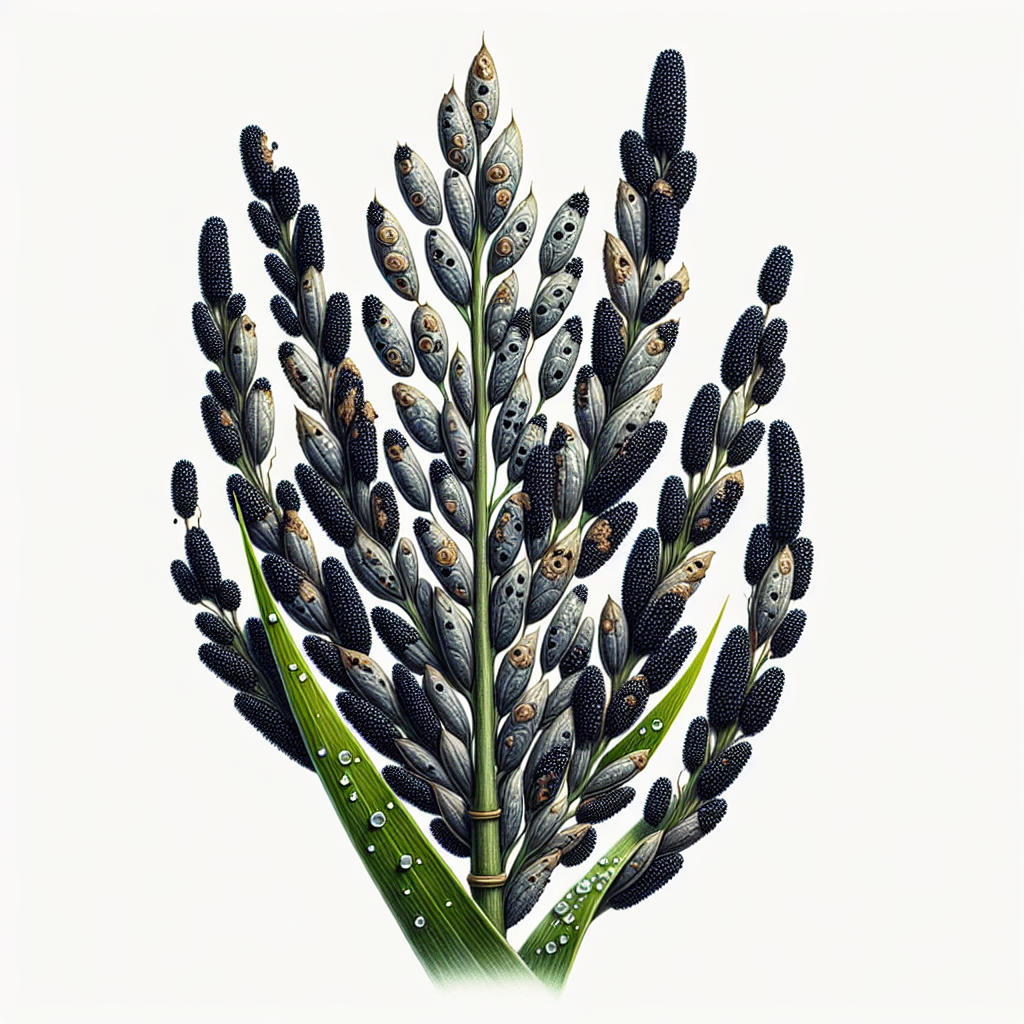
Introduction to Pyricularia
Pyricularia, commonly known as the blast fungus, represents one of the most devastating fungal diseases affecting cereal crops worldwide. Primarily associated with Pyricularia oryzae (the causal agent of rice blast), this pathogen also impacts other grasses like wheat, barley, and turfgrasses. First identified in rice fields in ancient China over 1,000 years ago, Pyricularia has since become a global threat, causing annual losses estimated at $60 billion in rice production alone. The fungus produces asexual spores (conidia) that spread via wind and rain splash, making it highly contagious in dense plantings.
As a professional botanist and agricultural expert, understanding Pyricularia is crucial for farmers growing staple grains. This guide provides definitive diagnostic criteria, lifecycle insights, and proven management strategies. Whether you're battling rice blast in paddies or leaf spots on turf, proactive measures can minimize damage. For small farms, integrating Rice (crop) cultivation with blast-resistant varieties is key to profitability. Read our comprehensive blog post on why misidentifying plants costs small farms thousands to avoid costly errors.
The pathogen's adaptability to new hosts and climates exacerbates its threat, especially with climate change increasing humidity in non-traditional areas. Early detection through symptoms like spindle-shaped lesions is vital. This SEO-optimized guide equips you with practical, professional-grade advice to protect yields and sustain organic farming practices.
Identifying Symptoms & Damage
Pyricularia manifests in distinct phases, each with characteristic symptoms for accurate diagnosis. On leaves, initial lesions appear as small, grayish-white spots (1-3 mm) with dark brown borders, resembling frog's eyes. These evolve into diamond or spindle-shaped lesions (1-10 mm long) with gray-white centers and lesion bands—dark margins that give a 'blast' appearance. Under humid conditions, centers turn necrotic with acervuli (spore-producing structures) visible as black dots.
Neck blast, the most destructive stage, targets the panicle node, causing it to rot and produce gray-white fungal growth. Affected panicles droop, grains fail to fill, leading to 100% yield loss in severe cases. On nodes, lesions girdle stems, causing lodging. Seedlings show oval lesions on coleoptiles, often fatal. Differentiate from brown spot (disease) by Pyricularia's lesion shape and rapid sporulation.
Damage quantification: Mild infections reduce photosynthesis by 20-30%; severe epidemics wipe out 50-100% of yield. In corn, gray leaf spots mimic northern corn leaf blight, but Pyricularia lesions lack zonate patterns. Use a 10x hand lens to spot two-celled pyriform conidia for confirmation. Economic impact is staggering— in Asia, rice blast destroys enough grain annually to feed 60 million people.
Lifecycle and Progression of Pyricularia
Pyricularia oryzae completes its lifecycle in 5-7 days under optimal conditions, enabling explosive epidemics. It overwinters as mycelium or conidia in infected residue, seeds, or collateral hosts like barnyard grass. Primary inoculum activates in spring with warming soils (15-30°C) and moisture.
The asexual cycle dominates: Appressoria form on hyphae, penetrate leaves via turgor pressure, and colonize mesophyll in 24-48 hours. Conidia (10-15 x 6-9 μm, two-celled, hilum at base) mature in acervuli, ejecting via guttation water. Wind and splash disperse them up to 1 km. Infection requires 6-12 hours leaf wetness; germination peaks at 25-28°C, 95% RH.
Sexual phase (ascospores in perithecia) occurs on residue, aiding genetic diversity. Progression: Incubation 3-5 days; sporulation 24 hours post-lesion. Multiple cycles per season amplify spread. In flooded rice, waterborne conidia infect seedlings; in upland systems, wind drives aerial spread. Lifecycle diagrams show vulnerability windows: tillering to heading stages.
Environmental Triggers & Risk Factors
Pyricularia thrives in warm (24-28°C daytime, >20°C night), humid (>90% RH) conditions with 6+ hours leaf wetness. Excessive nitrogen fertilizer promotes succulent tissue, increasing susceptibility—rates >150 kg/ha double infection. High plant density (>40 hills/m²) creates microclimates favoring spore dispersal.
Flooded fields with intermittent drainage stress plants, mimicking drought susceptibility. Clay soils retain moisture, prolonging wetness duration. Volunteer plants and grassy weeds harbor inoculum. Climate change extends wet seasons, shifting risks to new latitudes. Risk index: Score temperature (0-3), humidity (0-3), N-fertilizer (0-2); >5 signals outbreak.
Monocropping depletes soil micronutrients (Si, Mn), weakening defenses. Seedborne inoculum from poor certification infects 20% seedlings. Monitor with weather stations; thresholds: 25°C, 95% RH, wind <2 m/s for splash spread.
Organic Control & Treatment Plans
Organic management integrates cultural, biological, and botanical controls for sustainable suppression. Start with certified disease-free seeds; hot water treatment (52°C, 10 min) eliminates 95% inoculum. Use resistant varieties like IR36, Pi-ta gene carriers reducing severity 70%.
Cultural: Balance N (80-100 kg/ha split applications), apply silica (50 kg/ha rice hull ash) for cell wall fortification. Avoid excess water; alternate wetting-drying cycles. Trichoderma harzianum (5 kg/ha) colonizes residue, outcompeting Pyricularia—apply pre-flooding.
Botanicals: Neem oil (5 ml/L) + garlic extract inhibits spore germination 80%. Bacillus subtilis (QST 713, 5 L/ha) produces antibiotics; apply at tillering/heading, 7-day intervals. Silicon fertilizers (20% K2SiO3, 2 foliar sprays) boost resistance 50%. Treatment plan: Scout weekly; at 1% incidence, apply biofungicide + remove centers. Rotate with soybeans breaking cycles.
Integrated: Mulch residue to bury inoculum; burn only if incidence >20%. Efficacy: Combined approach yields 85% control vs. 40% single method.
Preventing Pyricularia in the Future
Long-term prevention hinges on IPM frameworks. Plant early maturing varieties escaping peak humidity. Site selection: Avoid low-lying frost pockets; ensure 30% sunlight penetration. Crop rotation (2-3 years non-grass) reduces soil inoculum 90%.
Sanitation: Destroy stubble post-harvest; deep plow buries mycelium. Eradicate wild rice, barnyard grass within 500m. Monitor with sticky traps counting conidia (>100/cm² = alert). Forecast models integrate weather data for spray timing.
Build soil health: Add compost (10 t/ha) enhancing microbiome antagonism. Scout grids (1/m²); rogue infected tillers. Community action: Synchronize planting ±10 days diluting inoculum. Future tech: CRISPR-edited resistance genes promise durable protection. Annual audits track progress; aim <5% incidence.
Crops Most Affected by Pyricularia
Rice (Oryza sativa) tops the list, with indica/japonica varieties equally vulnerable; Basmati Rice, Jasmine Rice suffer in tropics. Wheat experiences leaf/node blast in humid subtropics. Barley shows crown sheath blight. Turfgrasses like bentgrass develop melting-out. Emerging: Quinoa, millet in high-rain areas. Minor: Oats, finger millet. Global hotspots: Asia (90% rice blast), USA (turf), Africa (finger millet).