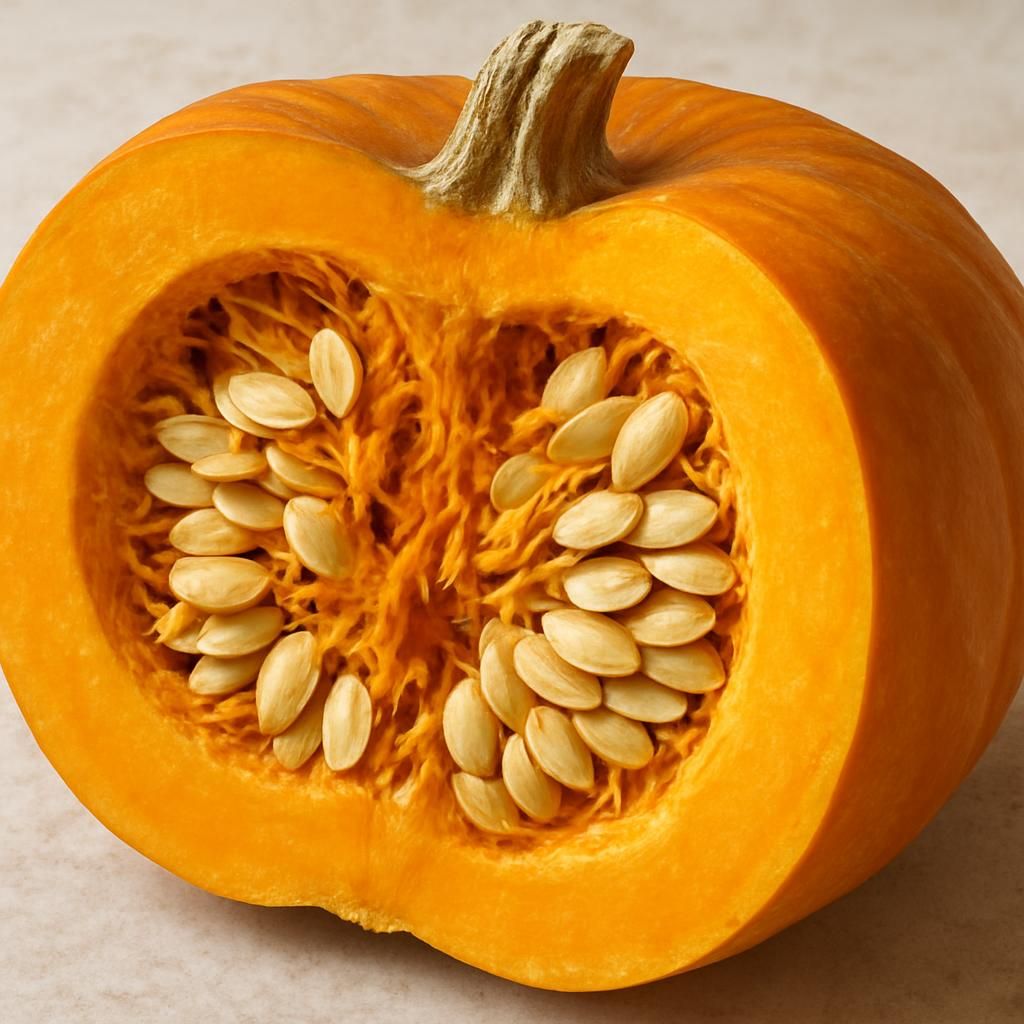
Introduction to Pumpkin Seed (Lady Godiva)
Pumpkin Seed (Lady Godiva) is a specialized variety of Cucurbita pepo developed for commercial and home seed production rather than flesh. The cultivar originated from European breeding programs that selected for thin or absent seed coats, resulting in "naked" seeds that require no hulling. This makes Lady Godiva one of the most efficient pumpkins for growers targeting the edible seed market, offering high protein content and excellent roasting qualities.
The variety is valued by both small-scale and commercial producers because it matures in approximately 100–110 days and produces 300–500 seeds per fruit. The fruits themselves are not ideal for culinary use due to thin, stringy flesh, so the focus remains entirely on seed yield and quality. Lady Godiva pumpkins are typically round to slightly flattened, weighing 4–8 kg with a mottled green and orange rind.
Botanical Profile of Pumpkin Seed (Lady Godiva)
Lady Godiva belongs to the Cucurbitaceae family and exhibits the classic vining growth habit of most pumpkins. Plants produce long, sprawling vines that can reach 3–5 meters, requiring substantial space or vertical support. The leaves are large, palmate, and deeply lobed with a rough texture that helps deter some insect feeding.
Flowers are bright yellow and typically appear 45–55 days after planting. Lady Godiva is monoecious, producing separate male and female flowers on the same plant. Female flowers are identifiable by the small ovary at the base that will develop into the fruit. Pollination is primarily carried out by bees, making the presence of pollinators critical for fruit set and seed development.
The seeds are the defining feature: they lack the thick, fibrous hull found in standard pumpkins, resulting in a thin, papery membrane that is easily removed or consumed. The seeds are rich in oil (approximately 45–50%) and protein (30–35%), making them highly nutritious.
Soil, pH, and Climate Requirements for Pumpkin Seed (Lady Godiva)
Lady Godiva pumpkins perform best in well-drained, fertile soils with high organic matter content. They are moderately heavy feeders and respond well to compost incorporation before planting.
| Parameter | Ideal Range | Notes |
|---|---|---|
| Soil Type | Sandy loam to loam | Excellent drainage essential |
| Soil pH | 6.0 – 7.0 | Slightly acidic to neutral |
| Temperature (Day) | 21–29°C (70–85°F) | Optimal growth and pollination |
| Temperature (Night) | 15–18°C (59–65°F) | Avoid below 10°C |
| Frost Tolerance | None | Plant after last frost |
| Growing Season | 100–110 days | Warm-season crop |
| Sun Exposure | Full sun (8+ hours) | Critical for fruit and seed development |
Step-by-Step Planting & Propagation
- Site Preparation: Choose a location with full sun and good air circulation. Incorporate 5–8 cm of well-rotted compost or aged manure into the top 30 cm of soil.
- Timing: Direct sow seeds when soil temperature reaches a minimum of 18°C (65°F), typically 2–3 weeks after the last frost.
- Spacing: Create hills 1.8–2.4 m apart in rows 2.4–3 m apart. Plant 4–6 seeds per hill at 2.5 cm depth, then thin to the 2–3 strongest seedlings.
- Starting Indoors (Optional): In cooler climates, start seeds indoors 3 weeks before the last frost in biodegradable pots to minimize root disturbance.
- Transplanting: Harden off seedlings for 7 days and transplant when they have 2–3 true leaves, taking care not to damage roots.
- Pollination Support: Encourage native bees or introduce honeybee hives if natural pollinator populations are low.
Care & Maintenance regimes for Pumpkin Seed (Lady Godiva)
Consistent moisture and nutrient management are essential for maximizing seed yield and quality. Avoid overhead watering late in the season to reduce disease pressure.
| Growth Stage | Watering Schedule | Fertilizer Application | Pruning/Maintenance |
|---|---|---|---|
| Germination | Keep soil evenly moist | None | None |
| Seedling (0–3 wks) | 2–3 cm/week | Side-dress with compost tea at week 3 | Remove weak seedlings |
| Vegetative | 2.5–4 cm/week | Apply balanced organic fertilizer (N-P-K 5-5-5) | Pinch growing tips after 4–5 leaves to encourage branching |
| Flowering | 4 cm/week | Switch to high-phosphorus fertilizer | Remove excess male flowers if needed |
| Fruit Development | 3–4 cm/week | Apply potassium-rich fertilizer | Remove damaged or diseased leaves |
| Maturation | Reduce to 2 cm/week | Cease nitrogen applications | Clear debris around fruits |
Pests, Diseases & Organic Management
Lady Godiva pumpkins are susceptible to several common cucurbit pests and diseases. Regular scouting and cultural practices form the foundation of organic management.
Major Pests:
- Squash Vine Borer: Monitor for entry holes at the base of stems; use row covers early and Bacillus thuringiensis sprays.
- Squash Bugs: Handpick adults and nymphs; destroy egg masses on leaf undersides.
- Cucumber Beetles: Use yellow sticky traps and kaolin clay sprays.
- Aphids: Spray with insecticidal soap or introduce ladybugs.
Major Diseases:
- Powdery mildew: Improve air circulation and apply neem oil or potassium bicarbonate sprays.
- Downy mildew: Avoid overhead irrigation and remove infected foliage promptly.
- Bacterial wilt: Control cucumber beetles as they vector the disease.
Harvesting, Curing & Optimal Storage
Harvest when the rind is hard and the stem has dried and turned brown, typically 100–110 days after planting. Cut fruits from the vine with 5–8 cm of stem attached using clean pruners.
Cure harvested pumpkins in a warm, dry location (24–27°C) with good airflow for 10–14 days. This process hardens the rind and improves seed quality. After curing, store in a cool, dry place (10–13°C) with 50–70% humidity. Seeds can be extracted by cutting open the fruit, separating seeds from pulp, rinsing, and drying thoroughly before roasting or storage.
Companion Planting for Pumpkin Seed (Lady Godiva)
Strategic companion planting improves pollination, deters pests, and maximizes space utilization. Recommended pairings include Corn and Beans in the classic Three Sisters method, as well as Nasturtium and Marigold to repel aphids and cucumber beetles. Avoid planting near potatoes, which can compete for nutrients and increase disease risk.
For additional organic strategies to enhance small farm resilience during the growing season, see Summer Companion Planting: 10 Organic Pairings to Boost Small Farm Resilience.