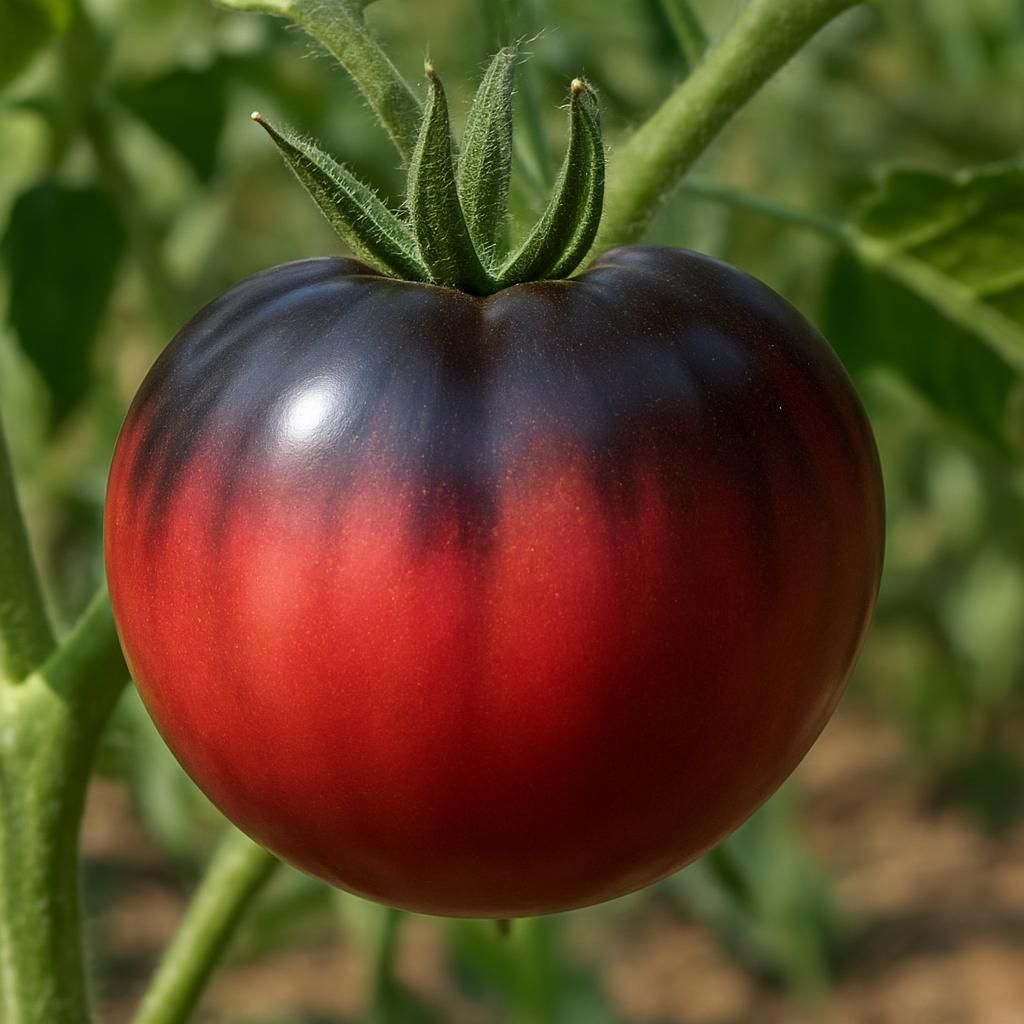
Introduction to Prudens Purple Tomato
Prudens Purple Tomato stands among the most visually striking and flavorful heirloom beefsteak varieties available to home gardeners and small-scale commercial growers. Its dusky purple-black shoulders fade into rich red-pink tones at the blossom end, signaling high anthocyanin content and exceptional flavor complexity. Developed in the early 20th century, this indeterminate variety has maintained a loyal following for its reliable yields, disease tolerance, and ability to thrive in cooler summer nights where many modern hybrids fail.
Gardeners seeking both ornamental appeal and culinary excellence consistently rank Prudens Purple among the top-performing purple tomatoes. The plants produce heavy clusters of large, slightly flattened fruits with meaty interiors and few seeds, making them perfect for fresh salads, sandwiches, and gourmet cooking. With proper care, each plant can deliver 15–25 pounds of fruit over an extended harvest window from mid-summer into early autumn.
Botanical Profile of Prudens Purple Tomato
Prudens Purple belongs to the nightshade family (Solanaceae) and exhibits classic indeterminate growth, continuing to set fruit until frost. Plants reach 6–8 feet in height and benefit from strong vertical support systems such as cattle panels or Florida weave trellising. The foliage is dark green with moderate leaf coverage that protects developing fruit from sunscald while allowing sufficient airflow.
Fruits average 12–16 ounces with thick walls and a dense, juicy interior. The purple coloration intensifies with cool nighttime temperatures below 65°F (18°C), enhancing both visual appeal and antioxidant levels. Seeds are relatively few and viable for saving, preserving the variety’s genetic integrity across generations.
Soil, pH, and Climate Requirements for Prudens Purple Tomato
Successful cultivation begins with understanding the precise environmental parameters that maximize plant health and fruit quality.
| Parameter | Ideal Range | Notes |
|---|---|---|
| Soil Type | Loamy, well-drained | Incorporate 2–3 inches of compost annually |
| Soil pH | 6.2–6.8 | Test soil and amend with lime if below 6.0 |
| Temperature (Day) | 70–85°F (21–29°C) | Optimal fruit set occurs within this range |
| Temperature (Night) | 55–65°F (13–18°C) | Promotes purple coloration and flavor |
| Sunlight | Full sun, minimum 8 hours | Morning sun helps reduce fungal pressure |
| Spacing | 24–36 inches between plants | Rows 48–60 inches apart for airflow |
| Frost Tolerance | None; protect below 50°F (10°C) | Use row covers for late spring/fall |
Step-by-Step Planting & Propagation
Start seeds indoors 6–8 weeks before the last expected frost date. Sow seeds ¼ inch deep in sterile seed-starting mix at 75–80°F (24–27°C). Maintain consistent moisture until germination occurs in 6–10 days. Once seedlings develop their second set of true leaves, transplant into 4-inch pots and grow under full-spectrum lights or in a bright south-facing window.
Harden off transplants for 7–10 days by gradually exposing them to outdoor conditions. Plant outdoors when soil temperature reaches at least 60°F (15.5°C) and nighttime air temperatures remain above 55°F (13°C). Dig planting holes 12 inches deep and wide, mixing in ½ cup of balanced organic fertilizer and a handful of crushed eggshells for calcium. Set plants deeply, burying the stem up to the first true leaves to encourage strong root development. Water thoroughly after planting and apply a 2–3 inch layer of organic mulch to conserve moisture and suppress weeds.
Care & Maintenance regimes for Prudens Purple Tomato
Consistent attention to water, nutrition, and pruning ensures maximum productivity and disease resistance.
| Growth Stage | Watering Schedule | Fertilizer Application | Pruning Schedule |
|---|---|---|---|
| Transplanting | 1–2 inches per week; keep evenly moist | Side-dress with ½ cup compost tea | Remove lower leaves touching soil |
| Vegetative (4–8 wks) | Deep watering 2–3× weekly; mulch helps | Apply balanced NPK (5-5-5) every 3 weeks | Prune suckers below first flower cluster |
| Flowering & Fruit Set | Maintain 1 inch/week; avoid overhead | Switch to high-phosphorus (2-5-3) monthly | Continue sucker removal weekly |
| Ripening | Reduce to ¾ inch/week to concentrate flavor | Light potassium boost (0-0-5) if needed | Remove yellowing leaves for airflow |
Pests, Diseases & Organic Management
Prudens Purple Tomato shows good resistance to many common tomato ailments but remains susceptible to Aphids, Spider Mites, Early Blight, and Late Blight. Monitor plants weekly for signs of infestation. Introduce beneficial insects such as ladybugs and lacewings for aphid control. Apply neem oil or insecticidal soap at the first sign of spider mites, focusing on the undersides of leaves.
Prevent fungal diseases through proper spacing, mulching, and drip irrigation to keep foliage dry. Rotate tomatoes with non-solanaceous crops every three years. Copper-based fungicides provide organic protection during humid periods when late blight pressure is high. Remove and destroy any infected plant material immediately to prevent spread.
Harvesting, Curing & Optimal Storage
Harvest fruits when they reach full color with slight softening at the blossom end. For peak flavor, allow tomatoes to ripen on the vine until they detach easily with a gentle twist. In regions with early frost, pick mature green fruits and ripen indoors at 65–70°F (18–21°C) in a single layer.
Store ripe tomatoes at room temperature away from direct sunlight for up to one week. For longer preservation, process into sauce, salsa, or freeze whole after blanching and peeling. Avoid refrigeration, which diminishes flavor and texture.
Companion Planting for Prudens Purple Tomato
Strategic pairings enhance growth, deter pests, and improve soil health. Plant Basil nearby to repel insects and improve flavor. Marigold and Nasturtium provide colorful pest barriers while attracting pollinators. Garlic and Onion deter nematodes and aphids when interplanted in alternating rows.
Avoid planting near Potato, Corn, or Fennel to prevent shared disease and nutrient competition. Clover sown as a living mulch fixes nitrogen and suppresses weeds without competing with tomato roots.