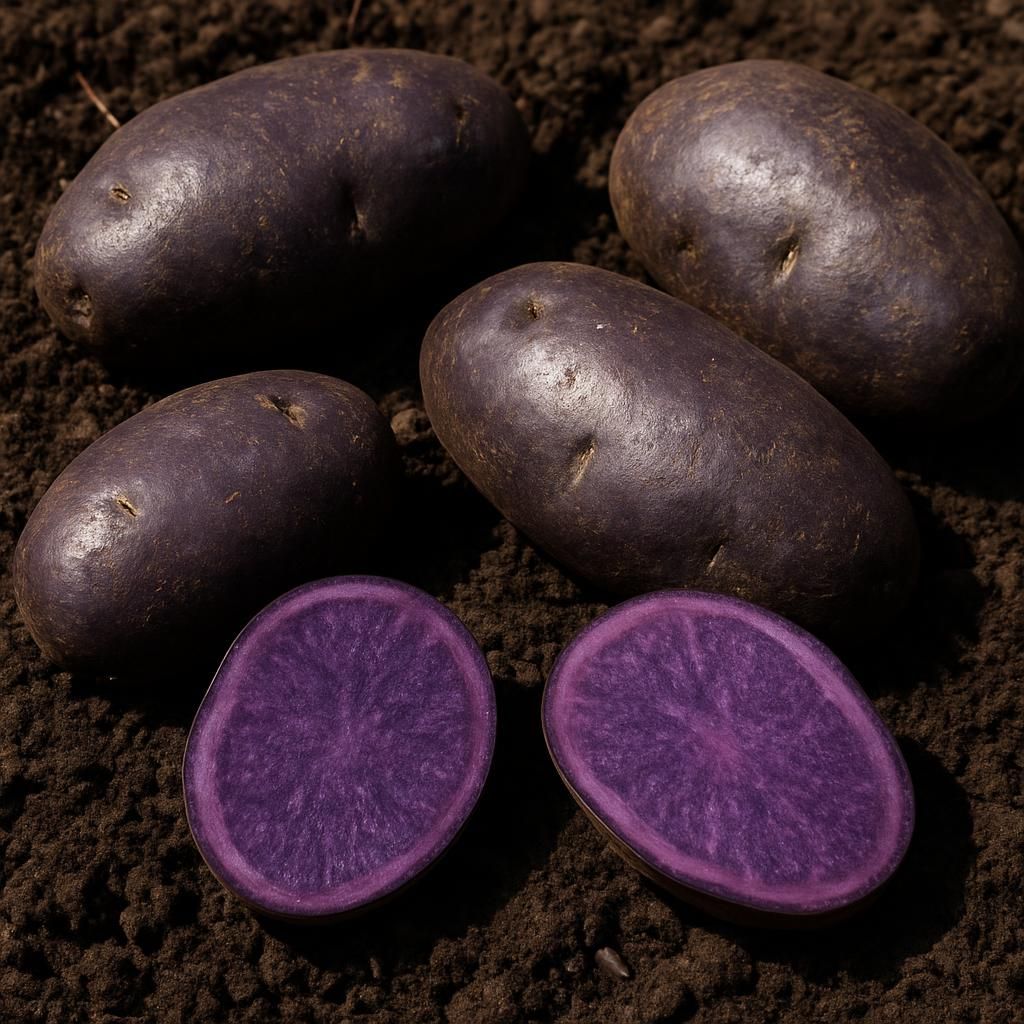
Introduction to Potato (Vitelotte)
Vitelotte, also known as Vitelotte Noire or the Purple Potato of the Andes, is a late-maturing specialty cultivar of Potato (crop) originating from France. Its striking violet-purple flesh retains color after cooking, making it highly valued in gourmet cuisine and for natural food coloring. The variety offers elevated levels of antioxidants, particularly anthocyanins, along with a firm texture and distinctive earthy-nutty flavor profile.
Botanical Profile of Potato (Vitelotte)
Vitelotte belongs to the nightshade family (Solanaceae) and produces compact, bushy plants reaching 60–80 cm in height. The tubers are elongated to oval, with smooth to slightly netted dark purple skin and intense purple-blue flesh that intensifies with cooler growing temperatures. Flowers are typically lavender to violet, and the plants exhibit moderate vigor with good tuber set under optimal conditions.
Soil, pH, and Climate Requirements for Potato (Vitelotte)
Vitelotte performs best in loose, well-drained sandy loam or loam soils that allow unrestricted tuber expansion. Heavy clay soils increase the risk of misshapen tubers and waterlogging. The variety prefers cool climates with daytime temperatures of 15–20 °C during tuber bulking.
| Parameter | Ideal Range/Value | Notes |
|---|---|---|
| Soil Type | Sandy loam to loam | Avoid compacted or heavy clay soils |
| Soil pH | 5.5–6.5 | Slightly acidic; liming may be needed above 6.8 |
| Temperature (Day) | 15–20 °C | Optimal tuber bulking; above 25 °C reduces quality |
| Temperature (Night) | 10–15 °C | Cooler nights enhance purple pigmentation |
| Frost Tolerance | Light frost (-2 °C) tolerable | Protect young shoots from hard frost |
| Rainfall/Irrigation | 500–700 mm season total | Consistent moisture critical during flowering and tuber set |
| Sunlight | Full sun (6–8 hours) | Adequate light maximizes anthocyanin levels |
Step-by-Step Planting & Propagation
- Source certified disease-free seed tubers of Vitelotte in late winter.
- Pre-sprout (“chit”) tubers 4–6 weeks before planting by placing them in a cool, bright location (10–15 °C) with eyes upward.
- Prepare planting trenches 10–15 cm deep, spaced 75–90 cm between rows.
- Plant tubers 30 cm apart with the strongest sprout facing upward; cover with 5–8 cm of soil.
- As shoots emerge, gradually hill soil around stems to a final depth of 20–25 cm to encourage additional tuber formation and protect from light.
Care & Maintenance regimes for Potato (Vitelotte)
Consistent moisture and balanced nutrition are essential for high-quality purple tubers. Avoid excess nitrogen late in the season to prevent excessive foliage at the expense of tuber development.
| Growth Stage | Watering Schedule | Fertilizer Application | Pruning/Other Care |
|---|---|---|---|
| Pre-Planting | Ensure soil at field capacity | Incorporate 40–60 kg N/ha + compost | Remove weeds; prepare hilling ridges |
| Emergence to Flowering | 25–30 mm/week; keep soil moist but not waterlogged | Side-dress 30 kg N/ha at 4 weeks post-emergence | Hill soil when plants reach 20 cm |
| Tuber Bulking | 30–35 mm/week; reduce slightly 2 weeks before harvest | Apply 20–30 kg K/ha; avoid excess N | Monitor for pests; maintain mulch layer |
| Pre-Harvest | Withhold irrigation 10–14 days prior | No additional fertilizer | Remove diseased foliage |
Pests, Diseases & Organic Management
Vitelotte is susceptible to the same suite of issues as other potatoes. Key threats include Colorado potato beetle, aphids, wireworms, late blight, early blight, and common scab. Implement a 3–4 year rotation away from solanaceous crops. Use floating row covers early in the season to exclude beetles. Apply neem oil or spinosad for beetle larvae when thresholds are reached. Copper-based sprays or Bacillus subtilis products provide organic control of blights when applied preventively during humid periods.
Harvesting, Curing & Optimal Storage
Vitelotte is a late-season variety typically ready 110–130 days after planting when vines begin to yellow and die back. Carefully dig tubers with a fork, avoiding skin damage. Allow harvested tubers to cure in a dark, well-ventilated area at 12–15 °C and 85–90 % relative humidity for 10–14 days. Store cured tubers at 4–7 °C in complete darkness with good air circulation; avoid refrigeration below 4 °C to prevent sugar accumulation and subsequent browning during cooking.
Companion Planting for Potato (Vitelotte)
Vitelotte benefits from strategic companions that deter pests and improve soil health. Plant Nasturtium and Marigold nearby to repel aphids and Colorado potato beetles. Thyme and Rosemary provide aromatic pest deterrence. Avoid planting near Tomato (crop) or other solanaceous crops to reduce shared disease pressure. Include Clover or Hairy vetch as living mulches to fix nitrogen and suppress weeds.