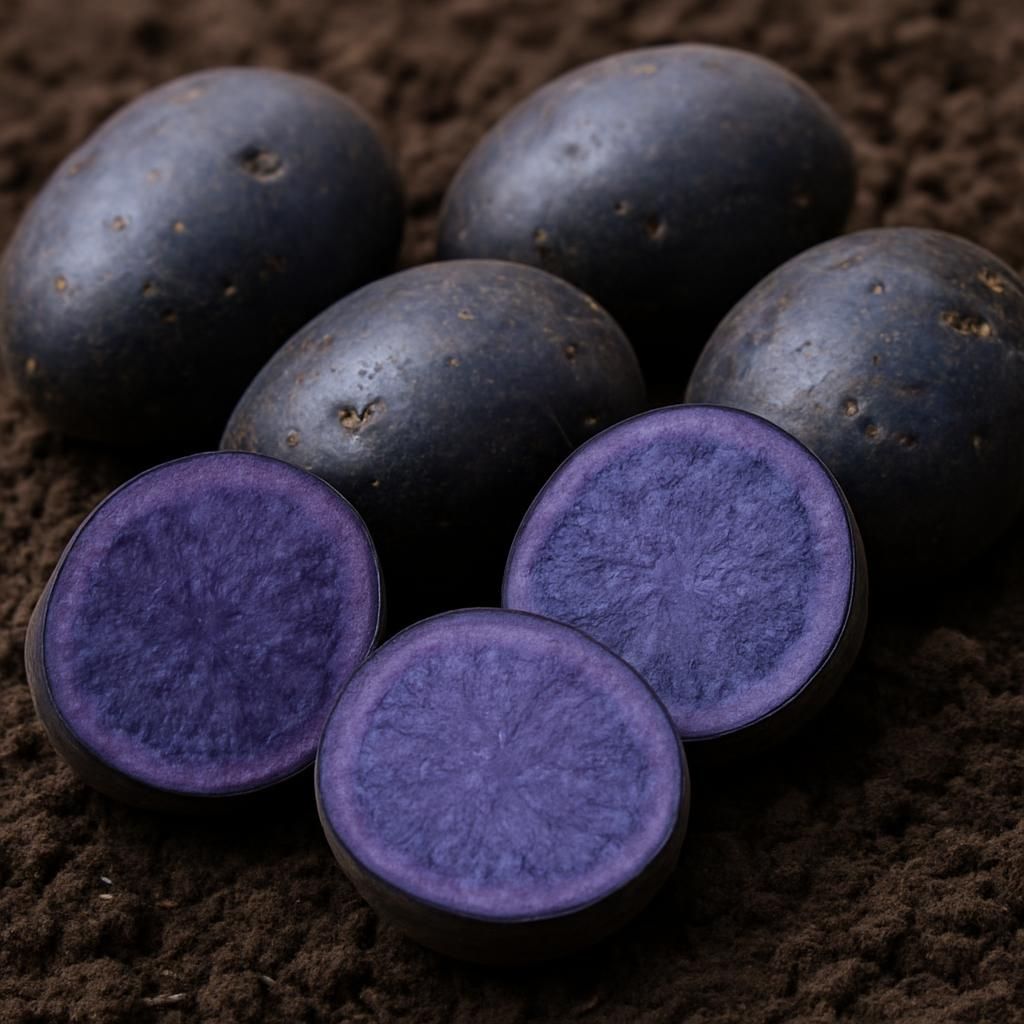
Introduction to Potato (All Blue)
The All Blue potato stands out in the garden and on the plate with its vivid indigo-blue skin and flesh that retains color after cooking. Developed from traditional Andean varieties, it delivers a nutty, earthy flavor and firm, waxy texture that excels in roasting, boiling, and making vibrant purple potato chips. Gardeners value its moderate productivity and resistance to common diseases, while nutritionists highlight its elevated levels of anthocyanins—powerful antioxidants responsible for the striking color. This guide covers every stage of successful cultivation, from site selection to storage, providing professional-grade advice for reliable harvests.
Botanical Profile of Potato (All Blue)
All Blue belongs to the nightshade family (Solanaceae) and is botanically classified as Solanum tuberosum 'All Blue'. It is an indeterminate, tuber-forming perennial typically grown as an annual. Plants produce upright to semi-upright vines reaching 60–90 cm in height with dark green, compound leaves. The variety sets medium-sized, oblong tubers with smooth, deep-blue skin and uniformly blue flesh that holds color through cooking. Flowers are typically lavender to purple, and seed production is low because the plant focuses energy on tuber formation. The high anthocyanin content gives the tubers both visual appeal and enhanced nutritional value compared to standard white or yellow potatoes.
Soil, pH, and Climate Requirements for Potato (All Blue)
All Blue potatoes thrive in well-drained, fertile loamy soils rich in organic matter. They prefer slightly acidic conditions that discourage common scab and support optimal nutrient uptake. The crop performs best in cool-season climates with daytime temperatures between 15–24 °C and cool nights. Avoid heavy clay or waterlogged soils that promote rot. Consistent moisture is essential during tuber bulking, yet the soil must never remain saturated.
| Parameter | Ideal Range | Notes |
|---|---|---|
| Soil Type | Loamy, well-drained, high in organic matter | Avoid compacted or heavy clay soils |
| Soil pH | 5.8–6.5 | Slightly acidic range reduces scab risk |
| Temperature (Day) | 15–24 °C | Cool conditions favor tuber development |
| Temperature (Night) | 10–15 °C | Prevents heat stress and hollow heart |
| Frost Tolerance | Light frost tolerated; protect below -1 °C | Use row covers for early or late plantings |
| Sunlight | Full sun (6–8+ hours) | Adequate light maximizes tuber size |
| Soil Moisture | Consistent 60–70% field capacity | Critical during tuber initiation and bulking |
Step-by-Step Planting & Propagation
- Source certified disease-free seed potatoes of the All Blue variety. Avoid grocery-store tubers that may carry viruses.
- 4–6 weeks before planting, place seed tubers in a bright, cool location (10–15 °C) to encourage short, sturdy sprouts (“chitting”).
- Cut larger tubers into pieces, each containing at least one or two eyes, and allow cut surfaces to callus for 24–48 hours.
- Prepare planting beds by incorporating well-rotted compost or aged manure to a depth of 20–30 cm.
- Plant seed pieces 10–15 cm deep and 25–30 cm apart in rows spaced 75–90 cm apart when soil temperature reaches 7–10 °C.
- As shoots emerge, gradually hill soil around the stems to a final depth of 20–25 cm to protect developing tubers from light and encourage additional tuber set.
- Maintain even moisture and apply a 5–8 cm layer of organic mulch to moderate soil temperature and suppress weeds.
Care & Maintenance regimes for Potato (All Blue)
Proper irrigation, balanced nutrition, and timely cultural practices maximize yield and tuber quality. Water deeply but infrequently to encourage deep rooting, and side-dress with nitrogen early in the season followed by potassium during tuber bulking. Remove weeds by hand or shallow cultivation to avoid damaging shallow roots. Monitor for nutrient deficiencies and adjust fertility based on soil tests.
| Growth Stage | Watering Schedule | Fertilizer Application | Pruning / Hilling Notes |
|---|---|---|---|
| Pre-emergence | Keep soil moist but not saturated | None | None |
| Vegetative (Emergence to Flowering) | 25–35 mm/week; deep, infrequent watering | Side-dress 20–30 g/m² of 10-10-10 NPK at 15–20 cm height | Hill soil when plants reach 15 cm |
| Tuber Bulking | Maintain consistent moisture; avoid fluctuations | Apply potassium-rich fertilizer (0-0-50) at 15 g/m² | Second hilling when plants are 30 cm tall |
| Late Season / Maturity | Reduce watering 2–3 weeks before harvest | Cease nitrogen applications | Remove any yellowing foliage if disease present |
Pests, Diseases & Organic Management
All Blue potatoes face several insect and disease pressures common to the crop. The most significant threats include Colorado potato beetle, aphids, wireworms, and fungal diseases such as early blight and late blight. Implement integrated pest management by rotating crops on a 3–4 year cycle, planting resistant varieties, and using floating row covers during early growth. Hand-pick beetle adults and larvae, and apply Bacillus thuringiensis (Bt) or neem-based sprays when thresholds are reached. Improve air circulation and avoid overhead irrigation to reduce foliar disease pressure. Copper-based fungicides approved for organic use can help suppress late blight when applied preventively during humid periods.
Harvesting, Curing & Optimal Storage
Harvest All Blue potatoes when vines begin to yellow and die back, typically 90–110 days after planting. Use a garden fork to gently lift tubers, taking care not to bruise or puncture the skin. Allow harvested tubers to cure in a dark, well-ventilated area at 12–15 °C and 85–90% relative humidity for 7–10 days. This process toughens the skin and heals minor wounds. For long-term storage, keep cured tubers at 4–7 °C in complete darkness with moderate humidity (85–90%). Avoid refrigeration below 4 °C, which can cause sugar accumulation and off-flavors. Properly stored All Blue potatoes maintain quality for 4–6 months.
Companion Planting for Potato (All Blue)
Strategic companions enhance pest control and nutrient cycling. Plant garlic or onion nearby to deter aphids and beetles through natural repellency. Marigold and nasturtium attract beneficial insects while masking potato foliage from pests. Avoid planting near tomato or other nightshades to reduce shared disease risk. Leguminous green manures such as clover or hairy vetch preceding the potato crop improve soil nitrogen levels. After harvest, follow with brassicas or leafy greens to break pest and disease cycles. These pairings contribute to a resilient, low-input growing system.
For deeper insights into seasonal soil strategies that support potato success, see The Forgotten Art of Fall Soil Revival: 8 Organic Strategies for Small Farm Resilience. Additional botanical context on the species is available at the Potato (crop) wiki entry.