Introduction to Potato (Adirondack Red)
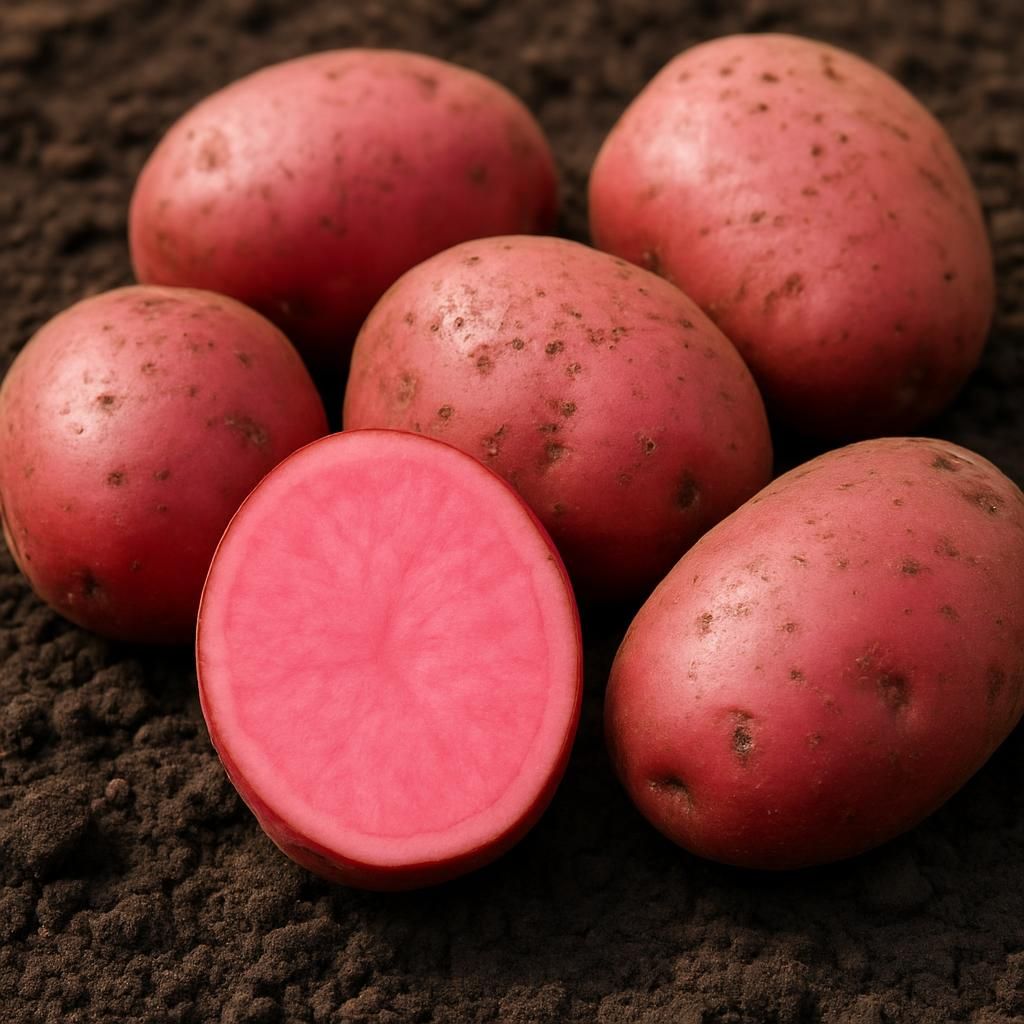
Adirondack Red is a mid-season specialty potato developed by Cornell University. Its striking red skin and pinkish-red flesh set it apart from common white or russet types, delivering elevated levels of anthocyanins that give the tubers both color and nutritional value. Gardeners and small-scale farmers choose Adirondack Red for its firm texture, which holds up well when roasted or boiled, and for its moderate resistance to common scab.
The variety matures in approximately 80–90 days and produces oval to oblong tubers that average 4–6 ounces. Yields are generally high when planted in fertile, well-drained soils, making it suitable for both home gardens and market growers seeking unique red-fleshed potatoes. Its relatively compact vines simplify hilling and harvest logistics.
Botanical Profile of Potato (Adirondack Red)
Adirondack Red belongs to the nightshade family, Solanaceae, and is botanically identical to other cultivated potatoes at the species level. It is a herbaceous perennial grown as an annual in temperate climates. The plant produces compound leaves with 6–8 leaflets and bears clusters of small, white to pale lavender flowers.
Tubers develop from underground stolons that arise from the base of the stem. The red anthocyanin pigments are expressed in both skin and flesh, providing visual appeal and antioxidant properties. Under optimal conditions, each plant can produce 8–12 marketable tubers. The variety stores well for 4–6 months when cured properly.
Soil, pH, and Climate Requirements for Potato (Adirondack Red)
Adirondack Red performs best in loose, fertile, well-drained soils with consistent moisture. Avoid heavy clay or waterlogged sites that promote rot. The variety tolerates a slightly wider pH range than many potatoes but still prefers mildly acidic conditions.
| Parameter | Ideal Range | Notes |
|---|---|---|
| Soil Type | Sandy loam to loam | High organic matter improves drainage |
| Soil pH | 5.8–6.5 | Below 5.5 increases scab risk |
| Soil Temperature | 50–70 °F (10–21 °C) | Plant when soil reaches 50 °F at 4-inch depth |
| Air Temperature | 60–75 °F (15–24 °C) daytime | Cool nights enhance tuber set |
| Frost Tolerance | Light frost OK | Protect new growth below 28 °F |
| Spacing | 12–15 inches in-row | Rows 30–36 inches apart |
| Planting Depth | 4–6 inches | Cover with 2–3 inches of soil initially |
Step-by-Step Planting & Propagation
- Source certified seed potatoes of Adirondack Red to reduce disease risk. Allow whole tubers or cut pieces (each with at least two eyes) to cure 1–2 days before planting.
- Prepare beds by incorporating 2–3 inches of well-aged compost. Perform a soil test and amend to reach the target pH range listed above.
- Plant seed pieces 4–6 inches deep, eyes up, when soil temperature is consistently above 50 °F. Space plants 12–15 inches apart in rows 30–36 inches wide.
- Water thoroughly after planting to settle soil around the seed. Apply a light mulch of straw to moderate temperature and suppress weeds.
- Begin hilling when shoots reach 6–8 inches tall; repeat every 2–3 weeks until vines begin to flower. This encourages more tuber formation along buried stems.
Care & Maintenance regimes for Potato (Adirondack Red)
Consistent moisture and balanced nutrition are critical during tuber bulking. Avoid high-nitrogen fertilizers after flowering to prevent excessive foliage at the expense of tubers.
| Growth Stage | Watering Schedule | Fertilizer (NPK) | Pruning / Hilling |
|---|---|---|---|
| Pre-emergence | Keep soil moist, 0.5–0.75 in/week | None | None |
| Vegetative (up to flowering) | 1–1.5 in/week, deep soak weekly | 10-10-10 at 1 lb/100 sq ft at planting | Hill when 6–8 in tall, repeat 2–3× |
| Tuber Bulking | 1.5–2 in/week, maintain even moisture | Side-dress 5-10-10 at flowering | Stop hilling after flowering |
| Maturation | Reduce to 0.5 in/week 2 weeks before harvest | None | Remove flowers if desired to direct energy |
Monitor soil moisture with a finger test or tensiometer; never allow the root zone to dry completely during bulking. Mulch helps retain moisture and keeps tubers from greening.
Pests, Diseases & Organic Management
Adirondack Red shares susceptibility to common potato pests and diseases. Colorado potato beetle is the most damaging insect; hand-pick adults and larvae or use floating row covers early in the season. Aphids can transmit viruses—use insecticidal soap or introduce lady beetles.
Fungal threats include early blight and late blight. Remove lower leaves showing lesions and improve airflow. Apply copper-based fungicides preventively during humid periods. Practice a 3–4 year rotation away from other solanaceous crops and destroy all crop debris after harvest.
Harvesting, Curing & Optimal Storage
Begin harvest when vines start to yellow, typically 80–90 days after planting. Use a garden fork to gently lift tubers, avoiding skin damage. Cure harvested potatoes in a dark, humid location at 50–60 °F for 10–14 days to toughen skins.
Store cured tubers in a cool (38–42 °F), dark, well-ventilated space with 85–90 % relative humidity. Avoid refrigeration below 38 °F to prevent starch conversion to sugars. Properly stored Adirondack Red maintains quality for 4–6 months.
Companion Planting for Potato (Adirondack Red)
Plant marigold and nasturtium nearby to deter nematodes and aphids. Cabbage and broccoli benefit from proximity to potatoes because the latter repel cabbage worms. Avoid planting near tomato or eggplant to reduce shared disease pressure. Beans and peas fix nitrogen and can precede potatoes in rotation, improving soil fertility for the following season.