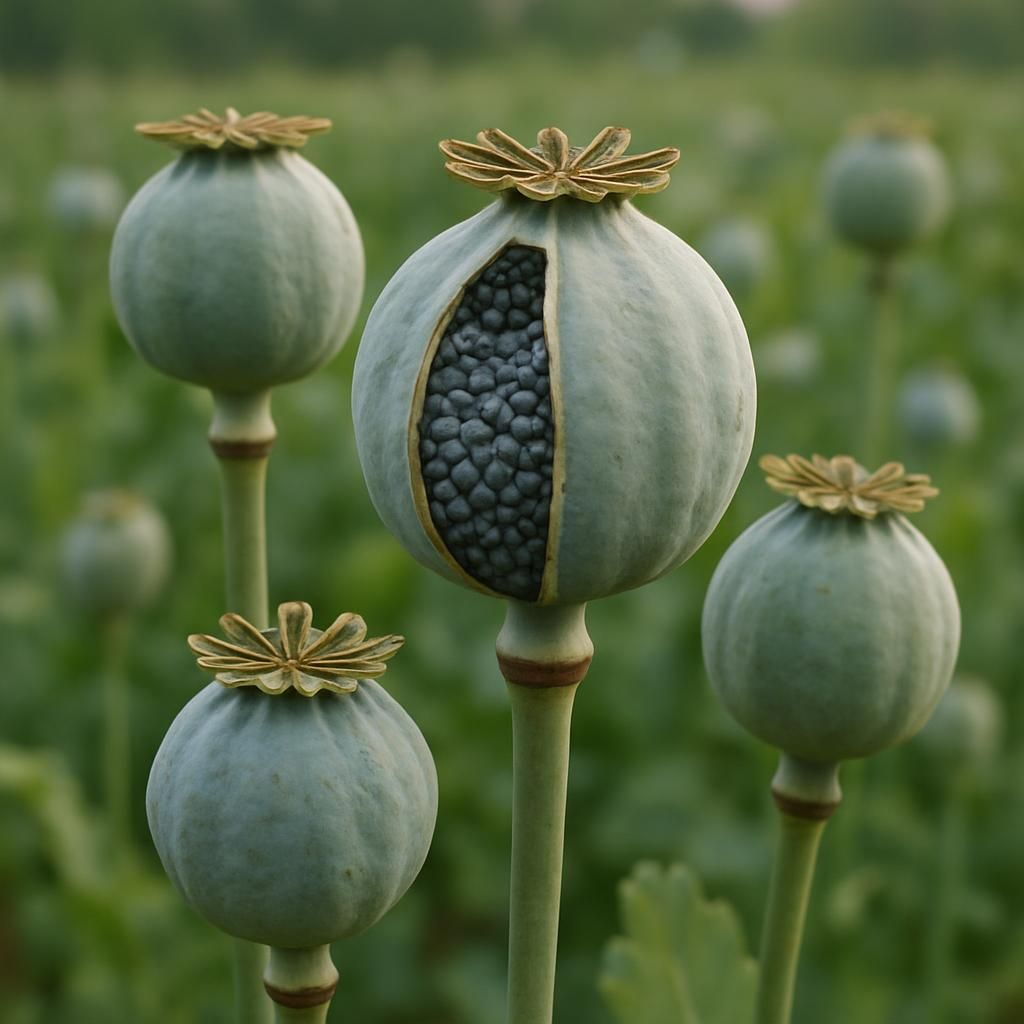
Introduction to Poppy Seed (Blue)
Blue poppy seed (Papaver somniferum) has been cultivated for centuries for both culinary seeds and oil production. The distinctive blue-grey seeds are prized by bakers for their nutty flavor and crunch, making them a staple in European and Middle Eastern cuisines. In modern agriculture, blue poppy seed offers farmers a profitable cool-season option that matures quickly and integrates well into diversified rotations.
Commercial production focuses on high-yielding cultivars selected for uniform seed color, oil content, and capsule shatter resistance. The crop also produces beautiful flowers that attract pollinators, providing secondary ecological benefits. Because the seeds are the primary economic product, growers must manage the crop carefully to avoid premature capsule opening and seed loss.
Botanical Profile of Poppy Seed (Blue)
Papaver somniferum is an annual herbaceous plant in the Papaveraceae family. Plants reach 60–120 cm in height with glaucous, lobed leaves and solitary terminal flowers. Each flower produces a distinctive capsule containing up to 20,000 tiny seeds. Blue varieties are specifically bred for the characteristic slate-blue seed coat color preferred in commercial markets.
The plant develops a taproot system with limited lateral branching, making it sensitive to soil compaction. Flowering occurs 60–80 days after emergence, followed by rapid capsule maturation. Seed dormancy is generally low in modern cultivars, allowing reliable establishment when soil temperatures are cool.
Soil, pH, and Climate Requirements for Poppy Seed (Blue)
Blue poppy seed performs best in well-drained, fertile loams with good structure. The crop is sensitive to waterlogging and compacted soils. Optimal soil conditions support rapid early growth and reduce the risk of root diseases.
| Parameter | Ideal Range | Notes |
|---|---|---|
| Soil Type | Loam to sandy loam | Avoid heavy clays and waterlogged sites |
| Soil pH | 6.0–7.5 | Slightly acidic to neutral; liming may be required below 5.8 |
| Temperature (Day) | 15–22 °C | Cool-season crop; heat stress reduces yield |
| Temperature (Night) | 5–12 °C | Frost tolerant to -5 °C once established |
| Annual Rainfall | 400–700 mm | Supplemental irrigation beneficial during flowering |
| Growing Season | 90–120 days | Cool spring to early summer in temperate zones |
Step-by-Step Planting & Propagation
Site Selection: Choose a field with good drainage and previous crop history free of broadleaf weeds. Avoid sites with recent manure applications that may promote excessive vegetative growth.
Soil Preparation: Perform deep tillage followed by fine seedbed preparation. Incorporate 20–30 kg/ha phosphorus and 40–60 kg/ha potassium based on soil tests. Avoid high nitrogen at planting to prevent lodging.
Sowing Timing: Direct seed when soil temperatures reach 5–8 °C in early spring. In temperate climates this typically occurs 2–4 weeks before the last frost.
Seeding Rate and Depth: Use 2–4 kg/ha of certified seed at 1–2 cm depth. Row spacing of 25–40 cm allows adequate airflow and mechanical weed control.
Establishment: Maintain consistent moisture until emergence (7–14 days). Thin seedlings to 15–20 cm in-row spacing once plants reach 5 cm height.
Care & Maintenance regimes for Poppy Seed (Blue)
Consistent moisture during flowering and capsule fill is critical. Overwatering after capsule formation increases disease pressure. Fertility programs should emphasize balanced nutrition without excess nitrogen.
| Growth Stage | Water Schedule | Fertilizer Application | Pruning / Other Maintenance |
|---|---|---|---|
| Pre-emergence | Keep seedbed moist (light irrigation) | Base P & K incorporated pre-plant | None |
| Vegetative (0–40 days) | 15–20 mm/week if rainfall insufficient | 30–40 kg N/ha at 4–6 leaf stage | Scout for weeds; cultivate between rows |
| Flowering (40–70 days) | 25–30 mm/week; avoid water stress | Avoid additional N; side-dress K if needed | Monitor for lodging; stake if necessary |
| Capsule Fill (70–100 days) | Reduce to 10–15 mm/week | No further fertilizer | Cease irrigation 2 weeks before harvest |
| Post-harvest | None | None | Clean field of residue to reduce volunteers |
Pests, Diseases & Organic Management
Blue poppy seed faces pressure from several insect pests and fungal pathogens. Aphids can transmit viruses and reduce plant vigor during early growth. Capsule borers and webworms damage developing capsules and cause seed loss.
Fungal diseases such as downy mildew and Alternaria leaf spot thrive in cool, humid conditions. Organic management relies on crop rotation, resistant cultivars, and timely cultural practices. Beneficial insect releases and neem-based sprays provide effective aphid control without residues.
Harvesting, Curing & Optimal Storage
Harvest when capsules turn brown and rattle when shaken, typically 100–120 days after planting. Cut plants at ground level and bundle for drying in a well-ventilated area. Once fully dry, thresh and clean seeds using a fanning mill or air-screen cleaner.
Store cleaned seeds at 8–12% moisture in cool, dry conditions. Use sealed containers or bulk bins with regular monitoring for moisture migration and insect activity. Properly stored blue poppy seed maintains viability and culinary quality for 12–18 months.
Companion Planting for Poppy Seed (Blue)
Blue poppy seed integrates well with cool-season companions that do not compete heavily for resources. Lettuce, spinach, and radish can be intercropped in early spring before poppy canopy closes. These pairings improve land use efficiency and provide additional early-season income.
Avoid planting near tomato or potato because shared pests and diseases can increase management costs. Leguminous cover crops such as clover planted after poppy harvest help restore soil nitrogen and suppress volunteer seedlings.