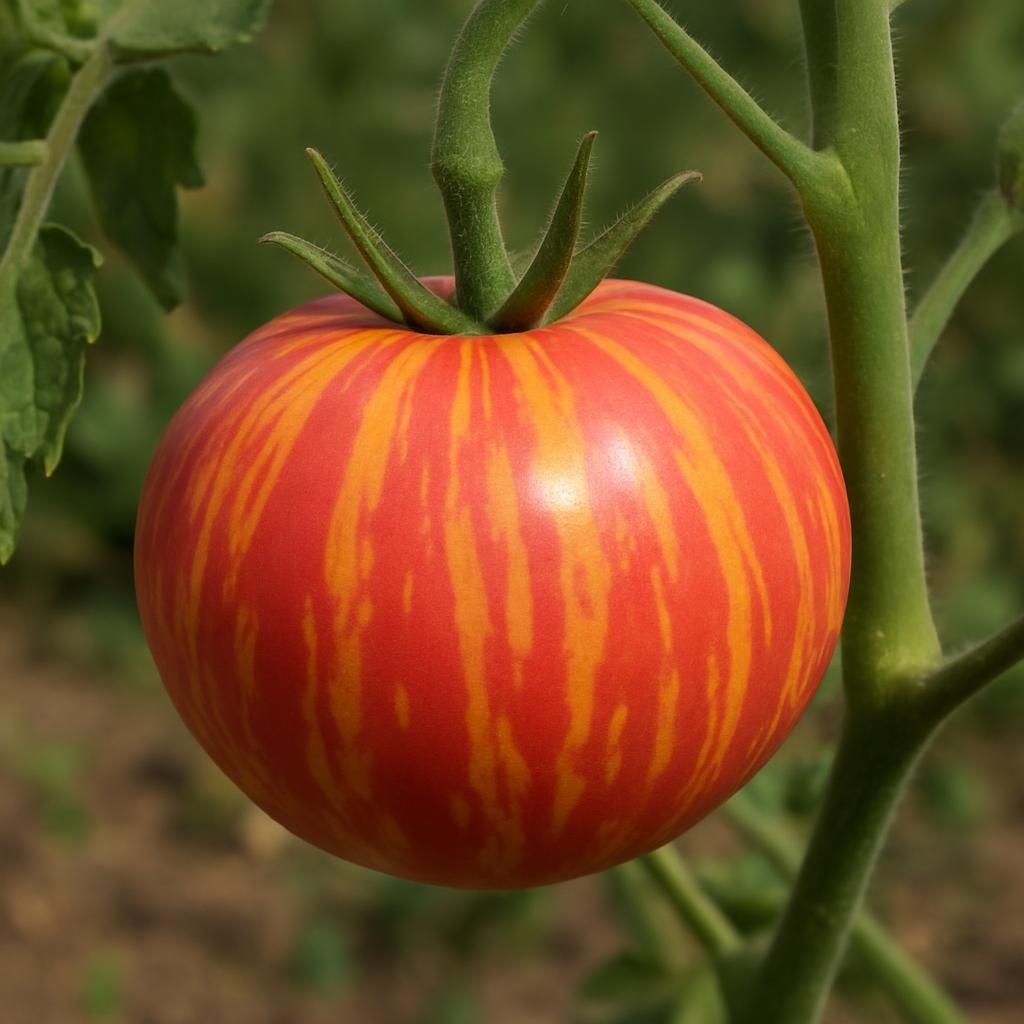
Introduction to Pink Berkeley Tie-Dye Tomato
Pink Berkeley Tie-Dye Tomato is a visually stunning heirloom variety developed by Brad Gates of Wild Boar Farms. Its large, oblate fruits display vivid pink skin with bold yellow-orange stripes that intensify as they ripen. The flavor profile is exceptionally sweet with balanced acidity and a rich, almost tropical note that sets it apart from standard beefsteak tomatoes. Gardeners value this variety for both its ornamental appeal and its productivity in home and small-farm settings.
Botanical Profile of Pink Berkeley Tie-Dye Tomato
Pink Berkeley Tie-Dye belongs to the Solanaceae family. Plants are vigorous, indeterminate vines that can reach 6–8 feet in height when properly staked or caged. Leaves are compound and slightly fuzzy with serrated margins. Flowers are yellow and self-pollinating, typically appearing in clusters of 6–10. Fruit averages 8–16 ounces, with occasional specimens reaching 2 pounds under optimal conditions.
Soil, pH, and Climate Requirements for Pink Berkeley Tie-Dye Tomato
This variety thrives in fertile, well-drained loam enriched with organic matter. It prefers full sun exposure of at least 8 hours daily and consistent warmth. Avoid planting in areas prone to late frosts or strong winds.
| Parameter | Ideal Range | Notes |
|---|---|---|
| Soil Type | Loamy, well-drained | Incorporate compost or aged manure |
| Soil pH | 6.2–6.8 | Test annually; adjust with lime or sulfur |
| Temperature (Day) | 70–85 °F (21–29 °C) | Optimal fruit set occurs in this range |
| Temperature (Night) | 55–65 °F (13–18 °C) | Below 50 °F slows growth |
| Spacing | 24–36 inches between plants | Rows 48–60 inches apart |
| Sunlight | Full sun (8+ hours) | Afternoon shade in extreme heat |
Step-by-Step Planting & Propagation
- Start seeds indoors 6–8 weeks before the last expected frost. Sow ¼ inch deep in sterile seed-starting mix.
- Maintain soil temperature at 70–80 °F using a heat mat; germination occurs in 5–10 days.
- Provide 14–16 hours of light daily once seedlings emerge.
- Harden off plants for 7–10 days before transplanting outdoors.
- Transplant after soil has warmed to at least 60 °F and all danger of frost has passed.
- Dig holes twice the width of the root ball; plant deep, burying the stem up to the first true leaves to encourage strong root development.
- Install sturdy cages or trellises at planting time to support future growth.
Care & Maintenance regimes for Pink Berkeley Tie-Dye Tomato
Consistent care ensures maximum yield and fruit quality. Mulch heavily with straw or shredded leaves to retain moisture and suppress weeds. Monitor plants weekly for signs of stress or nutrient deficiency.
| Task | Frequency | Details |
|---|---|---|
| Watering | 1–2 inches per week | Deep, infrequent watering; avoid wetting foliage |
| Fertilizer | Every 3–4 weeks | Balanced organic fertilizer (NPK 5-5-5) until flowering; switch to high-potassium formula after fruit set |
| Pruning | Weekly | Remove suckers below first flower cluster; maintain 1–2 main stems |
Pests, Diseases & Organic Management
Common threats include aphids, hornworms, and spider mites. Fungal issues such as early blight and late blight can occur in humid conditions. Use floating row covers early in the season, introduce beneficial insects, and apply neem oil or insecticidal soap as needed. Practice crop rotation and remove infected debris at season’s end.
Harvesting, Curing & Optimal Storage
Harvest when fruits reach full color and yield slightly to gentle pressure. Pick at the breaker stage for longer storage or allow full ripeness on the vine for peak flavor. Store at 55–60 °F away from direct sunlight. For extended keeping, wrap individual fruits in paper and place in a single layer.
Companion Planting for Pink Berkeley Tie-Dye Tomato
Pair with basil, marigold, and nasturtium to deter pests and improve flavor. Avoid planting near fennel or walnut trees, which can inhibit tomato growth. Consider interplanting with cucumber or pepper varieties for efficient space use.