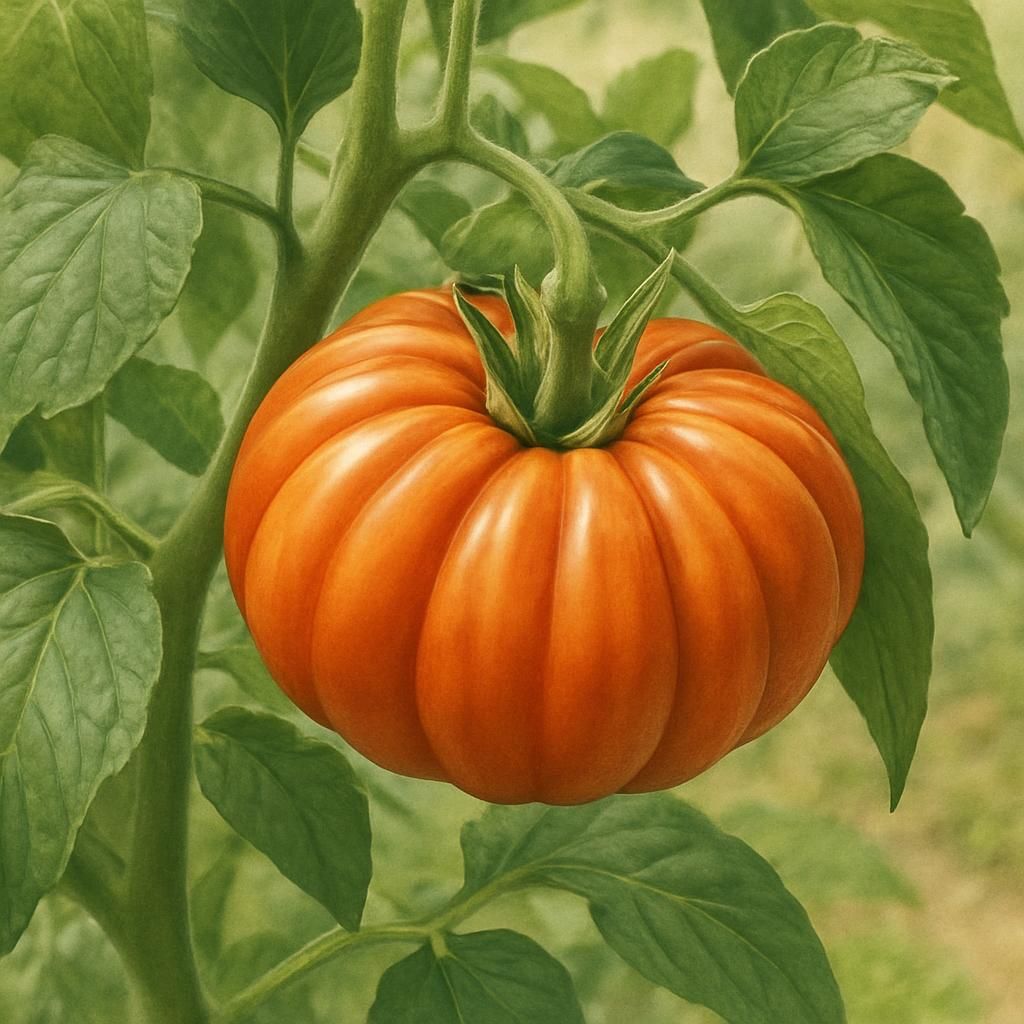
Introduction to Persimmon Tomato (Heirloom)
The Persimmon Tomato (Heirloom) stands out among beefsteak varieties for its striking persimmon-orange coloration, meaty texture, and rich, tropical-sweet flavor with minimal acidity. Originating in the United States in the early 20th century, this indeterminate heirloom produces fruits weighing 1–2 pounds that ripen late in the season, rewarding patient growers with exceptional quality. Because it is an open-pollinated variety, saved seeds will produce true-to-type plants, making it a favorite among seed savers and market gardeners seeking unique, high-value produce.
Botanical Profile of Persimmon Tomato (Heirloom)
Persimmon Tomato belongs to the Solanaceae family and exhibits classic indeterminate growth, continuing to set fruit until frost. Plants typically reach 6–8 feet in height and benefit from strong vertical support. The large, slightly lobed leaves provide ample photosynthetic surface, while the orange fruits develop prominent ribbing and a flattened shape. Internally, the variety shows few seed cavities and thick, juicy flesh that holds well after harvest.
Soil, pH, and Climate Requirements for Persimmon Tomato (Heirloom)
This heirloom performs best in fertile, well-drained loam enriched with organic matter. Consistent warmth and protection from late-spring frosts are essential for successful production.
| Parameter | Ideal Range | Notes |
|---|---|---|
| Soil Type | Loamy, well-drained | Incorporate 2–3 inches compost before planting |
| Soil pH | 6.2–6.8 | Test and amend with lime or sulfur as needed |
| Temperature Range | 70–85°F (21–29°C) daytime | Night temps above 55°F (13°C) |
| Spacing | 24–36 inches between plants | Rows 4–5 feet apart |
| Sun Exposure | Full sun (8+ hours) | Afternoon shade in extreme heat |
| Frost Tolerance | None | Transplant after last frost |
Step-by-Step Planting & Propagation
Start seeds indoors 6–8 weeks before the last expected frost date. Sow ¼ inch deep in sterile seed-starting mix and maintain 75–80°F (24–27°C) soil temperature for rapid germination. Transplant seedlings outdoors when soil reaches 60°F (16°C) and nighttime air temperatures stay above 55°F (13°C). Harden off plants for 7–10 days. Space transplants 24–36 inches apart in rows 4–5 feet wide and install sturdy cages or trellises at planting time.
Care & Maintenance regimes for Persimmon Tomato (Heirloom)
Consistent moisture, balanced nutrition, and regular pruning maximize fruit size and flavor while reducing disease pressure.
| Task | Frequency | Details |
|---|---|---|
| Watering | 1–2 inches per week | Deep, infrequent irrigation; mulch to retain moisture |
| Fertilizer | Every 3–4 weeks after first fruit set | Side-dress with ½ cup balanced organic fertilizer or compost tea |
| Pruning | Weekly | Remove suckers below first flower cluster; maintain 1–2 main stems |
| Mulching | At transplant and mid-season | 3–4 inches organic mulch to suppress weeds and stabilize soil temperature |
Pests, Diseases & Organic Management
Common challenges include Aphids, Hornworms, Spider Mites, and fungal issues such as Early Blight and Septoria Leaf Spot. Scout plants twice weekly. Use floating row covers early in the season, introduce beneficial insects such as lady beetles and lacewings, and apply neem oil or insecticidal soap at the first sign of infestation. Remove and destroy infected foliage promptly. Rotate tomatoes with non-solanaceous crops every 3–4 years and maintain good airflow through proper spacing and pruning.
Harvesting, Curing & Optimal Storage
Harvest when fruits reach full orange color and yield slightly to gentle pressure. Clip stems with pruners to avoid tearing the plant. For peak flavor, allow fruits to ripen fully on the vine. Store at 55–60°F (13–16°C) and 85–90% humidity for up to two weeks. Green fruits can be ripened indoors in a paper bag with an ethylene-producing fruit. Avoid refrigeration, which dulls flavor and causes mealy texture.
Companion Planting for Persimmon Tomato (Heirloom)
Pair Persimmon Tomato with aromatic herbs and flowers that deter pests and improve soil health. Basil repels hornworms and enhances flavor. Marigold and Nasturtium attract beneficial insects while repelling aphids. Carrot and Radish grow well beneath tomato foliage without competition. Avoid planting near Potato or Corn to reduce shared pest and disease pressure. The Overlooked Art of Crop Rotation for Small Farm Resilience provides additional rotation strategies that protect long-term soil vitality.