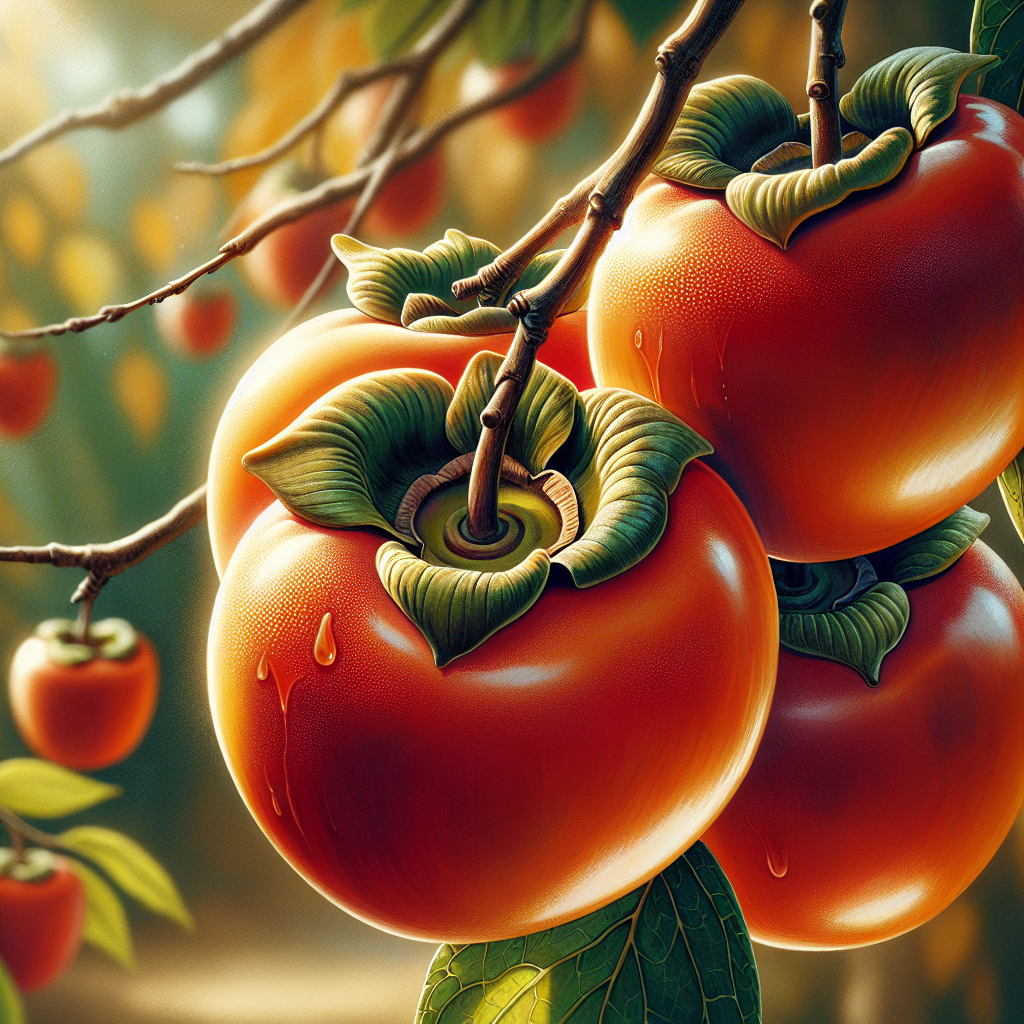
Introduction to Persimmon (Coffee Cake)
Persimmon (Coffee Cake), a standout variety of Diospyros kaki, has surged in popularity among specialty fruit growers due to its unique dessert-like flavor reminiscent of spiced coffee cake—dense, sweet, and subtly tannic when perfectly ripe. Originating from advanced breeding programs in California, this astringent persimmon ripens to a deep orange-red hue, offering exceptional texture and taste that commands premium market prices. Unlike non-astringent types like Persimmon (Fuyu), Coffee Cake requires proper curing to eliminate mouth-puckering tannins, making it a rewarding challenge for dedicated growers.
This comprehensive guide draws on decades of botanical and agricultural expertise to deliver professional-grade advice. Whether you're establishing a small orchard or integrating into a polyculture system, mastering Coffee Cake persimmons can boost farm profitability through direct sales, farmers' markets, or value-added products like persimmon puree and baked goods. Expect first substantial harvests in 4-6 years from grafted trees, with mature specimens yielding 100-300 fruits annually under optimal conditions. Key success factors include site selection, precise pruning, and vigilant pest monitoring. Dive in to unlock the full potential of this gourmet crop.
Botanical Profile of Persimmon (Coffee Cake)
Family and Origin: Persimmon (Coffee Cake) belongs to the Ebenaceae family, native to East Asia but selectively bred in the U.S. for superior flavor and disease resistance. Diospyros kaki 'Coffee Cake' is an astringent (astringent-type or PCNA - pollination constant non-astringent variant in some classifications, but primarily astringent) cultivar developed for its compact growth and heavy cropping.
Growth Habit: Forms a vase-shaped, deciduous tree reaching 15-25 feet tall and wide at maturity, with smooth gray bark and large, glossy green leaves turning brilliant orange-red in fall. Trees are moderately vigorous, self-fruitful but benefit from cross-pollination with varieties like Hachiya. Flowers are small, greenish-yellow, appearing in late spring.
Fruit Characteristics: Medium-large fruits (2-3 inches diameter) with flattened-round shape, vibrant orange skin, and creamy amber flesh when cured. Flavor peaks post-ripening: sweet (22-26° Brix), with notes of baked cinnamon, coffee, and honeyed custard. High pectin content makes it ideal for preserves. Seeds are minimal in parthenocarpic fruits.
Phenology: Dormant winter; bud break March-April; bloom May; fruit set June; harvest October-November. Cold hardy to USDA Zone 7b (-5°F), but thrives in Zones 8-10. Rootstock preferences include D. lotus for wet soils or D. virginiana for adaptability.
Nutritional Profile: Exceptional source of A-prov Vitamin, antioxidants (tannins convert to beneficial polyphenols), fiber (6g/100g), and potassium. Caloric density supports gourmet markets targeting health-conscious consumers.
Soil, pH, and Climate Requirements for Persimmon (Coffee Cake)
Soil Preferences: Coffee Cake persimmons demand well-drained, loamy soils rich in organic matter. Avoid heavy clays prone to waterlogging, which invite Phytophthora root rot. Incorporate 4-6 inches of compost pre-planting to enhance tilth and microbial activity. For more on building fertile ground, see Soil Health Mastery: 5 Proven Strategies for Small Farms to Build Fertile Ground Without Breaking the Bank.
pH Range: Optimal 6.0-7.5; slightly acidic to neutral. Test soil annually and amend with lime if below 6.0 or sulfur if exceeding 7.5. Micronutrients like zinc and iron become unavailable in alkaline extremes.
Climate Needs: Full sun (8+ hours daily) essential for sugar accumulation and color. Heat units: 2000-2500 growing degree days (base 50°F). Tolerates summer highs to 100°F but requires 400-600 chill hours (32-45°F). Protect from late spring frosts (<28°F) with overhead irrigation or row covers. In humid regions, ensure airflow to combat fungal issues. Drought-tolerant once established, but young trees need consistent moisture.
Site Selection: South-facing slopes ideal for drainage and warmth. Space trees 18-25 feet apart to prevent limb rubbing and disease. Mulch 4-6 inches deep (wood chips or straw) out to drip line, maintaining 6-inch trunk clearance to avert rodent damage.
Step-by-Step Planting & Propagation
Propagation Methods: Primarily grafted onto rootstocks for vigor and compatibility. Seed propagation unreliable due to long juvenility (10+ years). Softwood cuttings (June-July) root at 60-80% under mist with IBA (3000 ppm). Air-layering mature branches yields 90% success.
Planting Steps:
- Timing: Dormant season (January-March) in mild climates; container trees anytime with care.
- Site Prep: Dig 24x24x24-inch holes, backfill with 50% native soil + 50% compost. Avoid fresh manure.
- Planting: Position graft union 4-6 inches above soil. Spread roots naturally; water deeply.
- Staking: Use single stake for first 2 years; remove to promote taper.
- Initial Fertilization: 1 lb 10-10-10 per tree at planting; sidedress annually.
Training Young Trees: Central leader or open vase. Select 4-6 scaffold branches at 18-24 inches height, spaced 4-6 inches apart around trunk.
Care & Maintenance regimes for Persimmon (Coffee Cake)
Irrigation: Deep water weekly (1-2 inches) first 3 years; mature trees drought-tolerant but yield drops 20-30% without summer supplemental. Drip systems optimal; deficit irrigate post-harvest for bud set.
Fertilization: Soil test-directed. Nitrogen: 0.1 lb/tree/year increasing to 1 lb at maturity, split applications. Phosphorus/potassium per analysis. Foliar micronutrients (zinc, boron) in spring if deficient.
Pruning: Dormant season. Thin crowded wood; head back vigorous shoots. Maintain 30-50% canopy openness for light penetration. Summer pinch to control size.
Weed Control: Mulch + shallow cultivation. Pre-emergents (oryzalin) safe around trunks.
Pollination Management: Plant pollinators like Hachiya nearby; bees thrive on persimmon pollen.
Pests, Diseases & Organic Management
Common Pests: Mealybugs cluster on twigs—horticultural oil + insecticidal soap. Scale insects controlled by summer oils. Ants farm pests; disrupt trails with boric acid baits. Birds love ripe fruit—netting from color change. Deer browse young trees—fencing essential.
Diseases: Anthracnose causes fruit spotting—copper sprays at bud swell. Leaf spot diseases (Alternaria/Cercospora)—improve airflow, rake debris. Powdery mildew rare but treat with potassium bicarbonate. Root rots in wet soils—raised beds + biofungicides (Trichoderma).
Organic IPM: Scout weekly. Release lacewings for aphids. Neem oil rotations. Kaolin clay for fruit protection. For advanced strategies, explore Why 90% of Small Farms Fail at Pest Management - And 8 Organic Fixes That Actually Work. Sanitize prunings; 3-year rotation if feasible.
Harvesting, Curing & Optimal Storage
Harvest Timing: When fruits soften slightly and color fully develops (October-November). Clip with shears, leaving calyx. Yields peak at 75-150 lbs/tree.
Curing Astringent Fruit: Critical for edibility. Place in single layer on racks at 70-80°F, 85-90% humidity for 3-7 days until translucent and jelly-like. CO2 accumulation (from ethylene) breaks down tannins. Avoid refrigeration pre-cure.
Storage: Cured fruit: 32-35°F, 90% RH, 2-3 months. Fresh: ethylene-free at 40°F. Market as 'coffee cake persimmons' for premium pricing ($4-8/lb).
Post-Harvest: Process rejects into leather, vinegar, or bread. Compost cleanings.
Companion Planting for Persimmon (Coffee Cake)
Enhance orchard health with synergistic companions. Beneficials: Thyme and Yarrow attract predatory wasps. Marigold deters nematodes. Nitrogen Fixers: Clover understory improves soil.
Avoid: Garlic or Onion—allelopathic. Pair with Fig (Brown Turkey) for pest diversion. Guild example: Persimmon central, comfrey mulch, nasturtium trap crop. Boosts biodiversity, reduces inputs 20-30%. Learn more in Fall Companion Planting Guide: Boost Yields and Soil Health for Small Farms and Gardens.