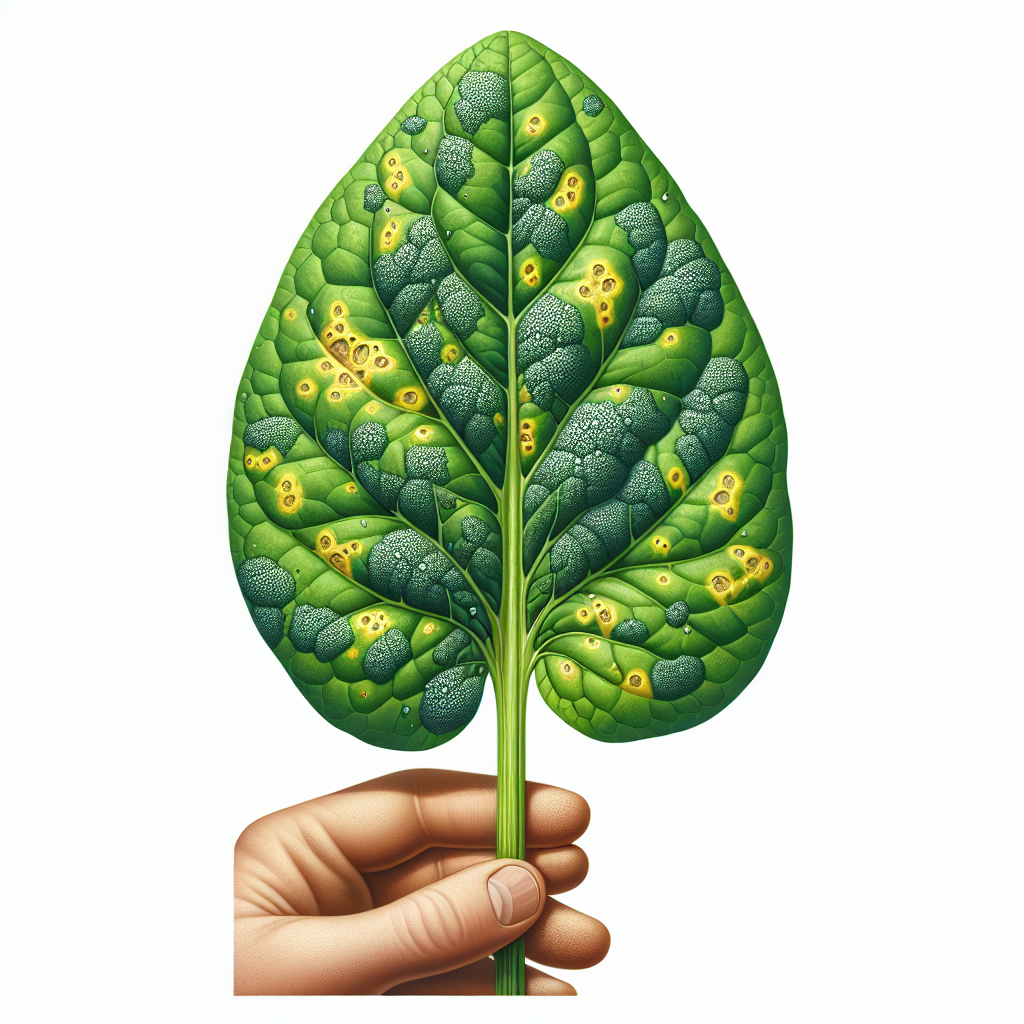
Introduction to Peronospora variabilis
Peronospora variabilis is a destructive oomycete pathogen responsible for downy mildew in several important crops, particularly in temperate and subtropical growing regions. Unlike true fungi, this obligate parasite requires living host tissue to complete its lifecycle, making it particularly challenging to culture in labs for research. First identified on crops like spinach and related species, it has spread globally, causing epidemics that can wipe out 50-100% of yields in severe outbreaks.
Farmers often confuse it with powdery mildew due to similar foliar symptoms, but downy mildew from P. variabilis produces profuse sporangia on leaf undersides under high humidity. This guide provides definitive diagnostic criteria, lifecycle details, and proven management strategies tailored for organic and conventional growers. Early detection is key, as infections spread rapidly via wind and splashing water. For small farms struggling with disease identification, tools like AI-powered plant diagnosis can prevent costly missteps—check out Why Misidentifying Plants Costs Small Farms Thousands - And How AI Camera Diagnosis Fixes It Fast for practical tips.
The pathogen's name 'variabilis' reflects its variable host range and symptom expression across species. In commercial production, losses exceed millions annually, emphasizing the need for integrated disease management (IDM). This comprehensive resource covers everything from symptom ID to prevention, helping growers protect their harvests effectively.
Identifying Symptoms & Damage
Accurate diagnosis starts with recognizing hallmark signs of Peronospora variabilis. Initial symptoms appear as small, pale green to yellow angular spots on upper leaf surfaces, often bounded by veins, giving a mosaic-like pattern. As lesions expand, they turn necrotic brown or black, sometimes with a chlorotic halo. Flip the leaf over: the underside reveals diagnostic grayish-white to purplish sporulation, especially visible in early morning dew.
In advanced stages, infected leaves curl, wilt, and drop prematurely, reducing photosynthetic capacity by up to 70%. On stems and petioles, dark lesions may girdle tissues, causing collapse. Severe infections lead to defoliation, stunted growth, and reduced fruit quality or yield. Differentiate from downy mildew (Peronospora farinosa) by host specificity and sporangiophore morphology under microscopy—P. variabilis produces branched sporangiophores with lemon-shaped sporangia.
Damage quantification: In spinach fields, yield losses reach 90% with 50% foliar coverage. On beets, root quality suffers from reduced sugar content. Use a 10x hand lens for confirmation; wet mounts show zoospores motile in water. Secondary invaders like Botrytis often follow, complicating symptoms. Scout weekly during cool, wet periods, focusing on lower canopy where humidity lingers.
Lifecycle and Progression of Peronospora variabilis
Peronospora variabilis follows a hemicyclic lifecycle typical of downy mildews. Primary inoculum overwinters as oospores in crop debris or infected seeds. In spring, under favorable conditions (10-20°C, >90% RH), oospores germinate, producing sporangia that release zoospores. These biflagellate zoospores swim in free water, infecting stomata on young leaves within 4-6 hours.
The incubation period is 3-7 days, after which conidiophores emerge from stomata at night, releasing sporangia for secondary spread. Each lesion produces thousands of sporangia, dispersible by wind up to 50 km. Systemic infections occur via roots, leading to stunted plants with mottled leaves. Oospore formation in senescing tissue ensures survival through dry summers.
Progression accelerates in dense canopies: Day 1-3 (latent), Day 4-7 (sporulation), Week 2+ (necrosis/defoliation). Temperature optima: 15-18°C; >25°C halts sporulation. High nitrogen favors lush growth, increasing susceptibility. Understanding this cycle enables predictive modeling for spray timing.
Environmental Triggers & Risk Factors
P. variabilis epidemics hinge on prolonged leaf wetness (6-12 hours) and moderate temperatures (12-20°C). Nighttime temps <18°C with morning fog are prime triggers. High relative humidity (>85%) in dense plantings amplifies spread. Overhead irrigation, poor air circulation, and excessive fertility create microclimates for infection.
Risk factors include susceptible varieties, volunteer plants harboring inoculum, and contaminated transplants. Fields near last season's infected crops face 5x higher risk. Soil moisture >60% promotes oospore germination. Climate change extends wet seasons, increasing outbreak frequency. Monitor with weather stations; disease models predict infection risk based on leaf wetness duration.
Organic Control & Treatment Plans
Organic management emphasizes prevention but includes curative options. Cultural: Rotate crops 2-3 years, destroy debris, space plants for airflow (30-45 cm). Use drip irrigation to minimize wetting. Resistant Varieties: Select hybrids like 'Evergreen' spinach or resistant beet lines.
Biologicals: Apply Trichoderma viride or Bacillus subtilis weekly from first symptoms. Serenade (Bacillus mycoides) suppresses sporulation by 60%. Organic Fungicides: Copper octanoate (0.5-1 gal/A), OMRI-listed potassium bicarbonate (2-5 lb/100 gal), or Regalia (Reynoutria extract) at 7-day intervals. Alternate modes of action to prevent resistance.
Treatment Protocol: Scout → Prune infected leaves → Apply at 10% incidence → Repeat every 5-7 days during risk periods. Efficacy: 70-90% with timely use. Integrate with downy mildew strategies for brassicas if co-occurring.
Preventing Peronospora variabilis in the Future
Long-term prevention builds resilient systems. Sanitation: Deep plow residues post-harvest; solarize soil in off-season. Crop Rotation: Avoid host crops for 3 years; interplant with suppressives like marigold. Forecasting: Use apps tracking leaf wetness and temp for spray windows.
Seed Treatment: Hot water (50°C, 25 min) or bio-priming eliminates oospores. Greenhouse: Sterilize tools, ventilate, UV lights disrupt sporangia. Monitoring: Yellow sticky traps catch sporangia; threshold: 1 sporangium/cm² leaf area. Build soil health with compost to enhance plant vigor—see Soil Health Mastery: 5 Proven Strategies for Small Farms to Build Fertile Ground Without Breaking the Bank. Annual planning prevents recurrence.
Crops Most Affected by Peronospora variabilis
Primarily attacks Chenopodiaceae: spinach (most severe, 80-100% losses), beets (Detroit Dark Red Beet, sugar beets), chard, quinoa (white quinoa). Also reported on amaranth (red amaranth), lamb's quarters (weed host). Less common on kale or lettuce. Regional hotspots: Pacific Northwest spinach belts, European beet fields. Yield impacts: Spinach bolting delayed, beets stunted roots. Diversify to non-hosts like potato in rotation.