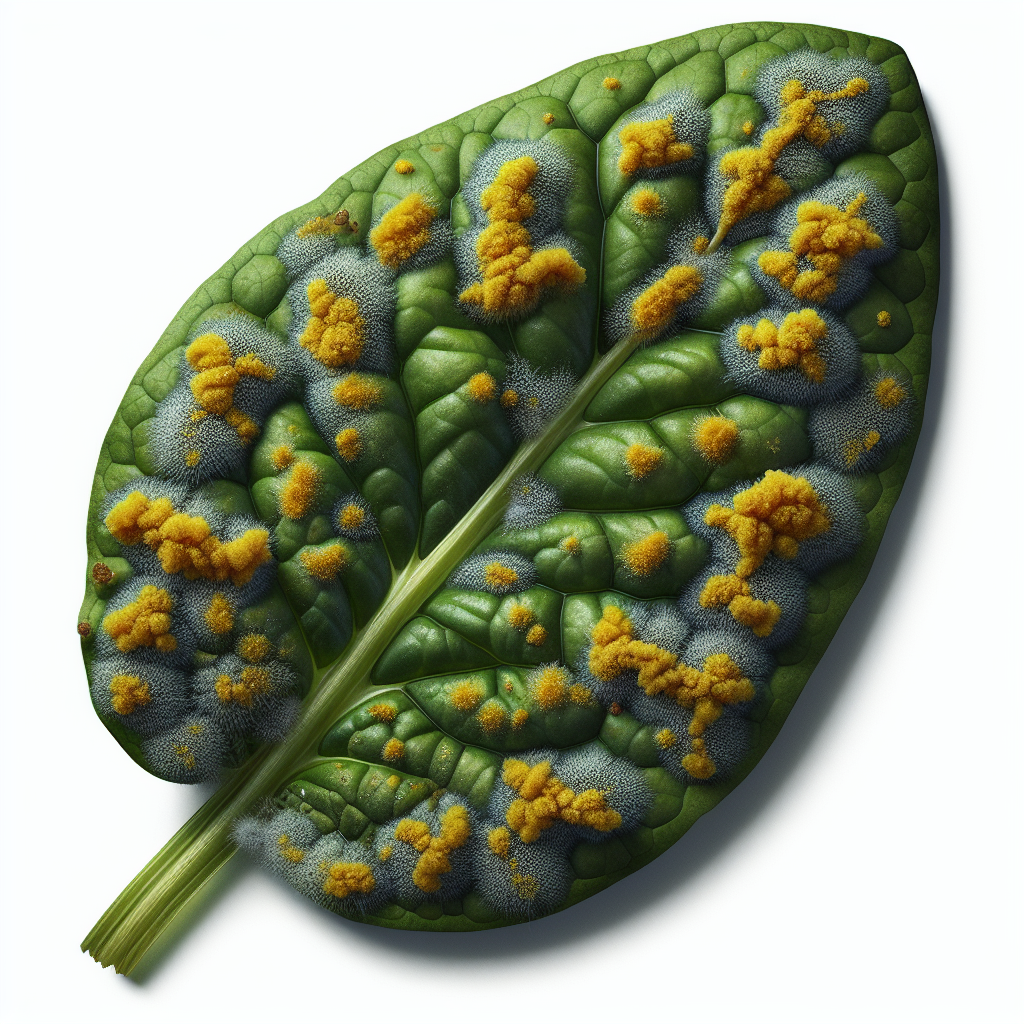
Introduction to Downy mildew (Peronospora farinosa)
Downy mildew (Peronospora farinosa) is one of the most economically important diseases in leafy greens production, particularly impacting spinach (Spinach (crop)) and related Chenopodiaceae crops worldwide. Caused by the obligate biotrophic oomycete Peronospora farinosa, this pathogen thrives in cool, humid conditions, producing characteristic purplish-gray sporangia on leaf undersides that resemble downy fuzz—hence the name. First described in the 19th century, P. farinosa has numerous formae speciales adapted to specific hosts like spinach (P. farinosa f. sp. spinaciae), beets, and quinoa, making it a polymorphic threat across regions from temperate Europe to modern hydroponic systems in North America.
In commercial agriculture, downy mildew can devastate yields by 50-100% if unchecked, especially during prolonged wet spells. Symptoms often mimic nutrient deficiencies or powdery mildew (disease), leading to misdiagnosis and delayed intervention. This definitive guide equips growers with professional-grade diagnostics, lifecycle knowledge, organic treatments, and prevention protocols to safeguard harvests. Understanding environmental triggers and implementing integrated management is crucial for sustainable control, as fungicide resistance emerges in some strains. For small farms, early scouting paired with resistant varieties offers the best ROI, as highlighted in Why Misidentifying Plants Costs Small Farms Thousands - And How AI Camera Diagnosis Fixes It Fast.
Identifying Symptoms & Damage
Accurate identification of downy mildew (Peronospora farinosa) hinges on recognizing its distinct progression across plant tissues. Initial symptoms appear as small, pale green to yellowish spots (1-2 mm) on upper leaf surfaces, often irregular and angular due to vein confinement. These lesions expand into chlorotic (yellow) patches up to 1-5 cm, sometimes with a pale green halo, progressing to brown necrotic centers in advanced stages. A hallmark diagnostic feature is the adaxial (upper) surface mottling contrasted with dense, purplish-gray sporulation on the abaxial (lower) surface—visible in low light or with a 10x hand lens as branched conidiophores bearing lemon-shaped sporangia.
In spinach, symptoms start on older leaves, spreading systemically if infection reaches the vascular tissue, causing stunting, wilting, and seedstalk distortion in flowering plants. Beets show similar foliar lesions, but petioles and crowns may develop dark streaks, leading to defoliation and reduced root bulking. Severe infections trigger premature senescence, with infected leaves dropping and exposing crowns to root rots (disease). Yield impacts are profound: marketable spinach yield drops 30-70%, with unmarketable cull piles; beets suffer 20-50% tonnage loss plus quality downgrades from scarred roots.
Differentiate from look-alikes: Unlike powdery mildew (disease) (white powder on upperside, no vein-bounding), downy mildew sporulates underside and is wet-dependent. Cercospora leaf spot (disease) has tan centers with reddish margins, lacking sporulation. Confirm via lab assay (PCR for P. farinosa ITS sequences) or field test: place suspect leaf in a plastic bag overnight—if sporulation blooms in humidity, it's downy mildew. Economic thresholds: Scout 20-50 plants/acre weekly; treat at 1-5% incidence in high-risk fields.
Lifecycle and Progression of Downy mildew (Peronospora farinosa)
Peronospora farinosa follows a hemicyclic lifecycle optimized for cool, moist epidemics. Primary inoculum overwinters as oospores in infected crop debris, soil, or volunteer plants, resilient up to 2-3 years. These thick-walled chlamydospores germinate in water (free moisture >6 hours) at 5-20°C, producing zoospores that encyst and penetrate stomata, initiating infection within 4-6 hours. Optimal infection occurs at 10-16°C with leaf wetness >90% RH for 6-8 hours; above 25°C or dry conditions halt sporulation.
Post-penetration (3-5 days latent), mycelium ramifies intercellularly, haustoria absorbing nutrients. Conidiophores emerge from stomata 5-7 days post-infection (shorter at 12-15°C), releasing caducous sporangia (20-30 x 15-20 μm) for secondary spread via wind/splash. Each lesion produces 10,000-100,000 sporangia, dispersal up to 1-2 km. Nighttime sporulation peaks (cool, humid), infecting new leaves in polycyclic waves every 7-10 days. In spinach, 5-7 cycles per season amplify epidemics.
Oospores form in senescing tissue under short days, completing sexual cycle. Seed transmission occurs if mother plants infected pre-flowering. Progression: Seedling infection causes damping-off; vegetative stage yields systemic chlorosis; reproductive phase distorts inflorescences, reducing seed set 80-100%. Disease gradients follow humidity fronts, with foci expanding 2-5x weekly in conducive weather.
Environmental Triggers & Risk Factors
Downy mildew (Peronospora farinosa) epidemics hinge on a trifecta: susceptible host, virulent inoculum, and cool, wet weather. Temperature optima: Infection at 8-18°C (max 25°C, min 2°C); sporulation peaks at 12-15°C. Leaf wetness duration >6 hours nightly is critical—dew, fog, or irrigation overhead fosters it. High RH (>85%) without free water sustains latent infections.
Risk factors include dense canopies (spinach >30 plants/m²), poor airflow (row spacing <30 cm), and cool climates (e.g., Pacific Northwest spinach belt). Volunteer spinach or weeds like lamb's quarters harbor inoculum. Acidic soils (pH <6.5) and high N fertility promote succulent tissues. Overhead irrigation or rainy springs ( >200 mm/month) spike incidence 10-fold vs. drip-irrigated fields.
Forecast models (e.g., DOWNCAST) integrate 48-hour weather: DM severity value >4 predicts outbreaks. Climate change extends shoulders, with milder winters boosting oospore survival. Crop rotation gaps >2 years reduce soil inoculum 70%; monoculture spinach triples risk.
Organic Control & Treatment Plans
Organic management of downy mildew (Peronospora farinosa) emphasizes cultural, biological, and OMRI-approved biorationals, avoiding synthetic fungicides. Immediate Response: At first detection, remove/ destroy infected leaves (burn or bury >1m deep); rogue 10-20m foci. Apply copper hydroxide (e.g., Cueva, 1-2 gal/A) or OMRI copper octanoate weekly (4-hour REI), rotating with potassium bicarbonate (MilStop, 2-5 lb/A) for pH disruption.
Biologicals: Bacillus subtilis (Serenade, 2-4 qt/A) or Regalia (Reynoutria extract, 1-2 qt/A) induces SAR, applied preventively every 7 days. Trichoderma harzianum (RootShield) as drench suppresses soil oospores. Biorationals: Phosphorous acid (Reliant, 1-2 qt/A) boosts plant defenses; hydrogen peroxide (ZeroTol, 1:128) eradicates surface sporangia.
Integrated Plan: Week 1 (scout+): Copper + Serenade. Week 2: Phosphite + bicarb. Rotate modes-of-action; buffer with 7-day intervals. Efficacy: 60-85% control vs. 95% synthetics, but sustains resistance avoidance. Combine with downy mildew (disease) cultural tactics for 90% suppression.
Preventing Downy mildew (Peronospora farinosa) in the Future
Prevention is paramount for Peronospora farinosa, targeting inoculum elimination and microclimate modification. Select resistant varieties: Spinach 'Eclipse', 'Bolero', or hybrid Pigeon for 70% less severity; beets 'Bull's Blood' or 'Cylindra'. Site selection: Well-drained loams, pH 6.5-7.5, full sun >6 hours/day.
Cultural: Rotate non-hosts (grains, tomato (crop)) 2-3 years; destroy volunteers pre-plant. Drip irrigate, avoiding foliage wet >4 hours; time planting post-dew season. Space rows 45-60 cm, thin to 25 plants/m² for 20-30 cm/sec airflow. Mulch suppresses splash. Fallow tillage buries debris.
Sanitation: Hot water seed treatment (50°C/25 min) kills 99% seedborne oospores. Scout weekly with sticky traps for sporangia. Hyper-local forecasting via apps predicts outbreaks 72 hours ahead. Cover crops like mustard biofumigate soil. Long-term: Polyculture with Thai basil (crop) repels vectors.
Crops Most Affected by Downy mildew (Peronospora farinosa)
Peronospora farinosa targets Chenopodiaceae/Amaranthaceae: Spinach (primary, 90% global losses); Beets (table/garden, leaf damage halves tops); Swiss chard (cosmetic lesions reduce sales); Quinoa (quinoa (crop), Andean epidemics); Lamb's quarters (weed reservoir). Minor: Kale, orach. Regional: Pacific NW spinach (80% acreage threatened), European beets. Losses: Spinach $50-100M/year USA; beets 20-40% yield hits.