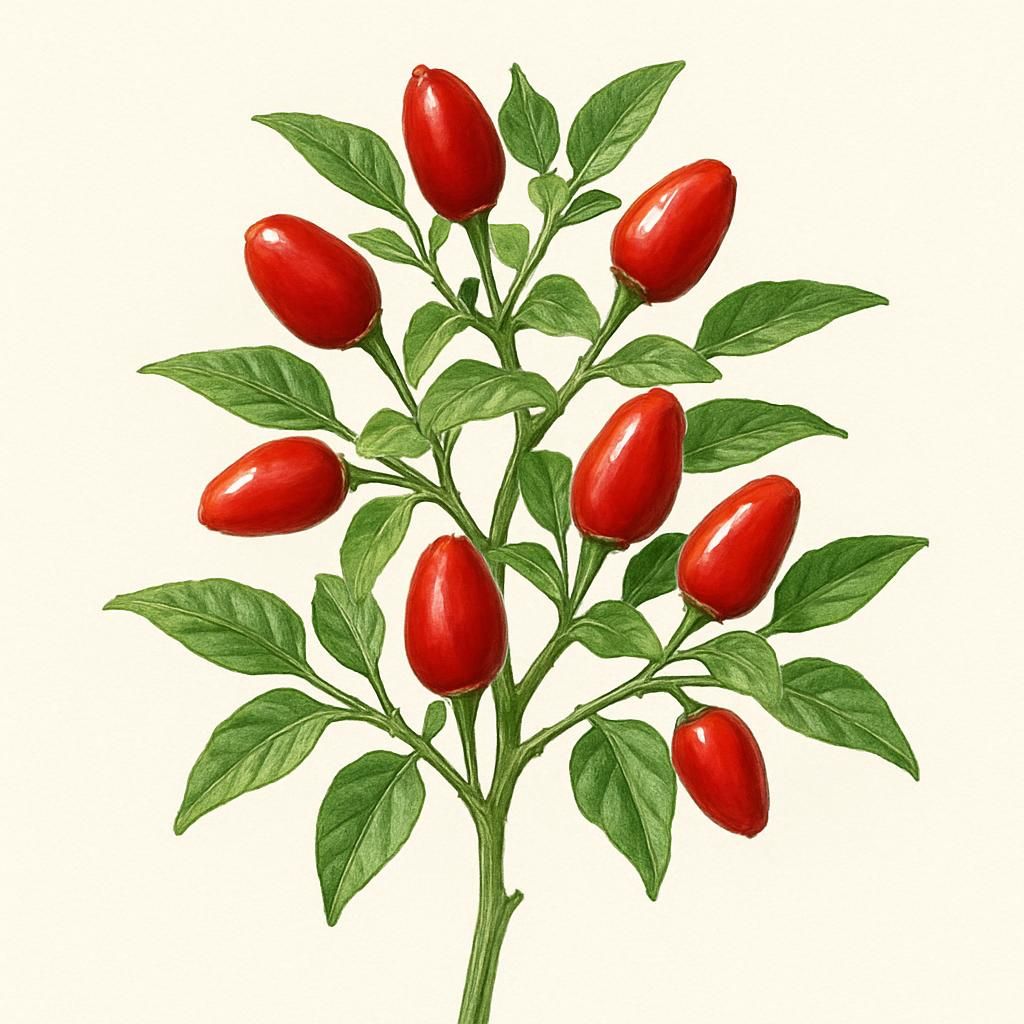
Introduction to Pequin Pepper
Pequin pepper (Capsicum annuum var. glabriusculum) is a diminutive yet intensely flavorful chile that grows wild across northern Mexico and the southern United States. Known for its small, round-to-ovoid pods that ripen from green to bright red, the variety delivers a Scoville rating between 30,000 and 60,000 units, offering a sharp, slightly citrusy heat followed by a subtle smoky sweetness. Commercial and home growers value Pequin for its compact habit, high productivity, and adaptability to both container and field production.
The pepper’s popularity has risen sharply among specialty-food producers and home cooks seeking authentic Mexican flavors. Because the plant sets fruit continuously over a long season, a modest planting can supply both fresh chiles and a steady supply of dried pods for seasoning blends and hot sauces.
Botanical Profile of Pequin Pepper
Pequin belongs to the Solanaceae family and is botanically classified as a perennial sub-shrub, although it is most often grown as an annual in temperate climates. Mature plants reach 60–90 cm in height with a similar spread, producing slender branches covered in small, ovate, dark-green leaves. The tiny white flowers are self-pollinating yet benefit from insect visitation. Fruits measure 1–2 cm in diameter, begin green, and mature to a glossy scarlet red. Inside each pod are numerous small, cream-colored seeds that remain viable for two to three years when stored properly.
Soil, pH, and Climate Requirements for Pequin Pepper
Pequin pepper performs best in well-drained, moderately fertile soils. Heavy clay must be amended with coarse sand or aged compost to prevent waterlogging. The plant tolerates a broad temperature range but is sensitive to frost.
| Parameter | Ideal Range | Notes |
|---|---|---|
| Soil Type | Sandy loam to loam | Good drainage prevents root rot |
| Soil pH | 6.0–7.0 | Slightly acidic to neutral |
| Temperature (day) | 24–32 °C | Optimal fruit set |
| Temperature (night) | 16–21 °C | Below 13 °C slows growth |
| USDA Hardiness Zones | 9–11 (annual elsewhere) | Protect or overwinter indoors in cooler zones |
| Sun Exposure | Full sun (6–8 hours) | Afternoon shade in extreme heat |
| Spacing | 45–60 cm between plants | Rows 75–90 cm apart |
Step-by-Step Planting & Propagation
Start seeds indoors 8–10 weeks before the last expected frost. Sow seeds 0.5 cm deep in sterile seed-starting mix; maintain 27 °C bottom heat for rapid germination (7–14 days). Transplant seedlings once they have two sets of true leaves and nighttime temperatures remain above 15 °C. Harden off plants for seven days before moving outdoors. Space transplants according to the table above; water thoroughly after planting to settle the root ball.
Care & Maintenance regimes for Pequin Pepper
Consistent moisture, balanced nutrition, and light pruning keep plants productive and compact.
| Task | Frequency / Timing | Details |
|---|---|---|
| Water | Every 2–3 days (soil surface dry) | Provide 2.5–3.5 cm per week; drip irrigation preferred |
| Fertilizer | Every 3 weeks after flowering | High-phosphorus, low-nitrogen formula (e.g., 5-10-10) at 1 tbsp/plant |
| Pruning | Once at 30 cm height | Pinch growing tip to encourage branching; remove lower leaves for airflow |
Mulch with 5 cm of organic material to moderate soil temperature and suppress weeds. Stake tall varieties in windy locations.
Pests, Diseases & Organic Management
Common threats include Aphids, Spider Mites, Thrips, and Flea Beetles. Monitor undersides of leaves weekly. Release lady beetles or lacewings for aphid control; apply insecticidal soap or neem oil for mites and thrips. Fungal issues such as Powdery Mildew and Phytophthora are mitigated by proper spacing, drip irrigation, and crop rotation. Remove and destroy infected plant material promptly.
Harvesting, Curing & Optimal Storage
Harvest Pequin peppers when fully red and firm for peak flavor. Pick every 3–5 days to stimulate continued production. For drying, spread pods in a single layer on screens in a warm, well-ventilated area (32–35 °C) until brittle (5–7 days). Store dried peppers in airtight glass jars away from light; they retain pungency for up to 18 months. Fresh peppers keep 2–3 weeks refrigerated at 7–10 °C.
Companion Planting for Pequin Pepper
Pair Pequin with Tomato, Basil, and Marigold to deter pests and improve flavor. Avoid planting near Fennel or Kohlrabi, which can stunt growth. Include Nasturtium as a trap crop for aphids.
For deeper seasonal planning insights, see The Overlooked Art of Seasonal Harvest Timing for Small Farm Profit.