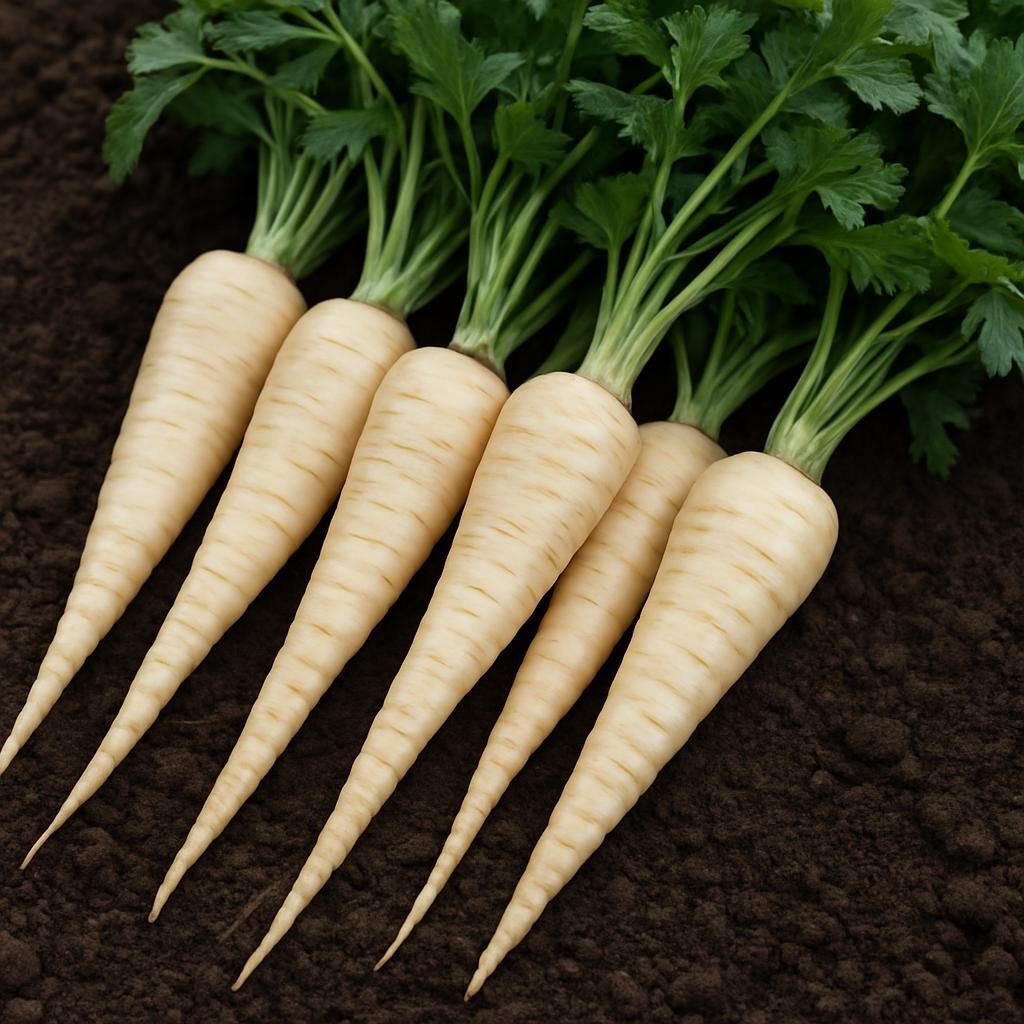
Introduction to Parsnip (Turga)
Parsnip (Turga) is a refined European selection of the common parsnip that produces exceptionally straight, smooth roots up to 30 cm long with creamy white flesh and a high sugar content. Because the cultivar is bred for uniform shape and resistance to forking, it is favored by market growers who need consistent product for direct sales and processing. The roots develop their signature sweet, nutty flavor only after exposure to several hard frosts, making it a true cool-season crop that rewards patient growers.
Unlike many root vegetables, parsnips are slow to germinate and require a long growing season of 120–150 days, so early planning is essential. Turga stands out for its tolerance of heavier soils and lower incidence of canker compared with older varieties. When grown correctly, a single 3 m row can yield 4–6 kg of marketable roots, making it an efficient use of space in intensive beds.
This guide covers every stage from soil testing through post-harvest storage so you can produce high-quality parsnips season after season.
Botanical Profile of Parsnip (Turga)
Parsnip (Turga) belongs to the Apiaceae family and is botanically classified as Pastinaca sativa 'Turga'. It is a biennial that forms a rosette of pinnate leaves in its first year and sends up a tall flowering stalk in the second year if left in the ground. The edible portion is a swollen taproot composed of xylem and phloem tissues that store carbohydrates.
The cultivar Turga is distinguished by its slender, wedge-shaped roots with minimal side branching and smooth skin that reduces soil adhesion at harvest. Foliage is dark green, deeply lobed, and reaches 40–50 cm in height. Flowers are small, yellow, and borne in compound umbels that attract beneficial pollinators when allowed to bloom.
Because parsnips are out-crossing, seed saved from garden plants will not breed true; commercial seed is the reliable route for consistent Turga performance.
Soil, pH, and Climate Requirements for Parsnip (Turga)
Parsnip (Turga) demands deep, friable, stone-free soil to allow straight root development. Compacted or rocky ground causes forking and reduces market value. The ideal pH range is slightly acidic to neutral.
Ideal Growing Conditions Table
| Parameter | Optimal Range | Notes |
|---|---|---|
| Soil Texture | Sandy loam to loam | Avoid heavy clay; add compost for structure |
| Soil pH | 6.0–7.0 | Below 6.0 increases risk of canker |
| Organic Matter | 3–5 % | Incorporate well-rotted manure or compost |
| Soil Temperature (planting) | 7–18 °C | Germination halts above 24 °C |
| Air Temperature (growth) | 10–20 °C | Tolerates light frost; flavor improves post-frost |
| Day Length | 12–16 h | Long days promote root bulking |
| Drainage | Excellent | Raised beds recommended in wet climates |
Site selection should receive full sun (minimum 6 hours) with protection from strong winds that can desiccate foliage.
Step-by-Step Planting & Propagation
- Timing: Sow directly outdoors 2–4 weeks before the last spring frost when soil reaches 7 °C. In mild-winter regions, fall sowing is possible for overwintered roots.
- Seed Preparation: Parsnip seed loses viability quickly; use fresh seed each year. Soak in water for 12–24 hours to accelerate germination.
- Bed Preparation: Loosen soil to 30 cm depth, remove stones, and incorporate 5 cm of compost. Create raised beds 20–25 cm high if drainage is marginal.
- Sowing Method: Sow seeds 1 cm deep in rows 30–45 cm apart. Thin seedlings to 8–10 cm within the row once true leaves appear.
- Germination: Expect 14–21 days at 10–15 °C. Keep seedbed evenly moist; never allow crusting.
- Succession: For continuous harvest, sow every 3 weeks until mid-summer in cool climates.
Care & Maintenance regimes for Parsnip (Turga)
Consistent moisture and weed control are the two most important factors after establishment. Hand-weed or use shallow hoeing to avoid root damage. Mulch with 5 cm of straw once plants are 15 cm tall to suppress weeds and retain moisture.
Water, Fertilizer, and Pruning Schedule Table
| Growth Stage | Watering Frequency | Fertilizer Application | Pruning/Thinning |
|---|---|---|---|
| Germination (0–3 wk) | Keep top 2 cm moist daily | None | None |
| Seedling (3–6 wk) | 2–3 times per week | Side-dress with 5-10-10 at 4 wk | Thin to 8–10 cm spacing |
| Vegetative (6–12 wk) | 25–30 mm per week | Light compost tea every 4 wk | Remove yellowing leaves |
| Root Bulking (12+ wk) | 20–25 mm per week | No additional N; potassium-rich if needed | None |
| Pre-Harvest | Reduce to 15 mm per week | None | Cut back foliage to 5 cm 1 wk prior |
Avoid high-nitrogen fertilizers after the first month to prevent excessive top growth at the expense of roots.
Pests, Diseases & Organic Management
Common pests include carrot fly larvae that tunnel into roots and aphids that colonize foliage. Use floating row covers from sowing until harvest to exclude carrot fly. Encourage beneficial insects with nasturtium and yarrow borders.
Diseases of concern are parsnip canker (Itersonilia pastinacae) and powdery mildew. Choose well-drained sites, practice 3-year rotations, and remove crop debris at season end. Copper-based sprays provide limited organic control of canker when applied at first sign of leaf lesions.
Harvesting, Curing & Optimal Storage
Harvest begins after 120 days when roots reach 2–3 cm diameter at the shoulder. In cold climates, leave roots in the ground through several frosts to convert starches to sugars. Use a digging fork inserted beside the row and lift carefully to avoid breakage.
Cure harvested roots for 24–48 hours in a shaded, well-ventilated area to reduce field heat and heal minor abrasions. Store at 0–2 °C and 95 % relative humidity; roots keep 4–6 months in perforated plastic bags or moist sand. Never wash before storage.
Companion Planting for Parsnip (Turga)
Parsnip (Turga) pairs well with onion, garlic, and leeks that repel carrot fly. Lettuce and radish make excellent understory companions that mature quickly and provide soil cover. Avoid planting near celery or parsley to reduce shared pest pressure. Marigold borders attract predatory insects and add beneficial diversity to the bed.
For more detail on cool-season soil strategies, see The Forgotten Art of Fall Soil Revival: 8 Organic Strategies for Small Farm Resilience.