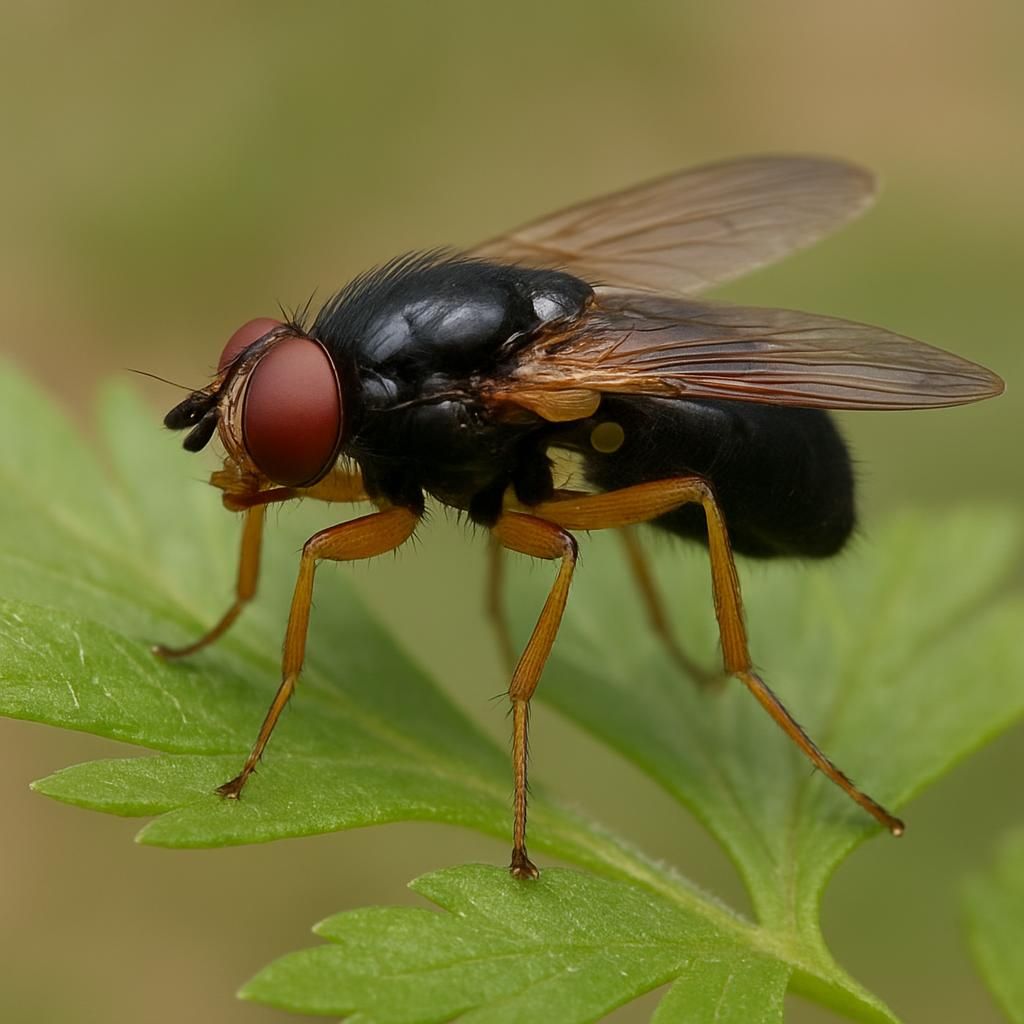
Introduction to carrot fly
The carrot fly (Psila rosae) is a small, shiny black fly whose larvae are one of the most destructive pests of Carrot and related root vegetables. Adult flies are approximately 5–8 mm long with reddish heads and yellow legs; they are weak fliers that stay close to the ground. The pest is widespread across temperate regions and can cause total crop loss in untreated plantings. Early detection and consistent management are essential because damage occurs below ground and is often discovered only at harvest.
Identifying Symptoms & Damage
Larval feeding produces characteristic brown tunnels and galleries inside roots, often accompanied by rusty discoloration and secondary bacterial or fungal rots. Above ground, plants may show wilting, yellowing foliage, or stunted growth, especially during dry periods when damaged roots cannot supply adequate water. Heavily infested roots become forked, scarred, and unmarketable; in severe cases entire beds must be destroyed. Regular inspection of foliage for adult flies and soil sampling near the crown can confirm active infestations before harvest losses occur.
Lifecycle and Progression of carrot fly (MUST INCLUDE A MARKDOWN TABLE OF LIFECYCLE STAGES)
The carrot fly completes 2–3 generations per year depending on climate. Overwintering occurs primarily as pupae in the soil; adults emerge in spring when soil temperatures reach approximately 12 °C. Females lay eggs in soil cracks at the base of host plants; eggs hatch in 7–10 days. Larvae feed for 3–4 weeks before pupating, and a new generation of adults appears 5–6 weeks later.
| Stage | Duration | Key Characteristics | Optimal Conditions |
|---|---|---|---|
| Egg | 7–10 days | Tiny white ovoid eggs laid in soil cracks | 15–20 °C soil temperature |
| Larva | 3–4 weeks | Creamy-white maggots up to 10 mm long | Moist, well-drained soil |
| Pupa | 2–3 weeks | Brown puparium 5–6 mm long in soil | 10–18 °C; overwinters in northern areas |
| Adult | 2–4 weeks | Shiny black body, reddish head, yellow legs | Cool, humid evenings (May–September) |
Environmental Triggers & Risk Factors
Carrot fly populations thrive in cool, moist weather typical of spring and early autumn. Sandy or light soils facilitate egg-laying and larval movement, while heavy clay soils may slow but not prevent infestation. Proximity to previous carrot or parsnip crops, lack of crop rotation, and absence of physical barriers increase risk. Overwintered pupae survive best in undisturbed soil; tillage and removal of crop residues reduce carry-over. Windbreaks and hedgerows can shelter adults, while temperatures above 25 °C suppress activity.
Organic Control & Treatment Plans (MUST INCLUDE A MARKDOWN TABLE OF TREATMENT OPTIONS AND FREQUENCIES)
Organic management integrates exclusion, cultural practices, and targeted biological controls. Floating row covers or fine-mesh netting placed immediately after sowing provide the most reliable exclusion. Companion planting with Onion or Garlic masks host odors. Soil solarization and timely removal of infested roots further reduce populations. Beneficial nematodes (Steinernema spp.) and predatory beetles can suppress larvae when applied correctly.
| Treatment Option | Application Method | Frequency / Timing | Notes |
|---|---|---|---|
| Fine-mesh netting / row covers | Install at sowing; seal all edges | Maintain until harvest | Most effective single control |
| Crop rotation (3–4 years) | Avoid planting carrots after carrots | Every season | Breaks pest cycle |
| Companion planting (onion family) | Interplant or border rows | At sowing | Masks carrot volatiles |
| Beneficial nematodes | Soil drench at 1 million per m² | At egg-laying peaks (spring & late summer) | Apply when soil is moist and >12 °C |
| Sticky traps (yellow) | Place 10–15 cm above soil | Weekly monitoring from April–October | Detect adult emergence; replace as needed |
| Sanitation (remove crop debris) | Uproot and destroy infested roots | Immediately after harvest | Prevents overwintering pupae |
Preventing carrot fly in the Future
Long-term prevention centers on integrated strategies that disrupt the pest’s lifecycle. Implement strict crop rotation with non-host crops such as Lettuce or Tomato for at least three years. Use physical barriers every season and combine them with timely sowing dates that avoid peak adult flights. Maintain healthy soil biology through regular addition of compost and avoidance of excessive nitrogen, which can make plants more attractive. Monitor with sticky traps and act at the first sign of adult activity. Record-keeping of infestation dates helps refine future planting schedules.
Crops Most Affected by carrot fly
Primary hosts belong to the Apiaceae family. Carrot is the most severely affected, followed by parsnip, parsley, and celery. Secondary hosts include Beet, Turnip, and certain wild umbellifers that serve as reservoirs. Radish and Cabbage are rarely damaged but may occasionally host low-level populations. Understanding host range supports effective rotation planning and barrier placement.
For further reading on integrated pest management strategies, see the Crop Rotation Realities: 6 Organic Patterns That Deliver for Small Farms post.