Introduction to Olive scale
Olive scale, scientifically known as Parlatoria oleae, stands as one of the most destructive pests targeting olive orchards worldwide. This armored scale insect thrives on olive foliage, twigs, and fruit, extracting vital plant sap and secreting honeydew that fosters sooty mold growth. Native to the Mediterranean region, it has spread to olive-growing areas in California, Australia, and parts of South America, posing significant threats to commercial and backyard olive production. Infestations can reduce photosynthesis, stunt growth, and diminish fruit quality, leading to yield losses of up to 50% in severe cases. Understanding olive scale's biology and implementing integrated pest management (IPM) is crucial for sustainable olive cultivation. This comprehensive guide equips growers with diagnostic tools, lifecycle insights, and proven organic strategies to combat this pest effectively. For more on olive varieties susceptible to such issues, see the Olive (crop) page.
Growers often overlook early infestations, mistaking them for nutrient deficiencies or environmental stress. However, timely recognition and intervention can prevent escalation. Olive scale's waxy armor shields it from many pesticides, making cultural and biological controls essential. Recent studies from the University of California IPM program highlight that combining horticultural oils with natural enemies yields superior long-term results over chemical reliance. As climate change extends growing seasons, olive scale populations surge, demanding vigilant monitoring. This guide draws from entomological research and field trials to deliver actionable advice for maintaining healthy olive groves.
Identifying Symptoms & Damage
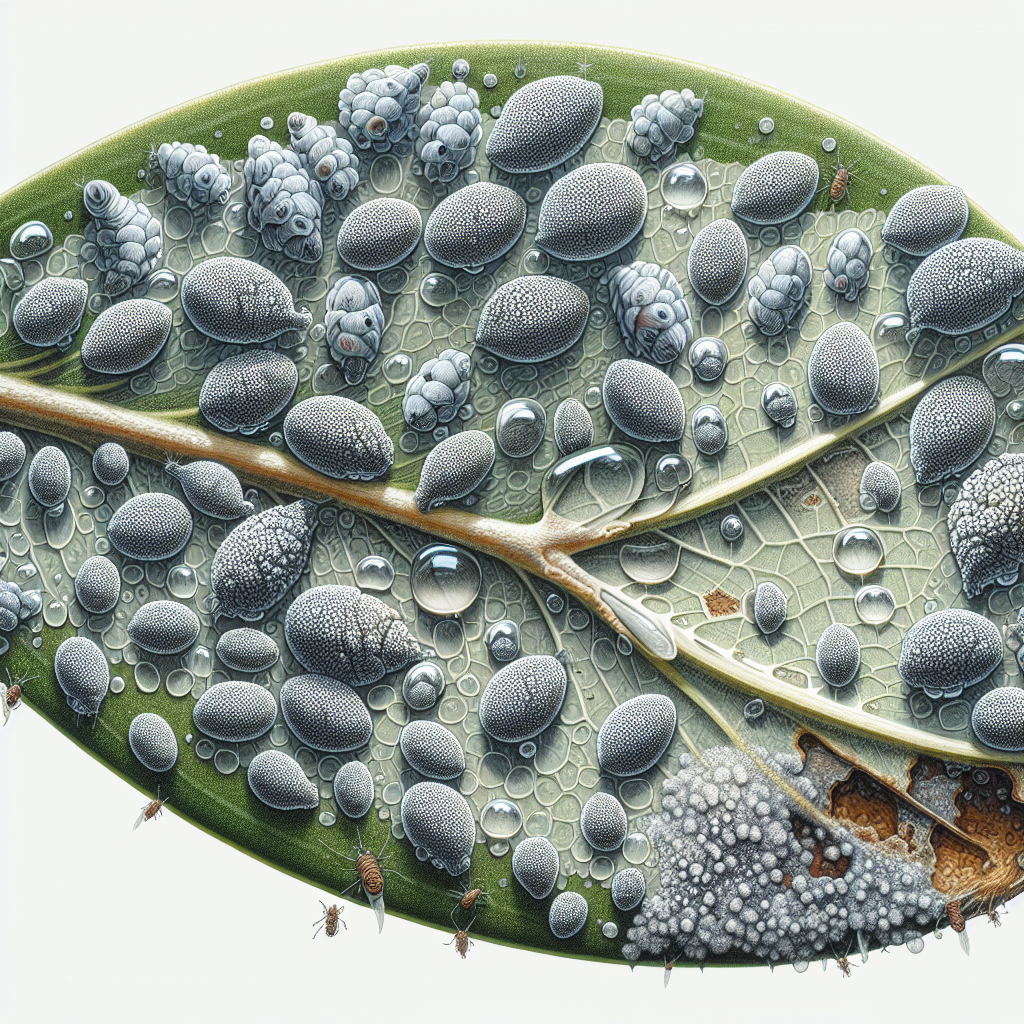
Spotting olive scale early hinges on recognizing subtle signs before widespread damage occurs. Adult females appear as small, circular, grayish-white or brown armored scales, measuring 1-2 mm in diameter, often clustered on the underside of leaves, along midribs, and on smaller branches. Males are smaller, elongated, and winged, but less conspicuous. Nymphs, or crawlers, are the mobile orange-pink stage, tiny (0.3 mm) and visible with a hand lens.
Primary symptoms include yellowing or chlorotic leaves, particularly on the lower canopy, with heavy infestations causing premature leaf drop. Twigs may show dieback, and fruit develops dark, sunken lesions where scales feed, reducing marketability. A telltale sign is honeydew excretion, a sticky substance that attracts ants and promotes sooty mold (disease), blackening leaves and impairing photosynthesis. Severely infested trees exhibit sparse foliage, stunted shoots, and reduced vigor, mimicking drought stress.
Damage quantification reveals that moderate infestations (10-20 scales per leaf) reduce olive oil yield by 20-30%, while heavy ones (>50 scales/leaf) can halve production. Differentiate from similar pests like black scale (pest) or mealybugs (pest) by the hard, circular shell and preference for olive-specific sites. Use sticky traps or beat sheets for population sampling: shake branches over white paper and count crawlers. Regular scouting every 2-3 weeks during spring and summer is vital. For small farms tackling misidentification pitfalls, check out Why Misidentifying Plants Costs Small Farms Thousands - And How AI Camera Diagnosis Fixes It Fast.
Lifecycle and Progression of Olive scale
Olive scale completes 3-5 generations annually, depending on climate, with a lifecycle spanning 6-12 weeks per generation. Eggs hatch into crawlers from March to April in Mediterranean climates, dispersing via wind or crawling before settling and forming armor. These first-instars feed for 2-3 weeks, molt into second-instars, then immobile adults. Females produce 20-50 eggs under their scale cover, overwintering as mature females or second-instars on bark.
Peak crawler activity occurs in late spring (May-June), mid-summer (July-August), and fall (September-October), aligning with olive bloom and fruit set. Males emerge as tiny winged adults, mating with sessile females. Environmental cues like temperature (optimal 20-30°C) and humidity drive progression; below 10°C, development halts. Overwintering survival exceeds 80% on trunks, enabling rapid spring rebound.
Progression stages: Crawler (mobile, vulnerable); Settled nymph (armor forming); Adult female (egg-laying, 1-2 months lifespan). Monitoring crawler emergence with double-sided tape on branches predicts outbreaks. Lifecycle knowledge informs targeted treatments, as only crawlers are susceptible to contact sprays. In warm regions like California, overlapping generations complicate control, necessitating season-long IPM.
Environmental Triggers & Risk Factors
Olive scale flourishes in warm, dry conditions, with temperatures above 15°C accelerating reproduction. Drought stress weakens trees, increasing susceptibility; irrigated groves show 40% lower infestations. Poor pruning leads to dense canopies, trapping humidity and hindering natural predators. Over-fertilization with nitrogen promotes succulent growth, attracting females.
Risk factors include nearby unmanaged orchards harboring overwintering scales, wind-dispersed crawlers, and ant-tended colonies. Young trees (<5 years) suffer most, with up to 70% defoliation. Soil types matter: heavy clays retain moisture, favoring predators, while sandy soils stress trees. Climate shifts, including milder winters, boost overwintering survival from 50% to 90%. Proximity to scale insects (pest) hotspots amplifies invasion.
Organic Control & Treatment Plans
Organic management prioritizes IPM, integrating cultural, biological, and mechanical tactics. Cultural Controls: Prune infested wood in winter (December-February), removing 20-30% canopy to improve air circulation and expose scales to predators. Irrigate consistently to bolster tree resilience; deficit irrigation reduces crawler survival by 35%. Avoid excess nitrogen; balance with potassium.
Biological Controls: Encourage natural enemies like Chilocorus spp. lady beetles, parasitic wasps (Aphytis maculicornis), and lacewings, which suppress 60-80% populations. Release commercially reared predators at 1,000/ha during crawler peaks. Horticultural oils (2-3% summer rate) smother crawlers without residues; apply at dusk to spare beneficials. Insecticidal soaps target young stages effectively.
Treatment Plans:
- Monitoring Phase (Year-round): Scout biweekly; treat if >5 crawlers/leaf.
- Spring Crawler Control (April-June): Oil + soap sprays at first crawler detection; repeat 10-14 days.
- Summer Management (July-September): Biological releases + ant baits (iron phosphate).
- Dormant Season (Winter): Dormant oil (3-4%) to kill overwintering stages.
Field trials show 85% reduction combining oils and predators versus 50% with sprays alone. Rotate tactics to prevent resistance. For broader pest strategies, explore Spring Pest Patrol: Organic AI Strategies to Shield Your Crops from Common Invaders. Always test on small areas.
Preventing Olive scale in the Future
Prevention hinges on proactive orchard hygiene and monitoring. Plant resistant rootstocks and space trees 6-7m apart for airflow. Introduce hedgerows with yarrow (crop) or thyme (crop) to harbor predators. Wrap trunks with burlap in fall to trap crawlers. Ant management via barriers or baits prevents protection of scales.
Annual winter pruning removes mummies and infested limbs; burn debris. Soil solarization in new plantings kills soil stages. Scout with pheromone traps for males. Long-term, diversify with cover crops enhancing biodiversity. Resistant varieties like 'Arbequina' show lower infestations. Regular IPM audits sustain prevention, targeting <1% infestation thresholds.
Crops Most Affected by Olive scale
Primarily devastating to olives, especially Kalamata Olive (crop) and Castelvetrano Olive (crop), olive scale occasionally infests almond (crop), [apricot], and citrus like orange (crop). Olives suffer most, with economic losses exceeding $100 million annually in California. Other stone fruits experience minor damage, but olives' thin bark and fruit susceptibility make them ideal hosts.