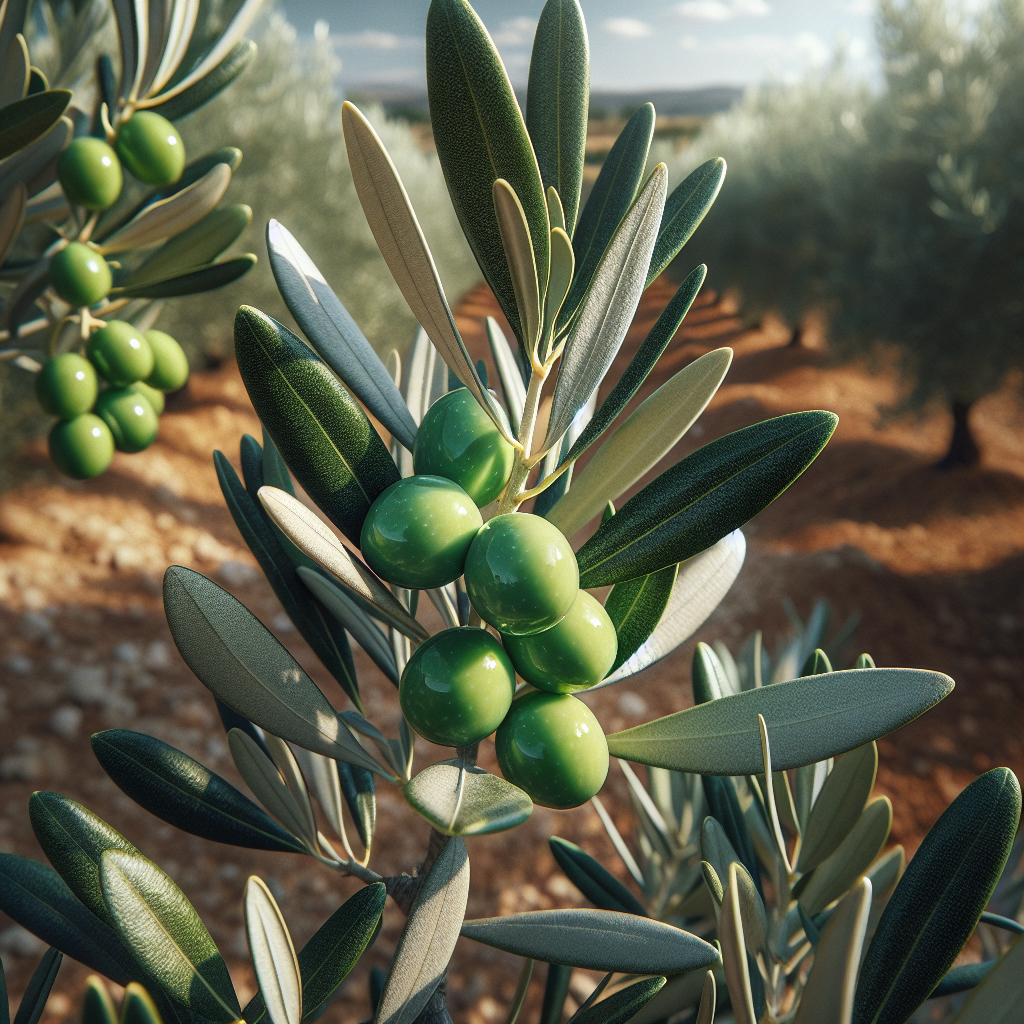
Introduction to Castelvetrano Olive
Known globally for its bright green, meaty, low-bitterness table olives, this cultivar traces to southwestern Sicily, especially the Belice Valley around Castelvetrano, from which the market name became famous. Botanically, the variety is Nocellara del Belice, a traditional Italian olive valued not only for eating but also for producing fragrant oil when harvested and milled at the proper maturity stage. Its commercial reputation comes from a rare combination of large fruit size, relatively high flesh-to-pit ratio, and a naturally mild flavor profile compared with more assertive brining cultivars.
For growers, that culinary prestige matters because market expectations are high. Buyers want uniform, medium-to-large, unblemished fruit with a saturated green color for table use, or balanced ripening and good oil accumulation for dual-purpose production. This means orchard management must emphasize fruit finish, consistent irrigation, calcium-balanced nutrition, and pest exclusion more than in lower-grade oil orchards. If you already grow other Mediterranean fruit trees, some cultural principles overlap with Olive, but this cultivar deserves more precise handling because table quality premiums can vanish quickly when fruit scars, bruises, or softens.
The tree is adaptable, drought tolerant once mature, and impressively resilient in poor soils compared with many fruit crops, yet the highest yields and finest olive quality come from controlled stress rather than neglect. Well-managed orchards can remain productive for decades, and in traditional landscapes much longer. Growers in Mediterranean, semi-arid, and mild subtropical regions often find it one of the more rewarding specialty olives, provided winter chilling is adequate for floral induction and humidity is not so persistent that foliar disease pressure becomes chronic.
Botanical Profile of Castelvetrano Olive
This is a selection of Olea europaea with moderate to high vigor, forming a broad, rounded canopy if left unpruned. Juvenile growth is upright, then scaffolds spread with age. Leaves are opposite, narrow-lanceolate, gray-green above and silvery beneath, an adaptation that reduces water loss and reflects intense summer light. The root system is fibrous and opportunistic rather than deeply taprooted in most cultivated conditions, so oxygen in the root zone is critical.
Flowering occurs on one-year-old shoots borne on the previous season's growth. Like many olives, it tends toward alternate bearing if crop load is not moderated through pruning, nutrition, and irrigation balance. Panicles carry numerous small cream-white flowers, but only a very small percentage set fruit. Heat spikes above about 32 to 35°C during bloom, cold wet bloom periods, or strong winds can sharply reduce fruit set.
Fruit are notably large, nearly spherical to broadly oval, with a smooth skin and substantial flesh. For premium green table production, harvest occurs before full color change, when the fruit is physiologically mature enough to size well but still firm and vividly green. For oil, harvest may be delayed into the turning-color stage. The cultivar is considered dual-purpose, but many growers dedicate blocks specifically to table or oil markets because irrigation, crop load targets, and harvest timing differ.
Pollination can be partial with self-fruitfulness varying by environment, but cross-pollination often improves set and consistency. In mixed orchards, compatible pollenizers such as other flowering olives can boost productivity, especially in seasons with marginal bloom weather. Wind is the main pollination vector, so orchard layout and airflow matter.
Soil, pH, and Climate Requirements for Castelvetrano Olive
This cultivar performs best in well-drained loam, sandy loam, gravelly loam, or calcareous soils with moderate depth. It can survive in poorer ground, but survival should not be confused with profitable production. The ideal soil profile drains freely after irrigation or rain, with no perched water table within roughly 1 to 1.5 meters of the surface during the growing season. If water remains in the root zone longer than 24 to 48 hours after saturation, root respiration drops, fine roots die back, and susceptibility to Phytophthora and decline rises sharply.
Preferred soil pH is about 6.5 to 8.2, with especially good performance on neutral to moderately alkaline soils. It tolerates lime better than many fruit trees, but extremely high pH above about 8.3 can tie up iron, zinc, and manganese, leading to chlorosis. Iron chlorosis typically appears as yellow young leaves with green veins; zinc deficiency often shows as shortened internodes and small leaves. In acid soils below pH 6.0, growth can be uneven and nutrient imbalances become more likely, so liming may be needed before planting.
Climate is the defining factor. This is fundamentally a Mediterranean crop: cool winters, mild wet spring, hot dry summer, and low humidity near harvest. Trees generally tolerate short dips below freezing when dormant, but young trees can be damaged around -3 to -5°C, and severe injury becomes more likely below -7°C depending on duration and acclimation. Summer heat is not a problem if roots have access to moisture and drainage is good; in fact, warm dry summers improve fruit health and reduce disease pressure.
Annual rainfall of 400 to 700 mm can sustain orchards in traditional systems, but high-quality commercial production often relies on supplemental irrigation. The key is not constant wetness but maintaining moderate soil moisture during shoot growth, flowering support, pit hardening, and fruit sizing. As a practical target, keep soil in the active root zone roughly at 60 to 80% of field capacity during establishment and main fruit development. Letting soil fall too dry for too long leads to leaf curl, dull gray foliage, fruit shrinkage, and poor return bloom. Conversely, chronic overwatering causes soft lush growth, reduced aeration, yellowing leaves, and fruit with lower firmness.
Site selection should favor full sun, open air movement, and slopes that drain cold air. South- or west-facing exposures can improve ripening in marginal climates. Avoid frost pockets, poorly drained valley bottoms, and sites with persistent morning fog. Salinity tolerance is moderate, but sodium-heavy water degrades soil structure over time; if irrigation EC is high, gypsum and periodic leaching may be necessary where drainage allows.
For broader orchard floor strategy and long-term structure, growers may also benefit from principles outlined in soil health strategies, especially where erosion, compaction, or low organic matter limit root performance.
Step-by-Step Planting & Propagation
Start with disease-free, true-to-type nursery trees propagated vegetatively, usually from semi-hardwood cuttings or rooted liners. Seedling propagation is unsuitable for commercial uniformity because offspring vary genetically and fruit traits will not remain consistent.
Prepare the site 3 to 12 months ahead. Test soil for pH, texture, salinity, organic matter, calcium, magnesium, boron, and micronutrients. Rip compacted layers if a hardpan exists, but only when soil moisture is right so you fracture rather than smear the profile. Install drainage before planting if infiltration is poor.
Control perennial weeds. Young olives establish slowly when competing with bermudagrass, bindweed, or aggressive annual weeds. Create a weed-free strip at least 1 to 1.5 meters wide along the tree row.
Lay out spacing according to system. Traditional orchards often use 6 x 6 m to 8 x 8 m. Moderate-density systems may use 5 x 6 m or similar. Because Nocellara del Belice is vigorous, avoid crowding unless you have a strong pruning program.
Plant in spring after frost risk, or in mild-winter regions in autumn. The best timing is when soil is workable and root growth can start before severe heat or cold. Container trees should be hardened to outdoor conditions.
Dig broad, not deep, holes. The planting hole should be only as deep as the root ball and about twice as wide. Planting too deep is a common failure point; keep the root flare slightly above finished soil level, especially in heavier soils.
Inspect roots. Tease out circling roots and prune broken or girdling roots. If root-bound, lightly score the outer root mass to encourage lateral expansion.
Backfill with native soil. Avoid filling the hole with rich compost-only mixes that create a bathtub effect. A small amount of well-finished compost can be incorporated broadly over the site, not concentrated in the hole.
Water in thoroughly. Apply enough water to settle soil around the root ball and eliminate air pockets. Then shift to a measured irrigation schedule rather than daily shallow watering.
Stake only if necessary. Windy sites may require temporary staking for 6 to 12 months. Use soft ties and remove before constriction occurs.
Mulch carefully. Apply 5 to 8 cm of coarse organic mulch around, but not touching, the trunk. Keep a 10 to 15 cm bare zone around the base to prevent collar rot.
For propagation by cuttings, take semi-hardwood shoots from healthy non-fruiting wood, typically 10 to 15 cm long, treat with rooting hormone, and root in a sharply drained medium under mist with bottom heat around 21 to 24°C. Commercially, mist control and sanitation are critical because rooting percentages fall rapidly if the material is stressed or infected.
Care & Maintenance regimes for Castelvetrano Olive
Young trees need steady but not excessive water. During the first year, irrigate deeply enough to moisten the top 30 to 45 cm of soil, then allow the upper few centimeters to dry slightly before the next cycle. In sandy soils this may mean 2 to 3 irrigations weekly during hot weather; in loam perhaps once every 5 to 8 days; in heavier but well-drained soils, less often. The goal is moist, aerated soil, never stagnant saturation. A soil probe should enter easily but not bring up sticky, anaerobic mud.
Mature trees are drought tolerant, but premium table olive production benefits from regulated irrigation. Water stress during bloom and early fruit set reduces crop potential. Stress during fruit enlargement reduces size, which is especially damaging for a large-fruited table cultivar. A common professional strategy is to irrigate to replace 40 to 70% of estimated crop evapotranspiration early in the season, increasing during heavy fruit sizing if water is available, then avoiding excessive late irrigation that can reduce concentration and promote disease in humid regions.
Nutrition should be driven by leaf analysis, not guesswork. Nitrogen is the main driver of vegetative growth and yield, but too much nitrogen produces overly vigorous shoots, shading, softer tissue, and lower fruit quality. Apply modest split doses in spring and early summer, with more caution in fertile soils. Potassium supports fruit development and drought tolerance; deficiency appears as marginal leaf scorch on older leaves and weak fruit fill. Calcium contributes to fruit firmness and cell wall integrity, especially relevant for table olives. Boron is crucial in tiny amounts for flowering and fruit set; deficiency can impair reproductive performance even when foliage looks acceptable.
Pruning should aim for light penetration, airflow, and stable bearing wood. Train young trees to a single trunk with 3 to 4 well-spaced scaffold limbs beginning 80 to 100 cm above ground, or use a multi-trunk vase where local practice favors it. Remove suckers regularly. In bearing years, thin crowded interior shoots and eliminate crossing branches. Because flowers arise on the previous year's growth, avoid over-pruning, which can trigger excessive vegetative rebound and reduce the next crop. A practical rule is to remove dead, diseased, damaged, and deeply shading wood first, then step back and ensure dappled light reaches the mid-canopy.
Orchard floor management matters. A bare weed-free strip under the canopy reduces competition in young orchards. Between rows, cover crops can reduce erosion and improve infiltration, but mow or terminate them before they compete heavily for spring moisture. Maintain trunk guards in areas with rabbit, vole, or sunscald risk.
Watch closely for stress symptoms. Overwatered trees often show pale foliage, reduced extension growth despite wet soil, leaf drop from the interior, and occasional blackened feeder roots. Underwatered trees show leaf folding, brittle shoot tips, reduced fruit sizing, and premature fruit drop. Nutrient imbalances frequently appear first on young expanding leaves, so regular scouting every 2 to 3 weeks during active growth is ideal.
Pests, Diseases & Organic Management
The most serious pest and disease profile depends on region, but several issues recur across olive-growing areas. Olive fruit fly is often the premier insect threat because larvae tunnel fruit, reducing table quality and opening pathways for rot. For table production, tolerance is very low. Use monitoring traps early in the season and maintain sanitation by removing infested fruit. Organic programs commonly combine mass trapping, bait sprays based on protein attractants plus approved insecticides, and early harvest where pressure is chronic.
Black scale, Olive scale, and related sap-feeding insects can colonize shoots and leaves, producing honeydew that encourages sooty mold. Heavy infestations reduce vigor and interfere with photosynthesis. Encourage natural enemies, avoid excess nitrogen, and use horticultural oil during dormant or low-heat periods with full canopy coverage.
Olive knot, caused by Pseudomonas savastanoi, produces rough tumor-like galls on twigs and branches, especially after hail, frost injury, or pruning wounds. Prune out infected wood well below visible symptoms during dry weather, sanitize tools, and avoid unnecessary wounding. Copper-based sprays are often used preventively after storms in organic systems where permitted.
Peacock spot is a common fungal leaf disease in humid climates, appearing as circular dark lesions that lead to leaf drop. It is favored by prolonged leaf wetness. Good airflow, lower canopy density, and preventive copper sprays before rainy periods are the classic management tools. Anthracnose can affect ripening fruit, especially in wet autumns, causing fruit rot and mummification.
Root and crown problems usually trace back to poor drainage rather than primary pathogen pressure alone. Phytophthora risk rises dramatically where irrigation is frequent and soils remain saturated. The best organic management is prevention: raised planting areas, clean nursery stock, controlled irrigation, and avoiding trunk wetting.
Integrated organic management starts with prevention rather than rescue. Use resistant, vigorous nursery trees; maintain open canopies; keep weeds from touching trunks; support beneficial insects with flowering strips; and monitor pest populations before damage escalates. Yarrow, Thyme, and Clover around orchard alleys can help support beneficial predators and parasitoids while improving biodiversity, though they should be managed so they do not create excessive humidity at the trunk line.
Harvesting, Curing & Optimal Storage
Harvest timing depends entirely on your market. For Castelvetrano-style green table olives, fruit are generally picked when full-sized, uniformly green to yellow-green, and still firm, before the purple-black ripening stage. Delayed harvest lowers the classic mild green-olive profile and can reduce processing value. For oil, harvest can extend into color break when oil accumulation rises, though flavor shifts from grassy and green to softer and riper.
Hand harvesting is preferred for premium table fruit because bruising, stem punctures, and skin abrasions reduce curing quality. Pick into shallow, ventilated crates rather than deep sacks. Fruit should be processed quickly after harvest, ideally within the same day, because heat buildup and mechanical injury accelerate softening and fermentation.
The famous Castelvetrano style is not simply a raw fresh olive; it is a processed green olive traditionally treated with lye and brine to remove bitterness while preserving color and crispness. Home or farm-scale curing requires care because sodium hydroxide handling is hazardous and timing errors can damage texture. After lye treatment penetrates the flesh appropriately, olives are washed and transferred to brine. Salt concentration, temperature, and sanitation determine whether the result stays bright, firm, and clean tasting.
If you are storing unprocessed harvested fruit temporarily, keep it cool, shaded, and well ventilated at roughly 5 to 10°C, but only for a short holding period. Prolonged raw storage leads to pitting, shrivel, and off-flavors. Processed olives in brine store best in food-safe containers fully submerged to exclude oxygen. Monitor brine salinity and pH regularly; low salt or exposed fruit invite yeast, mold, and softening.
For oil production, transport fruit cleanly and mill as fast as possible, ideally within 24 hours. Delays reduce sensory quality and increase free acidity. Store finished oil in stainless steel or dark inert containers, full to minimize headspace, at cool stable temperatures around 14 to 18°C.
Companion Planting for Castelvetrano Olive
In olive orchards, companion planting is less about crowding the root zone with vegetables and more about designing a biologically useful understory. The best companions suppress erosion, attract beneficial insects, improve infiltration, and avoid excessive competition for summer moisture. Low-growing flowering herbs and legumes usually outperform tall, thirsty companions.
Clover is one of the most useful orchard companions because it fixes nitrogen, covers bare soil, and supports pollinators and beneficial insects. Keep it mowed low in spring if rainfall is limited so it does not compete too strongly during bloom and fruit set.
Thyme is excellent in dry Mediterranean orchards because it tolerates lean soils, attracts predatory insects when flowering, and stays low enough not to interfere with air movement. It is especially useful on berms or rocky borders.
Yarrow is valued for drawing hoverflies, parasitic wasps, and predatory beetles. It also tolerates heat and relatively poor soils once established. Plant it in strips or patches rather than directly against trunks.
Garlic can also be used strategically in smaller plantings or mixed homesteads to deter some pests and occupy spaces near orchard margins, though it is generally less important than permanent understory species in commercial systems. Whatever companions you choose, keep a vegetation-free collar around the trunk, avoid dense irrigated plants directly under the canopy in humid climates, and synchronize mowing with pest monitoring so you do not accidentally drive insects into the trees.