Introduction to Old German Tomato
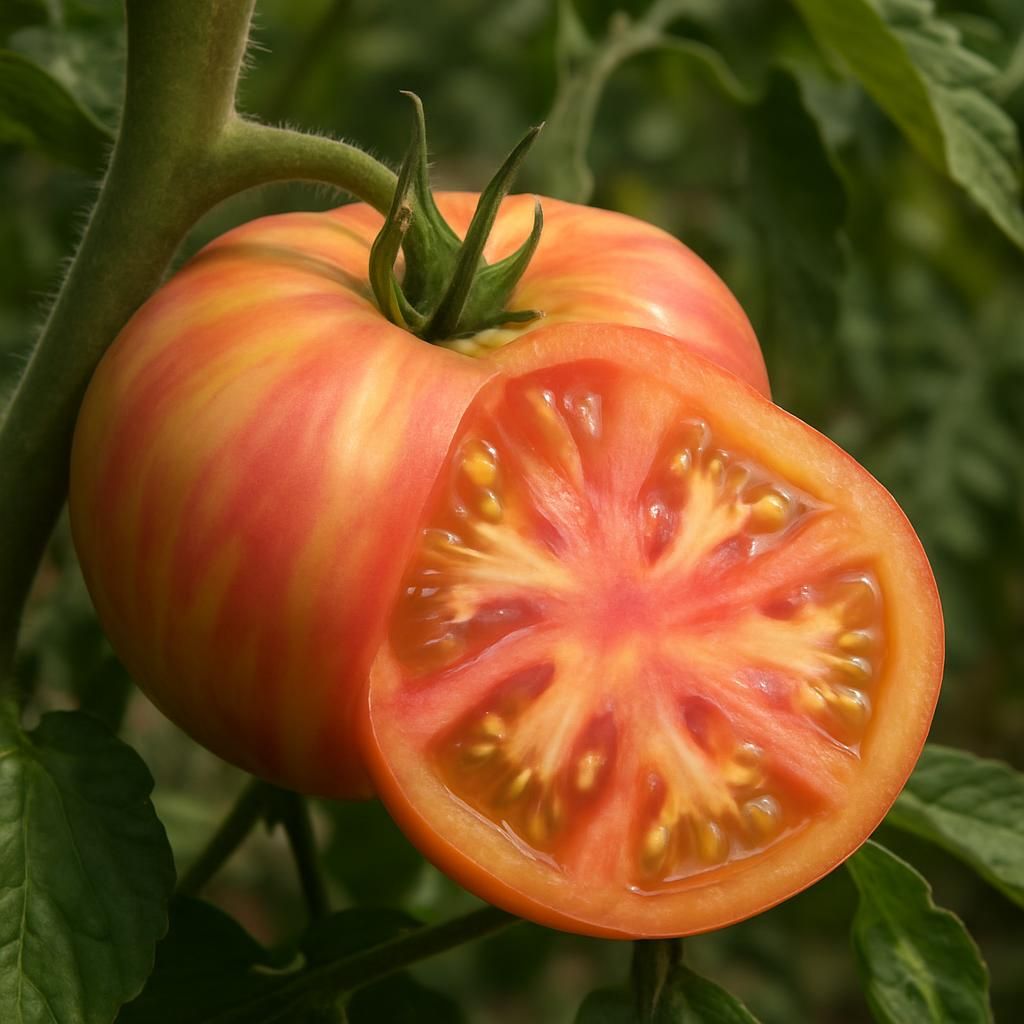
Old German Tomato is an heirloom beefsteak variety celebrated among gardeners and chefs for its enormous, marbled fruit and complex sweet flavor. This indeterminate plant produces large, irregularly shaped tomatoes that ripen to a distinctive pink-and-yellow pattern both inside and out. With a rich history tied to Amish seed savers, Old German has become a favorite for those seeking exceptional taste over commercial uniformity. Its low acidity and meaty texture make it perfect for sandwiches, salads, and fresh market sales.
Botanical Profile of Old German Tomato
Old German Tomato belongs to the nightshade family and grows as an indeterminate vine that continues producing until frost. The plants reach 6–8 feet tall with vigorous branching and require strong support structures. Leaves are typical tomato foliage with medium-green color and serrated edges. Fruit averages 1–2 pounds, featuring a flattened, oblate shape and thin skin that splits easily when fully ripe. The interior displays beautiful marbling of pink, yellow, and occasionally orange hues. Flavor is intensely sweet with low acidity and a juicy, almost creamy texture.
Soil, pH, and Climate Requirements for Old German Tomato
Successful cultivation of Old German Tomato begins with fertile, well-drained soil enriched with organic matter. The crop thrives in warm temperatures and full sun exposure. Consistent moisture without waterlogging prevents issues such as Blossom End Rot. Below is a table summarizing ideal conditions:
| Parameter | Ideal Range/Value | Notes |
|---|---|---|
| Soil Type | Loamy, well-drained | Add compost or aged manure before planting |
| Soil pH | 6.2–6.8 | Slightly acidic; test and amend as needed |
| Temperature (Day) | 70–85°F (21–29°C) | Optimal fruit set occurs in this range |
| Temperature (Night) | 60–70°F (15–21°C) | Avoid nights below 55°F |
| Sunlight | 8+ hours direct sun daily | Full sun maximizes yield and flavor |
| Spacing | 24–36 inches between plants | Rows 4–5 feet apart for airflow |
| Frost Tolerance | None | Transplant after last spring frost |
Step-by-Step Planting & Propagation
Start seeds indoors 6–8 weeks before the last expected frost date. Sow seeds ¼ inch deep in sterile seed-starting mix and maintain soil temperature at 75–80°F for rapid germination. Once seedlings develop two true leaves, transplant into 4-inch pots and harden off gradually over 7–10 days. Plant outdoors when soil has warmed to at least 60°F and nighttime temperatures remain above 55°F. Dig holes twice the width of the root ball and amend with compost. Install sturdy cages or trellises at planting time. Water thoroughly after transplanting and apply a layer of organic mulch to conserve moisture and suppress weeds.
Care & Maintenance regimes for Old German Tomato
Old German Tomato demands consistent attention to watering, nutrition, and pruning to reach full productive potential. Deep, infrequent watering encourages strong root systems while avoiding foliage diseases. Regular feeding with balanced organic fertilizers supports heavy fruit loads. Pruning suckers improves airflow and directs energy into fruit production. The table below outlines a recommended schedule:
| Growth Stage | Watering Schedule | Fertilizer Application | Pruning Actions |
|---|---|---|---|
| Seedling/Transplant | Keep evenly moist; 1 inch/week | Light compost tea every 2 weeks | Remove lower leaves touching soil |
| Vegetative | 1–1.5 inches/week; deep soak | Balanced 5-5-5 NPK monthly | Remove suckers below first flower cluster |
| Flowering/Fruit Set | Maintain consistent moisture | Switch to high-potassium organic blend | Continue sucker removal weekly |
| Ripening | Reduce slightly to concentrate sugars | Stop nitrogen; continue potassium | Minimal pruning; focus on airflow |
Pests, Diseases & Organic Management
Common threats to Old German Tomato include Hornworms, Aphids, and Spider Mites. Fungal issues such as Early Blight and Septoria Leaf Spot can reduce yields if humidity is high. Implement integrated pest management by inspecting plants twice weekly and using floating row covers early in the season. Beneficial insects like lady beetles and lacewings provide natural control. Apply neem oil or insecticidal soap for outbreaks. Improve airflow through proper spacing and pruning to reduce disease pressure. Remove and destroy infected leaves promptly. Crop rotation with non-solanaceous plants every 3–4 years helps break disease cycles.
Harvesting, Curing & Optimal Storage
Harvest Old German Tomatoes when they reach full color and yield slightly to gentle pressure. Pick at the breaker stage for longer storage or allow full ripening on the vine for peak flavor. Use clean pruners to avoid damaging vines. Store ripe fruit at room temperature away from direct sunlight for up to one week. For longer preservation, can, freeze, or dehydrate the fruit. Avoid refrigeration of unripe tomatoes as it diminishes flavor. Proper post-harvest handling preserves the variety’s signature sweetness and texture.
Companion Planting for Old German Tomato
Strategic companions enhance growth and deter pests. Plant Basil nearby to improve flavor and repel insects. Marigold flowers attract beneficial pollinators and deter nematodes. Nasturtium serves as a trap crop for aphids. Avoid planting near Fennel or Walnut trees, which can inhibit tomato growth. Carrot and Parsley are also beneficial neighbors that do not compete for nutrients.
For more guidance on optimal harvest timing that maximizes flavor and market value, see The Overlooked Art of Seasonal Harvest Timing for Small Farm Profit.