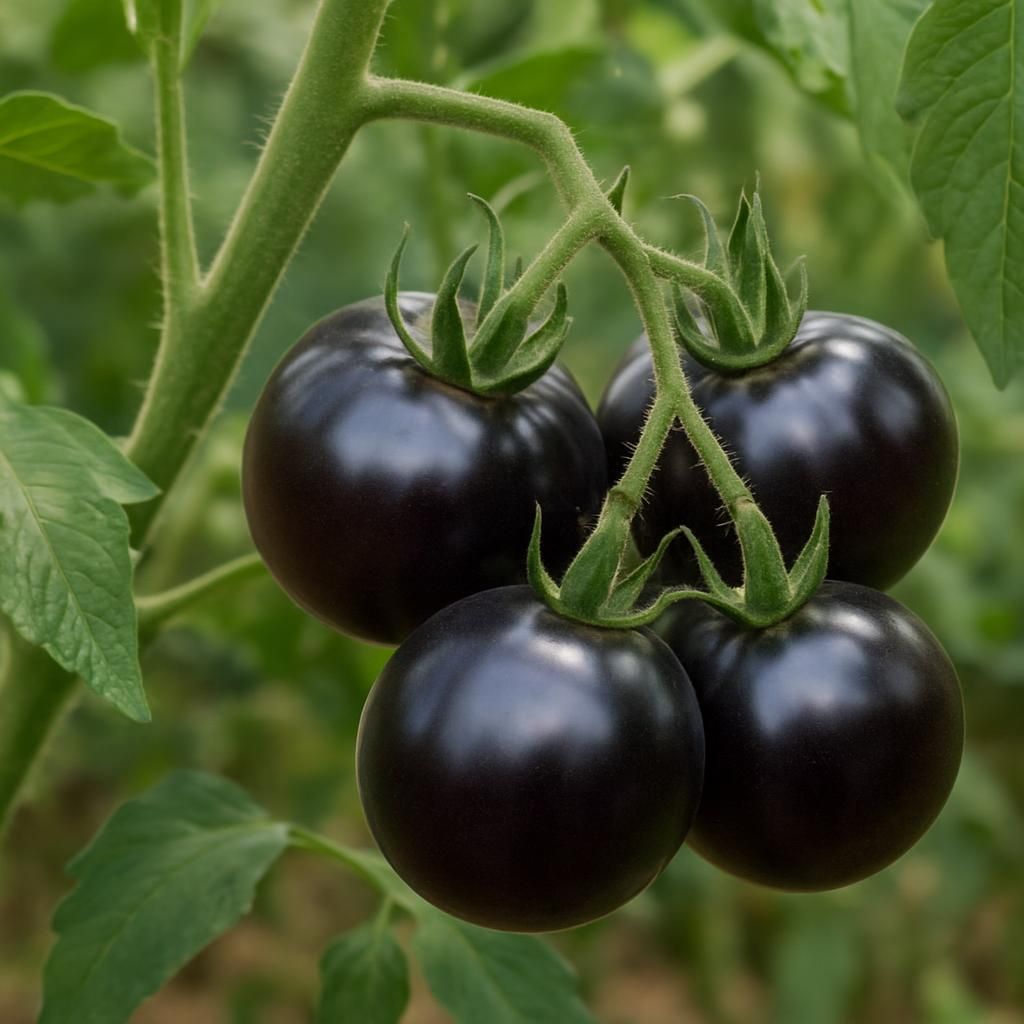
Introduction to Nyagous Tomato
Nyagous Tomato stands out among heirloom tomatoes for its dramatic dark coloration and rich, wine-like flavor profile. Developed from Russian seed stock and popularized in North America, this variety delivers medium-sized fruits that ripen to a deep purple-black hue when exposed to sunlight. Growers value Nyagous for both fresh eating and small-batch processing because of its high lycopene and anthocyanin levels, which contribute to both flavor complexity and nutritional density. The plant exhibits strong indeterminate growth, requiring sturdy support systems while rewarding attentive care with heavy, extended harvests throughout the season.
Botanical Profile of Nyagous Tomato
Nyagous Tomato belongs to the nightshade family and displays classic indeterminate growth habits, continuing to set fruit until frost terminates the vine. The foliage is dark green with slightly serrated leaflets, and the stems are robust yet flexible enough to train along trellises or cages. Flowers are typical yellow tomato blossoms that self-pollinate readily under favorable conditions. The fruit itself features smooth to slightly ribbed shoulders, thin but resilient skin, and juicy, meaty interiors with few seeds relative to its size. Anthocyanin pigmentation concentrates in the skin and outer flesh layers when the fruit receives direct sunlight, creating the signature near-black appearance prized by chefs and home cooks alike.
Soil, pH, and Climate Requirements for Nyagous Tomato
Successful cultivation of Nyagous Tomato begins with well-drained, fertile soil enriched with organic matter. The crop performs best in slightly acidic conditions and benefits from consistent warmth and protection from extreme temperature swings.
| Parameter | Ideal Range | Notes |
|---|---|---|
| Soil pH | 6.2 – 6.8 | Test soil annually; amend with lime if below 6.0 |
| Soil Type | Loamy, well-drained | Incorporate 2–3 inches of compost before planting |
| Temperature (Day) | 70–85 °F (21–29 °C) | Optimal fruit set occurs within this window |
| Temperature (Night) | 60–70 °F (15–21 °C) | Avoid nights below 55 °F to prevent blossom drop |
| Sunlight | 8+ hours full sun | Essential for anthocyanin development |
| Spacing | 24–36 inches between plants | Rows 4–5 feet apart for airflow |
| Frost Tolerance | None | Transplant only after last spring frost |
Step-by-Step Planting & Propagation
Start seeds indoors 6–8 weeks before the last expected frost date. Sow seeds ¼ inch deep in sterile seed-starting mix and maintain soil temperature at 75–80 °F for rapid germination. Once seedlings develop their first true leaves, transplant into 4-inch pots and provide 14–16 hours of supplemental light daily. Harden off plants for 7–10 days before transplanting outdoors. Dig planting holes 12–18 inches deep, incorporate a handful of balanced organic fertilizer or well-aged compost, and set plants deeply so only the top two sets of leaves remain above soil level. Install trellises, cages, or stakes at planting time to avoid root disturbance later. Water thoroughly after transplanting and apply a 2–3 inch layer of organic mulch to conserve moisture and suppress weeds.
Care & Maintenance regimes for Nyagous Tomato
Consistent attention to water, nutrition, and structural support ensures maximum productivity and fruit quality. Implement a regimented schedule that adapts to local weather patterns and plant growth stages.
| Growth Stage | Watering Schedule | Fertilizer Application | Pruning & Training |
|---|---|---|---|
| Transplant to 12" | 1–1.5 inches per week; keep evenly moist | Side-dress with ½ cup balanced organic fertilizer per plant | Remove suckers below first flower cluster; tie main stem |
| Flowering | Maintain consistent moisture; avoid wetting foliage | Apply fish emulsion or seaweed extract every 3 weeks | Continue sucker removal; tie every 12–18 inches |
| Fruit Set | Increase to 1.5–2 inches during heat waves | Switch to low-nitrogen, high-phosphorus formula | Top vines at 5–6 feet to redirect energy to fruit |
| Ripening | Reduce slightly to concentrate sugars | Cease nitrogen; foliar calcium spray if blossom end rot appears | Remove lower leaves touching soil to improve airflow |
Pests, Diseases & Organic Management
Nyagous Tomato can be affected by common tomato pests and diseases, but proactive cultural practices and organic interventions keep problems manageable. Monitor plants twice weekly for Aphids, Spider Mites, and Hornworms. Introduce beneficial insects such as lady beetles and lacewings early in the season. Apply neem oil or insecticidal soap at the first sign of infestation, ensuring thorough coverage of leaf undersides. Prevent fungal issues like Early Blight and Septoria Leaf Spot by spacing plants properly, pruning for airflow, and watering at the base. Rotate crops on a three-year cycle and remove crop debris at season’s end to reduce overwintering inoculum. For Blossom End Rot, maintain consistent soil moisture and supplement with calcium if soil tests indicate deficiency.
Harvesting, Curing & Optimal Storage
Harvest Nyagous Tomatoes when the fruit reaches full color with slight softening at the blossom end. Pick in the cool morning hours to preserve firmness and flavor. For immediate use, store at room temperature away from direct sunlight. To extend shelf life, place firm, slightly underripe fruits in a single layer in a cool, dark location (55–60 °F). Fully ripe tomatoes keep 4–7 days refrigerated, though flavor may diminish; allow them to return to room temperature before serving. For long-term preservation, process into sauces, salsas, or dehydrate slices for storage in airtight containers. Avoid stacking heavy fruits to prevent bruising and check stored tomatoes regularly for spoilage.
Companion Planting for Nyagous Tomato
Strategic companions enhance soil fertility, deter pests, and improve overall garden resilience. Plant Basil nearby to repel Aphids and improve tomato flavor. Marigold and Nasturtium provide colorful borders that attract beneficial insects while masking tomato scent from pests. Interplant with Carrot or Radish to maximize space and improve soil structure. Avoid planting near Fennel or Walnut trees, which can inhibit tomato growth through allelopathy. Consider pairing with Cucumber on the north side of the bed so the taller tomato plants do not shade the vines. Rotate tomato companions yearly as part of a broader crop rotation strategy to maintain soil health and break pest cycles.