Introduction to Myrrh Resin (Commiphora)
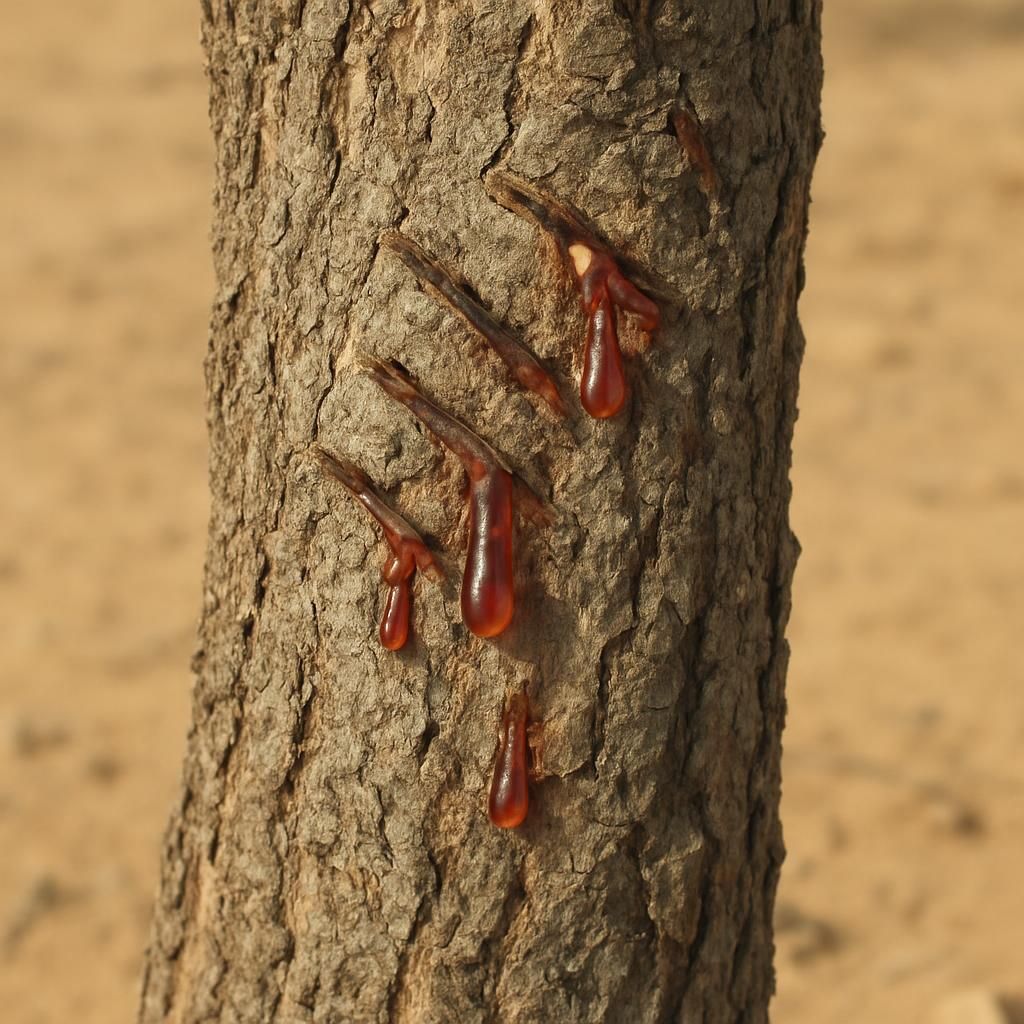
Myrrh resin, derived primarily from Commiphora myrrha, is one of the world’s oldest traded commodities. The resin forms naturally as a defense mechanism when the bark is wounded, producing a fragrant, reddish-brown gum that hardens upon exposure to air. Today, smallholder farmers and commercial growers in Ethiopia, Somalia, Kenya, and Oman cultivate myrrh alongside other arid-land species to generate income from marginal soils. Because the plant tolerates extreme heat and prolonged drought, it offers a resilient cash crop for regions where conventional agriculture struggles.
Beyond its economic value, myrrh plays ecological roles in dryland agroforestry. The deep taproot stabilizes sandy soils, while the canopy provides limited shade for understory legumes. Resin harvesting creates minimal disturbance when performed correctly, allowing trees to remain productive for decades. Growers seeking long-term, low-input perennial systems increasingly view myrrh as a strategic component of climate-smart farming.
Botanical Profile of Myrrh Resin (Commiphora)
Commiphora myrrha belongs to the Burseraceae family and typically grows 2–5 meters tall with a gnarled trunk and spiny branches. The bark is papery and peels in thin, silvery sheets, while the leaves are trifoliate and aromatic when crushed. Small, inconspicuous yellow-white flowers appear after seasonal rains, followed by small drupes that split to reveal a single seed. Resin ducts located in the secondary phloem produce the commercially valuable oleo-gum when the bark is incised.
The species is closely related to frankincense (Boswellia sacra) and shares similar resin chemistry. Wild stands still supply a portion of global demand, but cultivated plantations are expanding to meet traceability and sustainability standards required by the pharmaceutical and cosmetic industries.
Soil, pH, and Climate Requirements for Myrrh Resin (Commiphora)
Myrrh thrives in coarse, well-drained soils with minimal organic matter. It performs best on sandy loams or gravelly substrates that allow rapid water percolation. The plant is highly sensitive to waterlogging; even brief flooding can cause root rot. Optimal pH ranges from slightly acidic to moderately alkaline.
| Parameter | Ideal Range | Notes |
|---|---|---|
| Soil Type | Sandy loam to gravelly sand | Avoid heavy clays and compacted soils |
| Soil pH | 6.5–8.5 | Tolerates mild salinity |
| Temperature | 25–40 °C daytime | Frost sensitive below 5 °C |
| Annual Rainfall | 150–400 mm | Supplemental irrigation improves resin yield |
| Elevation | 0–1,500 m | Higher elevations slow growth |
| Sunlight | Full sun (minimum 8 hours) | Partial shade reduces resin production |
Step-by-Step Planting & Propagation
Myrrh is almost exclusively propagated from seed because cuttings root poorly. Fresh seeds collected from ripe drupes should be soaked in warm water for 24 hours to soften the hard seed coat. Sow in deep nursery tubes filled with a sterile sand-perlite mix at 2 cm depth. Germination occurs in 10–21 days at 28–32 °C. Seedlings are ready for transplanting when they reach 20–30 cm and have developed a woody stem base, usually after 6–9 months.
Field planting should coincide with the onset of seasonal rains. Dig planting holes 60 cm wide and 60 cm deep, backfill with the original soil mixed with a handful of well-rotted manure. Space trees 4–5 m apart in rows 5–6 m wide to allow mechanical access for resin collection. Water transplants deeply at planting and apply a 5 cm layer of gravel mulch to suppress weeds and conserve moisture.
Care & Maintenance regimes for Myrrh Resin (Commiphora)
Established myrrh trees require minimal intervention. The primary goal is to maintain tree health while maximizing resin flow. Over-fertilization promotes vegetative growth at the expense of resin quality. Pruning is limited to removing dead or crossing branches after harvest.
| Activity | Schedule | Details |
|---|---|---|
| Watering | Year 1: every 10–14 days; Mature: none unless drought exceeds 6 months | Deep soak at planting; thereafter rely on rainfall |
| Fertilizer | Once at planting; none thereafter | 5 kg well-rotted manure per tree at establishment only |
| Pruning | Post-harvest (after resin flow stops) | Remove dead wood and low branches; avoid heavy heading cuts |
| Mulching | Renew annually before dry season | 5–8 cm gravel or coarse sand circle 1 m radius around trunk |
| Weed Control | 2–3 times per year | Manual slashing or shallow cultivation; avoid herbicides near trunk |
Pests, Diseases & Organic Management
Myrrh is relatively pest-resistant due to its resinous chemistry, yet young trees can suffer from scale insects and spider mites during prolonged dry spells. These sap-feeding pests cause leaf yellowing and reduced vigor. Horticultural oil sprays applied at 1 % concentration during early infestation provide effective control without harming beneficial insects.
Fungal issues are rare but can include root rot caused by Phytophthora species when soils remain saturated. Prevention through proper site selection and drainage is the most reliable strategy. Termites occasionally attack stressed trees; maintaining tree vigor and using crushed neem seed barriers around the base reduces damage.
Harvesting, Curing & Optimal Storage
Commercial tapping begins when trees reach 8–10 years of age and a minimum trunk diameter of 8 cm. Using a specialized tapping knife, shallow incisions (2–3 mm deep) are made in a herringbone pattern on the trunk and main branches during the dry season. Resin exudes slowly over 7–14 days and is collected every 3–4 days. Each tree yields 200–500 g of clean resin per season when managed sustainably.
Fresh resin is spread on clean mats in a shaded, well-ventilated area for 10–14 days until it hardens into reddish-brown tears. Sorting removes bark fragments and soil. Store cured resin in food-grade polyethylene-lined jute bags or airtight containers at 15–25 °C and <60 % relative humidity. Properly stored resin retains aromatic and medicinal properties for 3–5 years.
Companion Planting for Myrrh Resin (Commiphora)
Myrrh integrates well into dryland polycultures. Leguminous species such as pigeon pea and sesame improve soil nitrogen while providing additional cash crops. Low-growing aromatic herbs like thyme and rosemary deter insect pests and create microclimates that reduce wind erosion. Interplanting with drought-tolerant fruit species such as pomegranate or date palm (when irrigation is available) diversifies farm income without competing for scarce water resources. Avoid planting with shallow-rooted annuals that require frequent irrigation, as excess moisture can induce root disease in myrrh.
For more on building resilient dryland systems, see The Truth About Weather Patterns and Small Farm Resilience.