Introduction to frankincense
Frankincense, derived primarily from Boswellia sacra and related species, represents one of the oldest traded agricultural commodities in human history. The resin, known as olibanum, has been harvested for over 5,000 years for religious ceremonies, traditional medicine, and high-value perfumery. Today, sustainable cultivation offers small-scale farmers in arid zones an opportunity to enter premium export markets while restoring degraded landscapes.
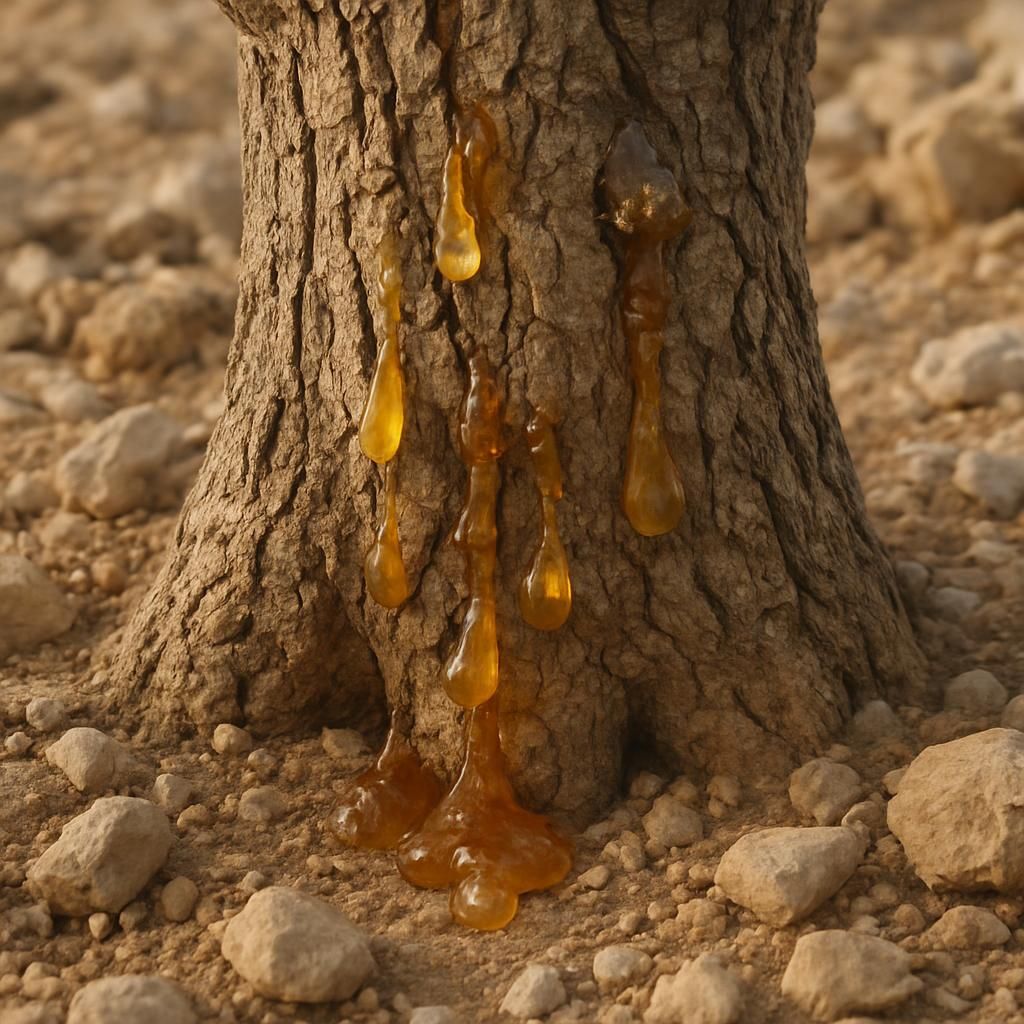
The tree produces a milky latex that hardens into fragrant tears when the bark is incised. Because frankincense trees grow slowly and yield resin only after several years, successful production demands long-term planning and patience. This guide provides professional-grade, field-tested advice for establishing and managing a productive frankincense orchard.
Botanical Profile of frankincense
Boswellia sacra belongs to the Burseraceae family and is a deciduous, multi-stemmed tree reaching 2–8 meters in height. Its papery, peeling bark protects the tree against intense solar radiation and herbivory. The compound leaves consist of 6–15 leaflets and drop during prolonged dry seasons to reduce transpiration.
Small, white-to-pink flowers appear in axillary racemes after the first rains, followed by small, three-angled capsules containing winged seeds. The tree’s extensive, shallow root system efficiently captures sporadic rainfall and dew. Resin ducts located in the inner bark produce the characteristic oleo-gum resin rich in boswellic acids.
Soil, pH, and Climate Requirements for frankincense
Frankincense thrives on marginal, rocky limestone or gypsum-derived soils with minimal organic matter. The species is exceptionally drought-tolerant once established but intolerant of waterlogging or heavy clay.
| Parameter | Ideal Range | Notes |
|---|---|---|
| Soil Type | Sandy loam to gravelly limestone | Excellent drainage essential |
| Soil pH | 7.5–9.0 | Alkaline conditions preferred |
| Annual Rainfall | 150–400 mm | Supplemental irrigation for first 3 years |
| Temperature Range | 18–38 °C daytime | Tolerates brief frosts to –2 °C |
| Elevation | 200–1,500 m | Higher elevations reduce resin yield |
| Relative Humidity | <55 % | Low humidity promotes resin quality |
Step-by-Step Planting & Propagation
- Seed Collection & Pretreatment: Harvest mature capsules in late dry season. Soak cleaned seeds in warm water for 24 hours to improve germination rates above 60 %.
- Nursery Phase: Sow in deep, perforated tubes filled with 70 % coarse sand and 30 % well-rotted goat manure. Maintain partial shade and water every 3–4 days until seedlings reach 25 cm.
- Site Preparation: Clear competing vegetation and create planting basins 60 cm wide by 60 cm deep. Incorporate crushed limestone or gypsum if soil pH is below 7.0.
- Outplanting: Transplant 6–9-month-old seedlings at the onset of rains. Space trees 4 m × 4 m (625 trees/ha) for resin orchards or 6 m × 6 m for dual-purpose fodder systems.
- Initial Irrigation: Provide 10–15 L per tree weekly for the first dry season; reduce gradually to encourage deep rooting.
Care & Maintenance regimes for frankincense
Young trees require consistent weed control and protection from browsing livestock. Once canopy closure occurs (year 5–6), maintenance drops dramatically.
| Task | Frequency | Rate / Method | Season |
|---|---|---|---|
| Watering | Weekly (years 1–3) | 15–20 L per tree via drip or basin | Dry season |
| Fertilizer | Annual (year 2 onward) | 2 kg well-composted goat manure + 100 g rock phosphate per tree | Pre-rain |
| Pruning | Every 2 years | Remove dead wood and basal suckers; shape to 3–4 main stems | Post-harvest |
| Mulching | Annual renewal | 5 cm layer of gravel or date-palm fronds around base | Year-round |
Pests, Diseases & Organic Management
Frankincense trees are relatively pest-resistant but can suffer from scale insects and occasional spider mites during prolonged drought stress. Root rot caused by Phytophthora may occur in poorly drained soils. Preventive measures include maintaining wide spacing for airflow, avoiding over-irrigation, and applying neem oil (0.5 % emulsion) at the first sign of scale. Grazing goats should be excluded from young orchards to prevent bark damage.
Harvesting, Curing & Optimal Storage
Commercial tapping begins in the sixth or seventh year. Using a specialized “mengaf” knife, make shallow, downward incisions (2–3 mm deep) on the trunk and main branches during the hottest months. Resin exudes over 7–14 days and is collected in three successive rounds spaced 10–14 days apart.
Tears are sun-cured on mats for 3–5 days until they become brittle and translucent. Sort by size and color: “Hojari” (white, premium) commands the highest prices. Store in airtight clay or metal containers in a cool, dark location; resin retains aroma for 3–5 years.
Companion Planting for frankincense
Frankincense benefits from nitrogen-fixing companions that improve soil fertility without competing for scarce moisture. Suitable partners include Gliricidia and drought-tolerant Sesame. Low-growing Thyme planted in the understory suppresses weeds and may deter certain insects. Avoid planting high-water-demand species such as Banana or Rice within 10 meters of frankincense trees.