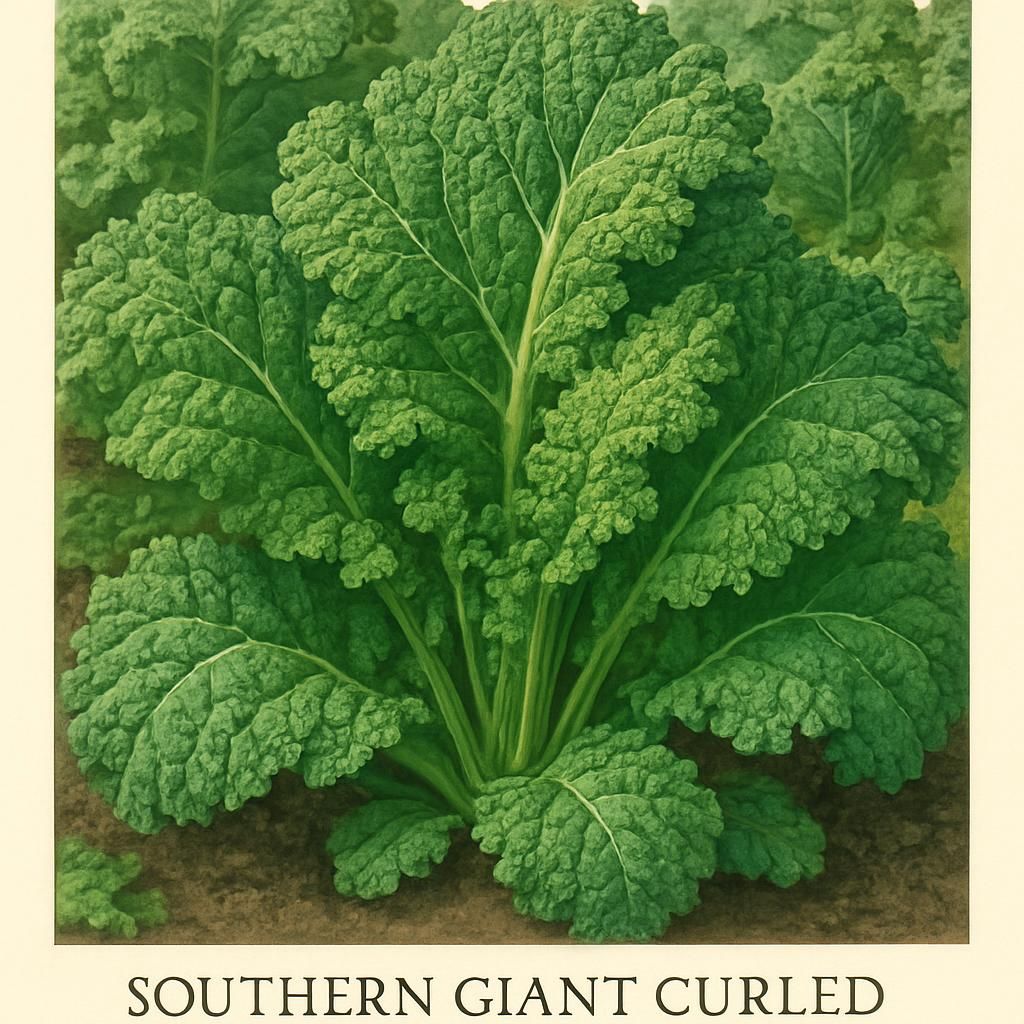
Introduction to Mustard Greens (Southern Giant Curled)
Mustard Greens, particularly the Southern Giant Curled variety, are a staple in Southern cuisine and recognized for their curly, vibrant green leaves and pungent flavor. This leafy plant is part of the mustard family and thrives in cool-season conditions, providing a nutritional punch rich in vitamins A, C, and K. Its versatility in culinary applications and ease of cultivation have made it a popular choice for home gardeners and professional farmers alike.
Botanical Profile of Mustard Greens (Southern Giant Curled)
The Southern Giant Curled mustard green, scientifically known as Brassica juncea, belongs to the Brassicaceae family. This plant species showcases a robust growth pattern with vigorously curled leaves that serve both aesthetic and functional purposes in dishes worldwide. Typically reaching heights between 12 to 18 inches, this variety is also known for its resilience to various climatic conditions and its rapid growth cycle, making it a preferred choice in both home gardens and commercial farms.
Soil, pH, and Climate Requirements for Mustard Greens (Southern Giant Curled)
For optimal growth of Southern Giant Curled mustard greens, several specific environmental conditions must be met. These conditions ensure robust leaf development and enhance the peppery flavor these greens are known for.
| Factor | Ideal Condition |
|---|---|
| Soil Type | Loamy, well-drained |
| Soil pH | 6.0 - 7.5 |
| Temperature Range | 10°C - 24°C (50°F - 75°F) |
| Sunlight | Full sun to partial shade |
Step-by-Step Planting & Propagation
- Choose the Right Location: Mustard greens prefer full sun but can tolerate partial shade, especially in hotter climates.
- Prepare the Soil: Enrich the soil with organic matter, such as compost or well-rotted manure, to improve soil fertility and drainage.
- Sowing Seeds: Direct sow the seeds in the garden bed, or start them indoors and transplant when seedlings are about 2 inches tall.
- Spacing: Plant seeds 6 inches apart in rows spaced 12-18 inches apart to allow for growth and air circulation.
- Timing: Plant seeds in early spring or late summer for a fall harvest to avoid summer heat.
Care & Maintenance Regimes for Mustard Greens (Southern Giant Curled)
Consistent care is essential for healthy growth and preventing pests and diseases.
| Task | Frequency |
|---|---|
| Watering | Regular watering, keeping soil consistently moist but not waterlogged |
| Fertilizing | Apply a balanced fertilizer once a month |
| Pruning | Remove yellow or damaged leaves regularly |
Pests, Diseases & Organic Management
Mustard greens are susceptible to various pests and diseases. Cabbage worms, Spider Mites, and Flea Beetles are common pests. Organic management includes:
- Introducing beneficial insects, like ladybugs, to control aphid and mite populations.
- Utilizing row covers to protect young plants from flea beetles and caterpillars.
- Practicing crop rotation to prevent disease buildup in the soil.
Harvesting, Curing & Optimal Storage
Harvest mustard greens when leaves are still tender, usually about 30-45 days after planting. Cut leaves at the base of the plant with scissors or a sharp knife. These greens are best used fresh but can be stored in the refrigerator for up to a week when wrapped in moist paper towels or stored in a perforated plastic bag.
Companion Planting for Mustard Greens (Southern Giant Curled)
Mustard greens benefit from specific companion plants. Plant alongside Spinach, Cabbage, or Peas for pest control and nutrient exchange. Avoid planting near Garlic or Onion as they may inhibit growth.
For additional insights and strategic planting tips, explore our Summer Companion Planting: 10 Organic Pairings to Boost Small Farm Resilience for professional-grade advice.
Conclusion
Cultivating Southern Giant Curled mustard greens not only provides a nutritious addition to your diet but also enhances biodiversity in your garden. With keen attention to environmental conditions, strategic care and maintenance, and mindful pest management, growing this variety can be both rewarding and sustainable.