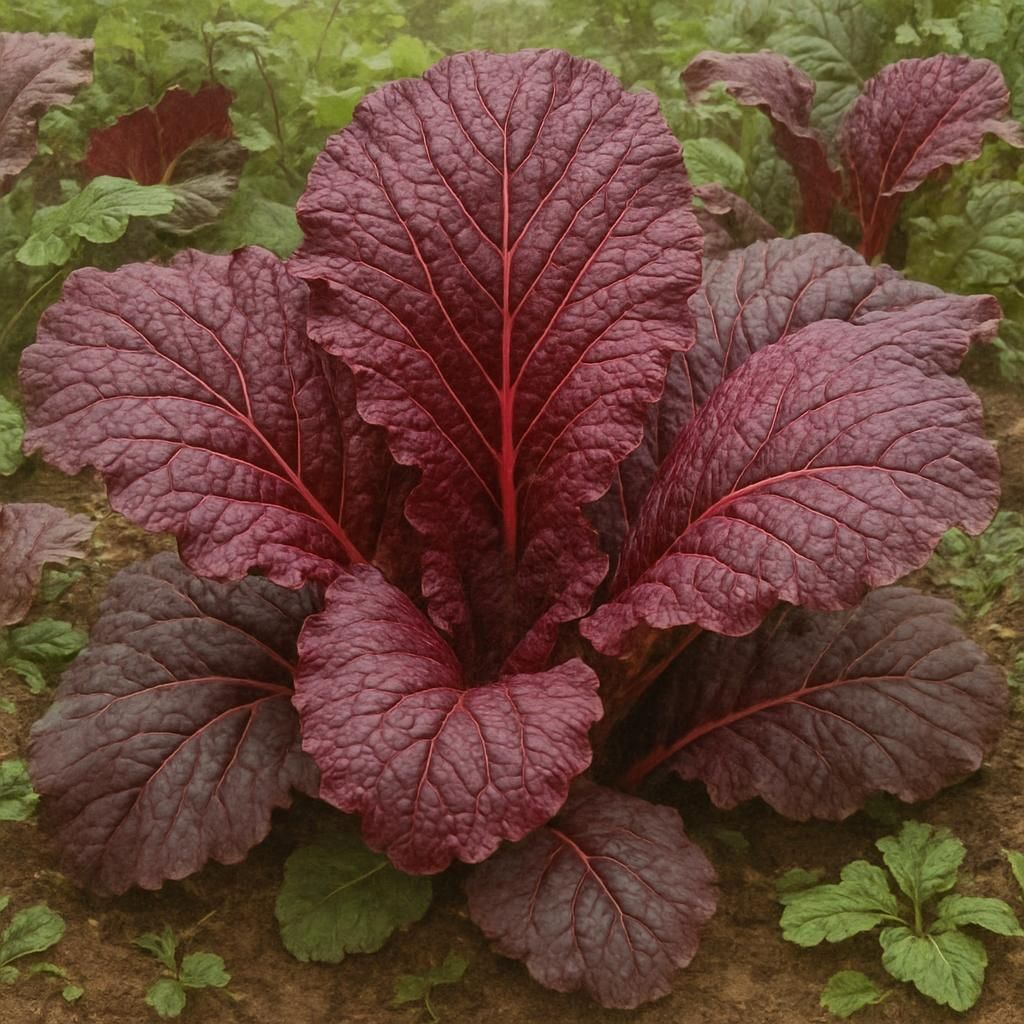
Introduction to Mustard Greens (Giant Red)
Mustard Greens, specifically the Giant Red variety, are a versatile and visually stunning addition to any garden. Known for their large, vibrant red-purple leaves, these greens not only add color but also provide a spicy, flavorful punch to salads and cooked dishes. Cultivating Giant Red Mustard Greens is relatively straightforward, making it suitable for both beginner and seasoned gardeners.
Botanical Profile of Mustard Greens (Giant Red)
The Giant Red variety of mustard greens belongs to the Brassicaceae family, which also includes cabbages, broccoli, and other cruciferous vegetables. Its scientific name is Brassica juncea var. rugosa. This hardy, cool-weather plant can grow up to 2 feet tall and produces large, deeply lobed leaves with a distinctive red-purple hue. These greens are fast-growing and can reach maturity in 40 to 50 days from seed.
Soil, pH, and Climate Requirements for Mustard Greens (Giant Red)
Giant Red Mustard Greens thrive in cool weather and are best planted in early spring or late summer for a fall harvest. They prefer well-drained soil with a pH between 6.0 and 7.5. Ensuring optimal soil conditions will enhance plant growth and leaf flavor.
| Aspect | Ideal Condition |
|---|---|
| Soil Type | Well-drained, loamy |
| Soil pH | 6.0 - 7.5 |
| Temperature Range | 50°F - 75°F (10°C - 24°C) |
| Sunlight | Full Sun to Partial Shade |
| Hardiness Zones | 6-11 |
Step-by-Step Planting & Propagation
Site Selection: Choose a location with full sun to partial shade where the plant can receive at least 6 hours of sunlight daily.
Soil Preparation: Amend the soil with organic matter such as compost to improve fertility and drainage. Ensure the pH is in the ideal range.
Sowing Seeds: Directly sow the seeds into the ground about 1/4 inch deep. Space the seeds 12 inches apart to allow room for full foliage development.
Watering: Water thoroughly after planting. Maintain consistent moisture, especially in dry conditions, to encourage germination.
Thinning: Thin seedlings to 6 inches apart once they reach about 2 inches in height to allow for proper growth.
Care & Maintenance Regimes for Mustard Greens (Giant Red)
Routine maintenance of Giant Red Mustard Greens ensures healthy, vibrant plants.
| Task | Frequency |
|---|---|
| Watering | 1 inch per week |
| Fertilizing | Monthly, balanced fertilizer |
| Mulching | As needed, to suppress weeds |
| Pruning | Harvest older leaves first |
| Pest Control | Monitor regularly |
Regular watering, especially during dry spells, is crucial. Incorporating a balanced, organic fertilizer will promote vigorous growth. Mulching can help retain soil moisture and suppress weed growth. Harvesting older leaves encourages new growth and prevents the plant from bolting.
Pests, Diseases & Organic Management
Giant Red Mustard Greens can be susceptible to common pests like Aphids, Flea Beetles, and diseases such as Downy Mildew. It is essential to monitor regularly and employ organic pest control methods such as neem oil sprays or introducing beneficial insects like ladybugs. For fungal issues like downy mildew, promoting air circulation and keeping foliage dry can prevent outbreaks.
Harvesting, Curing & Optimal Storage
Giant Red Mustard Greens can be harvested when the leaves are large enough to eat, typically 30-40 days after sowing. The greens are most flavorful when picked young. Cut leaves individually or harvest the entire plant to encourage regrowth. After harvesting, rinse the leaves thoroughly and store them in a refrigerator. They can be kept for up to a week.
Companion Planting for Mustard Greens (Giant Red)
Companion planting can enhance growth and protect mustard greens from pests. Consider planting them with Radish, Cabbage, or Lettuce. Avoid planting near Kale to prevent disease spread. For more insights on leveraging companion planting for crop resilience and growth, check out the blog post Summer Companion Planting: 10 Organic Pairings to Boost Small Farm Resilience.
For further in-depth understanding, you can learn more about Broccoli-related family crops and their growing habits which are similar to mustard greens.