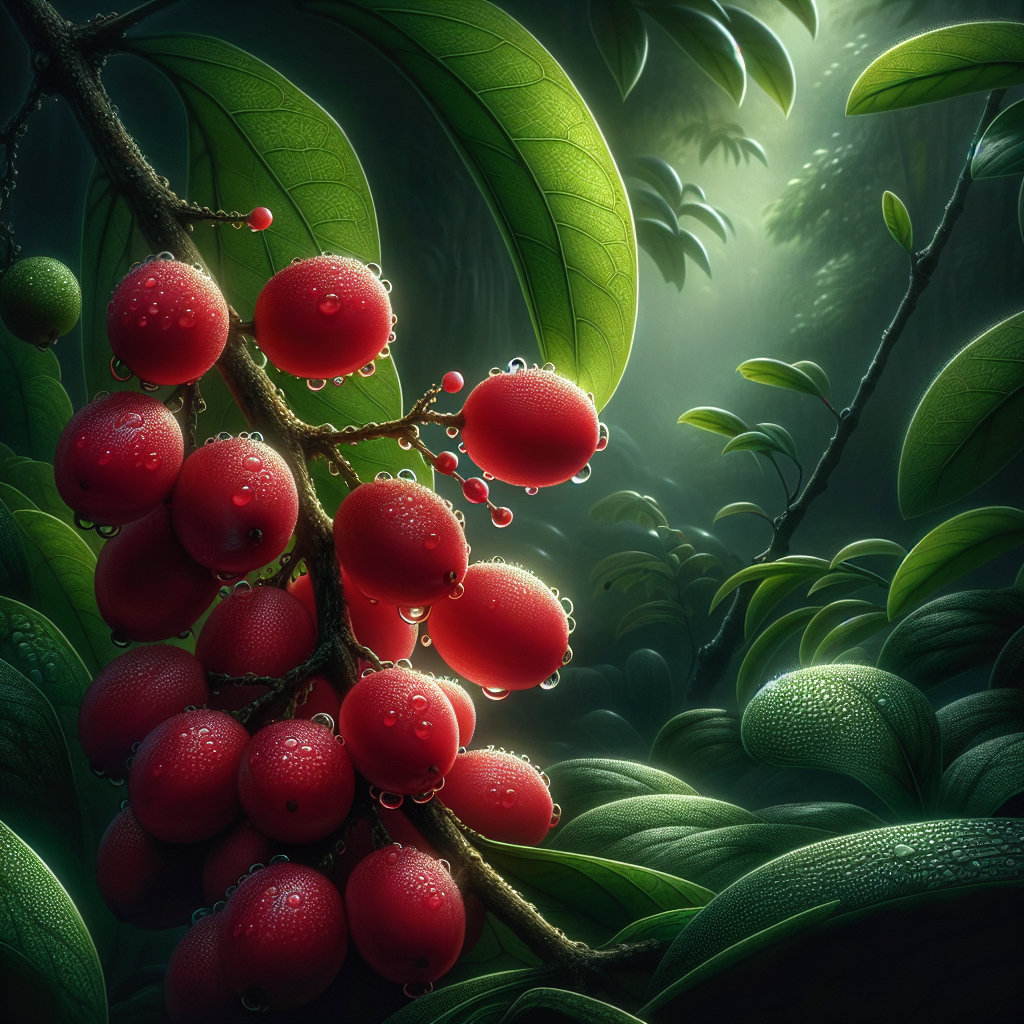
Introduction to Miracle Fruit (Synsepalum dulcificum)
Miracle Fruit, scientifically known as Synsepalum dulcificum, is a small evergreen shrub native to the tropical rainforests of West Africa, particularly Ghana and Nigeria. This plant has gained global attention not for its mildly sweet fruit, but for its extraordinary glycoprotein called miraculin, which coats the tongue and modifies taste buds to perceive sour flavors as sweet for up to two hours. Historically used by locals to enhance the flavor of unripe fruits and palm wine, Miracle Fruit has become popular in gourmet cuisine, molecular gastronomy, and health-conscious diets as a natural, calorie-free sweetener alternative.
Cultivating Miracle Fruit offers unique rewards for botanists, chefs, and hobbyists alike. Plants typically reach 3-6 feet in height with glossy green leaves and vibrant red berries clustered along racemes. While challenging in temperate zones due to its tropical requirements, success is achievable with proper indoor or greenhouse management. Yields begin after 2-3 years, producing 20-50 berries per plant annually under optimal conditions. This guide provides professional-grade agricultural advice for maximizing growth, health, and harvest, drawing from decades of cultivation research and field experience.
Botanical Profile of Miracle Fruit (Synsepalum dulcificum)
Synsepalum dulcificum belongs to the Sapotaceae family, closely related to persimmons and mamey sapotes. It is an upright, multi-branched shrub with a slow growth rate of 6-12 inches per year. Leaves are lanceolate, 2-4 inches long, leathery, and deep green, providing year-round aesthetic appeal. Flowers are small (1/4 inch), white to pale pink, hermaphroditic, and pollinated primarily by insects like sweat bees in native habitats.
Fruits are ellipsoid berries, 1-2 cm long, ripening from green to scarlet red. Each contains 1-3 oval seeds embedded in translucent white pulp rich in miraculin. The plant is dioecious in some classifications, but most cultivated varieties are self-fertile. Root systems are shallow and fibrous, sensitive to waterlogging. Hardiness falls in USDA zones 10-11, with tolerance to brief dips to 28°F (-2°C). Propagation challenges stem from recalcitrant seeds that lose viability quickly, necessitating fresh harvesting.
Genetically, Miracle Fruit exhibits low diversity, with commercial strains like 'Red Miracle' selected for heavier fruit set. Compared to similar crops like ginger, it shares tropical affinities but requires stricter acidity. Flowering occurs year-round in ideal conditions, peaking in warm, humid seasons.
Soil, pH, and Climate Requirements for Miracle Fruit (Synsepalum dulcificum)
Miracle Fruit demands highly acidic, well-draining soils mimicking its rainforest understory origins. Optimal pH ranges from 4.5-5.8; levels above 6.0 cause iron deficiency (chlorosis) and stunted growth. Use a peat moss-perlite mix (2:1) or pine bark fines amended with elemental sulfur for container growing. Field soils should incorporate 30-50% organic matter like coconut coir or sphagnum peat, avoiding heavy clays.
Climate-wise, maintain 70-90°F (21-32°C) daytime and 60-75°F (15-24°C) nights. Humidity above 70% is critical; mist daily or use pebble trays indoors. Full indirect light (2000-4000 foot-candles) prevents legginess—south-facing windows or LED grow lights excel. Annual rainfall equivalent of 60-80 inches suits it, with even moisture but no standing water. In subtropical areas, provide afternoon shade to avert leaf scorch. For cooler climates, Why Summer Heatwaves Are Silently Killing Small Farm Yields - And 7 Organic Strategies to Fight Back offers tactics adaptable to heat stress protection.
Wind protection is essential, as drafts dry foliage and inhibit fruit set. Mulch with pine needles to retain acidity and suppress weeds.
Step-by-Step Planting & Propagation
Seed Propagation (Preferred for Genetic Diversity)
- Harvest ripe berries immediately; extract seeds and sow fresh in 4-inch pots with 50/50 peat-sand mix.
- Plant 1/4 inch deep, keep at 75-85°F with bottom heat; germinate in 2-6 weeks.
- Thin to strongest seedling per pot; transplant to 1-gallon at 4-6 leaves.
Stem Cuttings (Faster for Clones)
- Take 4-6 inch semi-hardwood tips in spring/summer, dip in 0.1% IBA rooting hormone.
- Root in perlite under high humidity (plastic dome); 4-8 weeks to root.
- Acclimate gradually to reduce shock.
Air Layering (For Mature Plants)
- Girdle a branch, apply rooting hormone, wrap in moist sphagnum.
- Root in 6-8 weeks; sever and pot.
Plant spacing: 4-6 feet in-ground, 2-3 feet in hedges. Initial fertilizing: Monthly with Miracid (30-10-10) at half-strength post-establishment. Expect fruit in 2-4 years from seed, 1-2 from cuttings.
Care & Maintenance regimes for Miracle Fruit (Synsepalum dulcificum)
Water consistently to keep soil moist but not soggy—allow top 1 inch to dry between waterings. Use distilled or rainwater to avoid alkalinity buildup. Fertilize bi-weekly during growth (March-October) with acid-loving formulas: 1 tsp/gallon. Prune lightly post-harvest to shape and encourage branching; remove deadwood anytime.
Support pollination with manual brushing or引进 bees. Repot every 2 years into larger acidic containers. Overwinter indoors above 55°F, reducing water. Monitor for nutrient deficiencies: yellow young leaves signal iron chelate application. Integrate with pineapple for humidity microclimates. Track growth with seasonal logs for optimization.
Pests, Diseases & Organic Management
Common pests include mealybugs, scale insects, and aphids. Scout undersides weekly; treat with neem oil (2 tsp/gallon) or insecticidal soap. For spider mites, increase humidity and apply miticide soaps. Organic IPM emphasizes beneficials like ladybugs.
Diseases: Root rot from overwatering (Pythium/Phytophthora)—ensure drainage. Fungal leaf spots respond to copper fungicide. Powdery mildew rare but managed via airflow. Prevent with sterile media and quarantine. For broader strategies, see Why 90% of Small Farms Fail at Pest Management - And 8 Organic Fixes That Actually Work. Avoid chemicals to preserve miraculin integrity.
Harvesting, Curing & Optimal Storage
Harvest berries fully red and slightly soft, twisting gently. Peak season: late spring-summer, 3-5 months post-flowering. Yield: 10-30 per raceme. Do not wash pre-use; store at 45-55°F (7-13°C) in perforated bags up to 2 weeks. For miraculin preservation, freeze whole berries on trays, then bag for 6-12 months viability.
Curing unnecessary; efficacy peaks fresh. Dry seeds immediately for propagation. Post-harvest, refrigerate to extend effect duration. Market fresh or as taste-trip novelties.
Companion Planting for Miracle Fruit (Synsepalum dulcificum)
Pair with acid-lovers: blueberry, ferns, azaleas for shared soil needs. Marigold deters nematodes; thyme repels aphids. Avoid tomato or brassicas raising pH. Underplant with shade-tolerant ginger for humidity. Trellis vertically to maximize space. Benefits include pest diversion and microclimate enhancement, boosting overall yields 15-20%.