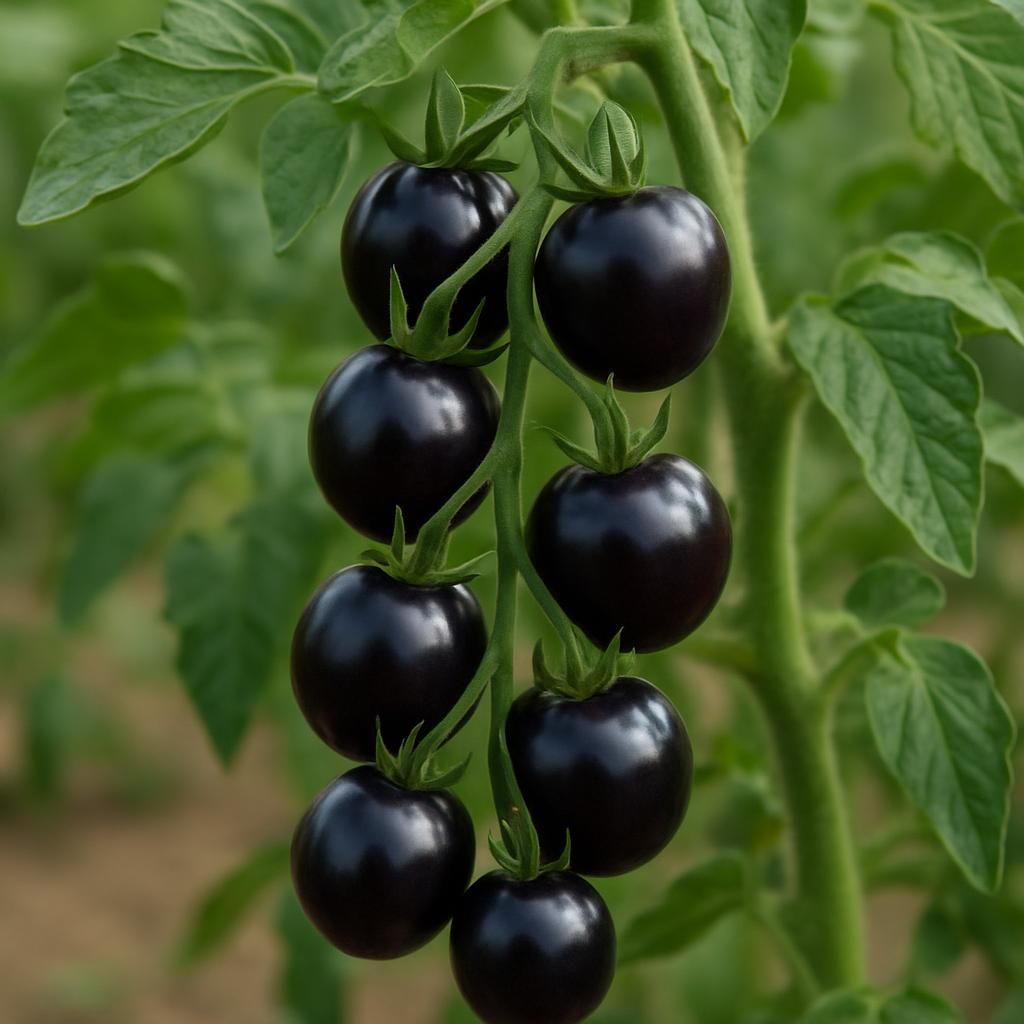
Introduction to Midnight Snack Tomato
Midnight Snack Tomato is an indeterminate cherry tomato variety developed for both home gardeners and small-scale commercial growers seeking exceptional flavor combined with visual appeal. The fruit transitions from green to a glossy, deep purple-black when ripe, delivering a balanced sweet-tart profile that intensifies with sun exposure. Because the plants continue producing until frost, growers can enjoy continuous harvests throughout the season when proper support and care are provided.
The cultivar's vigorous vines typically reach 6–8 feet, requiring sturdy trellising or caging systems. Its anthocyanin-rich coloration not only creates a striking market display but also contributes to elevated antioxidant levels compared with standard red cherry types. Commercial trials show consistent yields of 15–25 pounds per plant under optimal conditions, making it a profitable choice for direct-market sales and value-added products.
Botanical Profile of Midnight Snack Tomato
Midnight Snack Tomato belongs to the Solanaceae family and exhibits classic indeterminate growth, producing fruit clusters along the main stem and lateral branches. Each cluster typically holds 8–12 cherry-sized fruits averaging 15–20 grams. The plants develop compound leaves with serrated margins and display moderate resistance to many common foliar pathogens when cultural practices are sound.
Flowers are perfect and self-pollinating, though gentle shaking or the presence of bumblebees improves fruit set. Fruit coloration results from elevated anthocyanin expression triggered by light exposure, while sugar accumulation peaks when daytime temperatures remain between 70–85 °F. The variety matures in approximately 65–70 days from transplant.
Soil, pH, and Climate Requirements for Midnight Snack Tomato
Successful cultivation begins with well-drained, fertile soil enriched with organic matter. Midnight Snack Tomato performs best in loamy or sandy loam textures that retain moisture without waterlogging. Avoid heavy clay soils unless heavily amended with compost and raised beds are used.
| Parameter | Ideal Range | Notes |
|---|---|---|
| Soil pH | 6.2–6.8 | Prevents nutrient lockout |
| Soil Texture | Loam to sandy loam | Excellent drainage essential |
| Organic Matter | 4–6 % | Improves structure and microbial activity |
| Daytime Temperature | 70–85 °F (21–29 °C) | Optimal for fruit set and sugar development |
| Nighttime Temperature | 55–65 °F (13–18 °C) | Avoids blossom drop |
| Frost Tolerance | None | Protect or plant after last frost |
| Spacing | 18–24 in within row; 4–5 ft between rows | Allows airflow and support access |
Step-by-Step Planting & Propagation
Start seeds indoors 6–8 weeks before the last expected frost. Sow ¼ inch deep in sterile seed-starting mix maintained at 75–80 °F. Germination occurs in 7–10 days. Harden off seedlings for 7–10 days before transplanting into warmed soil (minimum 60 °F at 4-inch depth).
Transplant on an overcast day or late afternoon to reduce transplant shock. Bury stems up to the first true leaves to encourage adventitious root formation. Install trellis systems or cages at planting to avoid root disturbance later. Water thoroughly after transplant and apply a light organic mulch layer to conserve moisture.
Care & Maintenance regimes for Midnight Snack Tomato
Consistent moisture and balanced nutrition are critical for high-quality fruit. Drip irrigation is preferred to keep foliage dry and reduce disease pressure. Side-dress with compost tea or balanced organic fertilizer every 3–4 weeks once fruit set begins.
| Task | Frequency | Details |
|---|---|---|
| Watering | 1–1.5 in per week | Deep, infrequent watering; adjust for rainfall |
| Fertilizer | Every 3–4 weeks | 5-5-5 or 4-6-4 organic blend; avoid excess nitrogen |
| Pruning | Weekly | Remove suckers below first flower cluster; top vines at 6–7 ft |
| Mulching | At planting & mid-season | 2–3 in organic mulch to suppress weeds and retain moisture |
| Support | Continuous | String trellis or sturdy cages; tie every 8–10 in |
Pests, Diseases & Organic Management
Common challenges include aphids, hornworms, and spider mites. Scout weekly and employ integrated strategies such as releasing beneficial insects, applying neem oil or insecticidal soap, and maintaining strong plant vigor through proper nutrition.
Fungal issues such as early blight and septoria leaf spot can be minimized by crop rotation, adequate spacing, and drip irrigation. Remove lower leaves as they yellow and apply copper-based fungicides preventively during humid periods. Destroy crop debris at season end to break disease cycles.
Harvesting, Curing & Optimal Storage
Harvest Midnight Snack Tomato when fruit reaches full purple-black coloration and yields slightly to gentle pressure. Pick every 2–3 days during peak production to encourage continued fruit set. Avoid pulling; use pruning shears to prevent stem damage.
Store unwashed fruit at room temperature away from direct sun for up to one week. For longer storage, refrigeration at 55 °F slows ripening but may reduce flavor. Excess fruit can be dehydrated, frozen, or turned into value-added products such as sauces and salsas.
Companion Planting for Midnight Snack Tomato
Pair Midnight Snack Tomato with aromatic herbs such as Thai Basil and marigold to deter pests and attract pollinators. Nasturtium serves as a trap crop for aphids, while garlic and onion provide additional pest-repellent properties.
Avoid planting near potato or eggplant to reduce shared disease pressure. Include clover or other living mulches between rows to fix nitrogen and improve soil structure throughout the growing season.