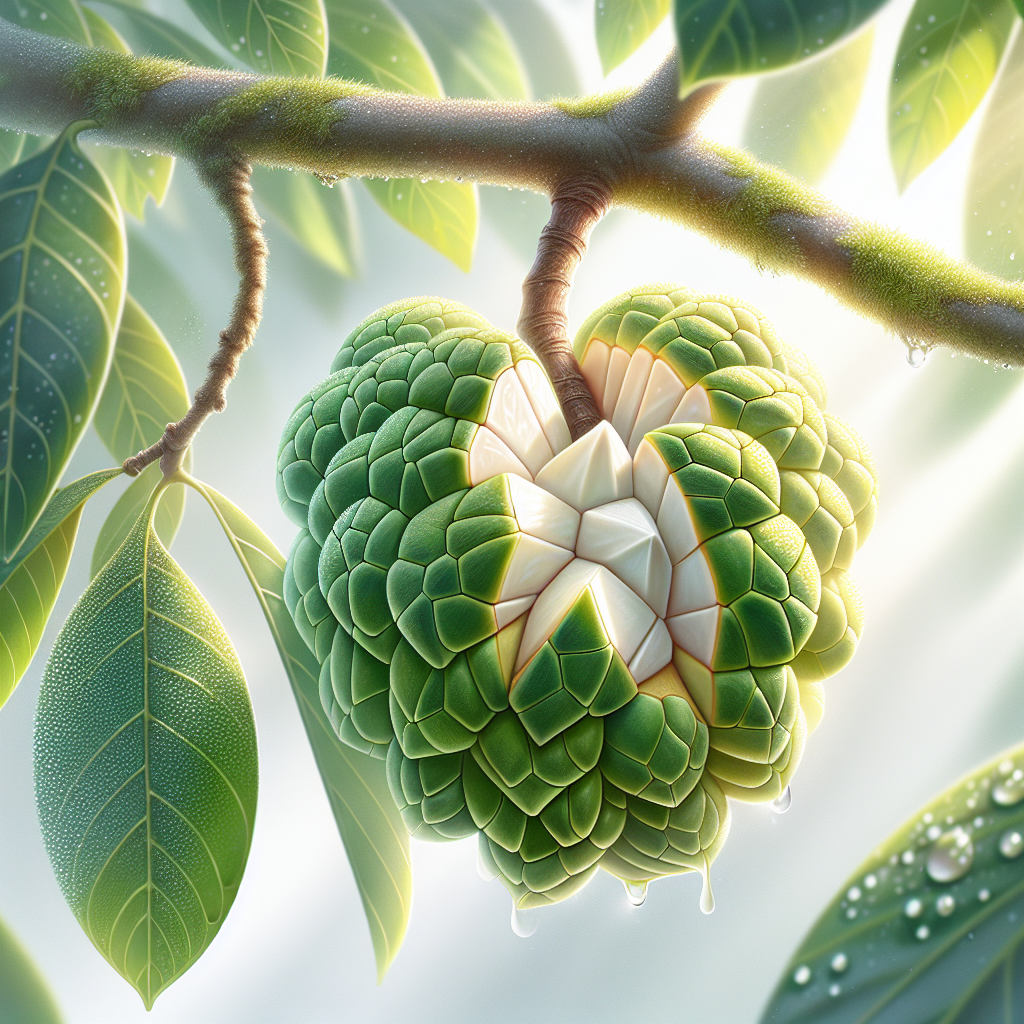
Introduction to Marang (Artocarpus odoratissimus)
Marang, scientifically known as Artocarpus odoratissimus, stands out among tropical fruits for its unique sensory profile: a pungent, floral aroma paired with buttery, sweet flesh that melts in the mouth. Closely related to durian and jackfruit, marang originates from the rainforests of Borneo, Malaysia, and Indonesia, where it grows wild in lowland areas. The fruit's hexagonal segments encase creamy white arils surrounding large seeds, offering a flavor profile that combines durian's richness with jackfruit's sweetness and a hint of almond.
This tree is dioecious, meaning male and female flowers grow on separate plants, necessitating cross-pollination for fruit production. In cultivation, marang trees can reach 20-30 meters in height but are often pruned to 10-15 meters for manageability. Yields begin 4-6 years after planting from seed or grafts, with mature trees producing 50-100 fruits per season. Its high demand in Southeast Asian markets makes it a lucrative crop for small farms, though its strong odor requires strategic placement away from living areas. For growers in suitable climates, marang offers exceptional returns with proper care.
Botanical Profile of Marang (Artocarpus odoratissimus)
Artocarpus odoratissimus belongs to the Moraceae family, sharing lineage with breadfruit, mulberry, and the infamous durian. The tree features a straight bole with buttressed roots, smooth grayish bark that exudes white latex when cut, and a dense canopy of large, leathery leaves up to 50 cm long and 20 cm wide. Leaves are elliptic to obovate, glabrous above and slightly hairy below, turning reddish before falling.
Flowers are borne on short, stout spikes: males are cylindrical (8-12 cm long), females are globose (4-6 cm diameter). Pollination occurs via insects like beetles and flies, attracted to the flowers' potent scent. Fruits develop as syncarps, forming irregular, oblong clusters 10-20 cm long and weighing 1-3 kg. Each segment contains a single seed enveloped in thick, edible aril that ripens from green to yellowish-brown. Peak season spans May to August in native habitats, with trees entering a brief deciduous phase post-harvest.
Nutritionally, marang arils provide 25-30% carbohydrates, 2-3% protein, and essential vitamins like C and B-complex, plus minerals such as potassium and calcium. The seeds are also edible when boiled, resembling chestnuts in texture. Mango growers often appreciate marang's similar growth habits but note its superior aroma retention during ripening.
Soil, pH, and Climate Requirements for Marang (Artocarpus odoratissimus)
Marang demands deep, well-drained loamy soils rich in organic matter, with sandy clay loams ideal for root development. Avoid heavy clays prone to waterlogging, as the tree's buttress roots require aeration to prevent root rot. Optimal pH ranges from 5.5 to 6.5—slightly acidic to neutral—where nutrient uptake is maximized. Test soil annually and amend with compost or peat to maintain fertility; marang responds well to soils with 2-3% organic content.
Climatically, marang is a strict lowland tropical requiring average temperatures of 25-32°C (77-90°F), with no tolerance for frost or temperatures below 15°C (59°F). Annual rainfall should exceed 2000 mm, evenly distributed, though it endures short dry spells if irrigated. High humidity (70-90%) enhances fruit aroma development, mimicking its rainforest origins. USDA zones 10b-12 are suitable; in marginal areas, use frost protection or greenhouses. Wind protection is crucial, as strong gusts damage flowers and young fruit. Pair with banana in mixed orchards for microclimate benefits, and consult Why Summer Heatwaves Are Silently Killing Small Farm Yields - And 7 Organic Strategies to Fight Back for heat management tips.
Elevations above 800 meters reduce vigor and fruit quality. Mulch heavily with organic materials to retain moisture and suppress weeds, targeting 10-15 cm depth around the drip line.
Step-by-Step Planting & Propagation
Propagation Methods
Seed propagation is straightforward but variable; select fresh seeds from ripe fruits, clean arils, and sow immediately in 50% sand-50% compost mix. Germination occurs in 10-20 days at 28-30°C. For uniformity, use air-layering or grafting onto Artocarpus rootstocks like jackfruit—success rates exceed 80%. Budding in the rainy season yields trees fruiting in 3-4 years.
Site Preparation
Choose sites with full sun (6-8 hours daily) and 8-10 m spacing (100-150 trees/ha). Dig pits 1x1x1 m, fill with topsoil mixed 2:1:1 farmyard manure, compost, and sand. Incorporate 500g superphosphate and 200g muriate of potash per pit.
Planting Steps
- Plant during the rainy season onset, early morning or late afternoon.
- Position grafted seedlings 20-30 cm deep, spreading roots without bending.
- Stake immediately and water thoroughly (50-100 liters/tree).
- Apply mulch and monitor for 2-3 months, irrigating weekly if dry.
Prune at planting to 1 m height, promoting low branching. Inoculate with mycorrhizal fungi for enhanced establishment.
Care & Maintenance regimes for Marang (Artocarpus odoratissimus)
Young trees need fortnightly irrigation (40-60 liters/tree) for the first two years, tapering to monthly for matures. Fertilize quarterly: NPK 15-15-15 at 500g/tree year 1, increasing to 5 kg by year 5, split applications. Foliar sprays of micronutrients (Zn, B, Mn) post-flowering boost set.
Prune annually post-harvest: remove deadwood, watersprouts, and crisscrossing branches to open the canopy for light penetration. Maintain 3-4 m height for easy harvesting. Intercrop with legumes like pigeon pea or ginger in early years for soil health.
Weed mechanically within 2 m radius; mulch suppresses growth. Monitor growth: expect 1-2 m annual height gain. Thin fruit clusters to 20-30/tree for larger sizes. For small farms, Soil Health Mastery: 5 Proven Strategies for Small Farms to Build Fertile Ground Without Breaking the Bank offers complementary practices.
Pests, Diseases & Organic Management
Common pests include fruit-piercing moths, managed with pheromone traps and neem oil sprays. Mealybugs cluster on young shoots—prune and apply soap-water drenches. Beetles and squirrels target ripening fruit; use bird netting and reflective mulches. Aphids are deterred by introducing ladybugs.
Diseases feature Phytophthora root rot in wet soils—improve drainage and use biofungicides like Trichoderma. Anthracnose causes fruit spotting; copper sprays preventively. Powdery mildew responds to potassium bicarbonate. Avoid overhead watering to minimize powdery mildew.
Integrated management: scout weekly, maintain sanitation, and rotate organics. Refer to Why 90% of Small Farms Fail at Pest Management - And 8 Organic Fixes That Actually Work for detailed protocols. Cultural resistance via diverse planting enhances resilience.
Harvesting, Curing & Optimal Storage
Harvest when fruit bases yellow and segments separate slightly, typically 110-120 days post-anthesis. Cut clusters with shears, leaving 2 cm stalk. Yield peaks at 20-50 kg/tree for 10-year-olds.
No curing needed; ripen at 25-28°C in ventilated shade. Shelf life: 5-7 days ambient, 2-3 weeks at 13°C (85% RH). For export, pack in ventilated crates; freeze arils at -20°C for 6 months retention of flavor. Process into ice cream, jams, or dried snacks. Handle gently to avoid bruising, which accelerates spoilage.
Companion Planting for Marang (Artocarpus odoratissimus)
Marang benefits from understory companions that suppress weeds, fix nitrogen, and attract pollinators. Plant Thai basil or marigolds for pest repulsion. Ginger or turmeric provides ground cover and repels nematodes. Nitrogen-fixers like pigeon pea enhance soil fertility without competing for light.
Avoid dense canopies like coconut; opt for spaced papaya for windbreaks. Beneficials include yarrow for predatory insects. See Why Companion Planting Feels Like Guesswork for Small Farms - And How AI Makes It Foolproof for optimization. This system boosts biodiversity, reduces inputs, and maximizes land use.