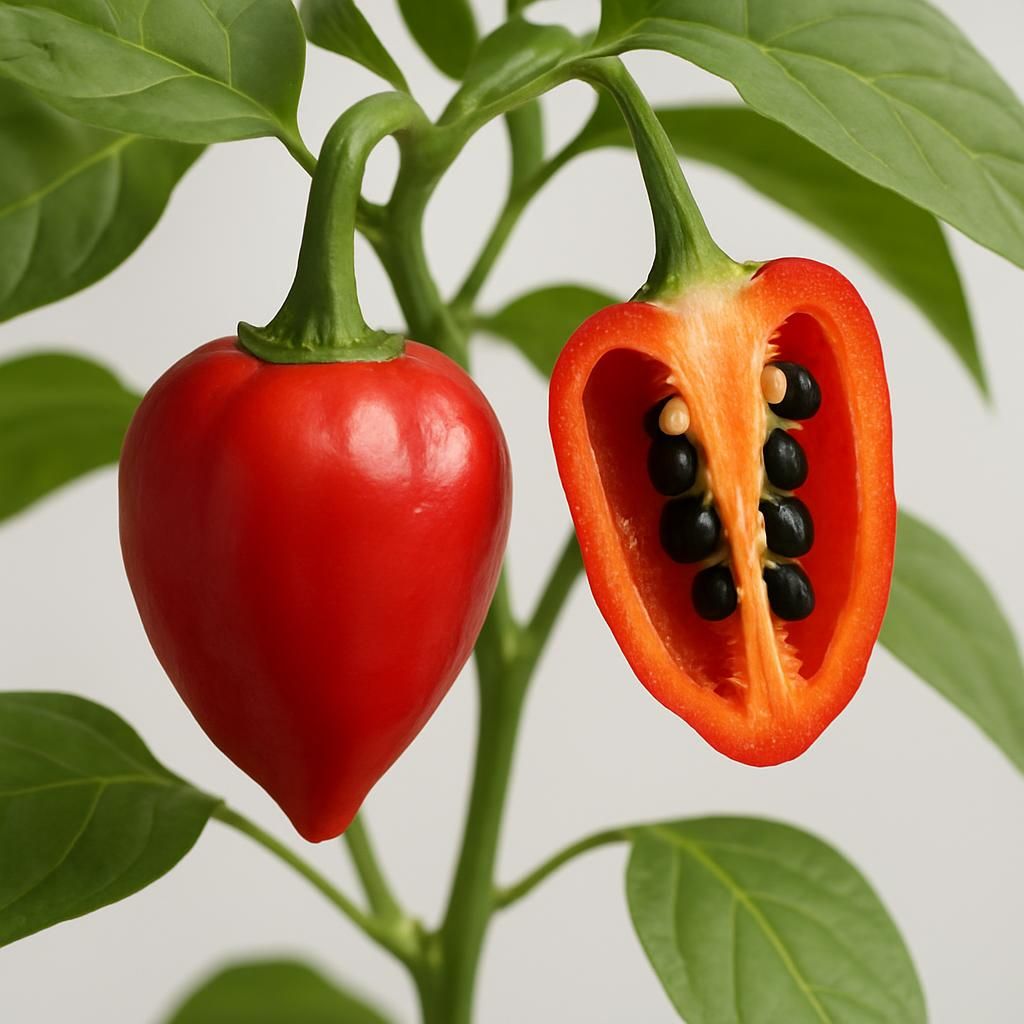
Introduction to Manzano Pepper (Red)
Manzano Pepper (Red), also known as rocoto or locoto in parts of South America, belongs to the species Capsicum pubescens. It stands apart from common peppers because of its distinctive black seeds, hairy leaves, and tolerance for cool highland climates. Growers value the fruit for its thick, crunchy walls and complex flavor that balances bright fruitiness with substantial heat levels between 12,000–30,000 Scoville units. The red-fruited form matures to a deep crimson and is favored for fresh eating, salsas, and pickling.
Because Manzano Pepper (Red) requires longer growing seasons and cooler nights than typical hot peppers, it rewards patient cultivators with heavy yields when provided the right microclimate and consistent care. The variety thrives in regions with daytime temperatures of 65–75 °F and nights that dip into the 50s, making it an excellent candidate for high-elevation or coastal summer gardens. Its perennial nature allows established plants to produce for three to five years when protected from frost.
Botanical Profile of Manzano Pepper (Red)
Capsicum pubescens is characterized by dense pubescence on stems and leaves, purple-tinged flowers, and distinctive black seeds. Plants grow 3–5 feet tall with a bushy habit and can become semi-woody at the base. The fruit is typically 2–3 inches long, apple- or pear-shaped, and turns from green to bright red at maturity. Unlike most peppers, this species is self-compatible yet benefits from insect pollinators. The thick pericarp stores well and retains crisp texture after cooking.
Soil, pH, and Climate Requirements for Manzano Pepper (Red)
Manzano Pepper (Red) performs best in well-drained, fertile loam enriched with organic matter. The root system is sensitive to waterlogging, so raised beds or containers with excellent drainage are recommended. Soil temperature should remain above 60 °F for successful transplanting.
| Parameter | Ideal Range | Notes |
|---|---|---|
| Soil Type | Loamy, well-drained | Add compost and aged manure |
| Soil pH | 6.0–6.8 | Slightly acidic to neutral |
| Day Temperature | 65–75 °F (18–24 °C) | Optimal fruit set |
| Night Temperature | 50–60 °F (10–15 °C) | Tolerates cooler nights than other peppers |
| Frost Tolerance | None | Protect below 40 °F |
| Sunlight | Full sun, 6–8 hours | Afternoon shade in extreme heat |
| Spacing | 24–36 inches between plants | 36–48 inches between rows |
Step-by-Step Planting & Propagation
Start seeds indoors 10–12 weeks before the last expected frost. Soak seeds for 24 hours, then sow ¼ inch deep in sterile seed-starting mix. Maintain soil temperature at 75–80 °F with a heat mat. Germination occurs in 14–28 days. Transplant seedlings when they have 4–6 true leaves and nighttime temperatures stay above 50 °F. Harden off for 7–10 days. Space plants 24–36 inches apart in prepared beds amended with compost. Provide sturdy stakes or cages because mature plants become heavy with fruit.
Care & Maintenance regimes for Manzano Pepper (Red)
Consistent moisture and balanced nutrition are critical. Apply a 2–3 inch mulch layer to retain moisture and suppress weeds. Monitor for magnesium deficiency, which appears as interveinal chlorosis; correct with Epsom salt foliar sprays. Prune lower leaves and suckers to improve airflow.
| Growth Stage | Watering Schedule | Fertilizer Schedule | Pruning Schedule |
|---|---|---|---|
| Seedling/Transplant | Keep evenly moist, 1 inch/week | Start with balanced 10-10-10 at half strength | Remove lower leaves at transplant |
| Vegetative | 1.5–2 inches/week | High-nitrogen every 3 weeks | Pinch growing tip at 12 inches |
| Flowering/Fruiting | 2 inches/week, reduce before harvest | Switch to 5-10-10 every 2 weeks | Remove suckers and yellow leaves weekly |
| Perennial Overwinter | Reduce to 0.5 inch/week | Light compost tea monthly | Cut back 30 % after final harvest |
Pests, Diseases & Organic Management
Common threats include Aphids, Spider mites, and Whiteflies. Use insecticidal soap and neem oil at 7–10 day intervals. Prevent Powdery mildew with proper spacing and morning irrigation. Rotate crops every three years and remove crop debris to reduce Root-knot nematodes. Encourage beneficial insects such as lady beetles and lacewings.
Harvesting, Curing & Optimal Storage
Harvest when fruits reach full red color and firm walls. Use pruners to cut stems, leaving a short calyx. For fresh use, store at 45–50 °F with 85–90 % humidity for up to three weeks. For drying, slice and dehydrate at 125 °F until brittle. Store dried flakes in airtight containers away from light. Pickled Manzano Pepper (Red) retains crunch for 6–12 months when processed in a vinegar brine.
Companion Planting for Manzano Pepper (Red)
Pair with Tomato and Basil to improve flavor and deter pests. Marigold repels nematodes and aphids. Avoid planting near Fennel or Dill, which can inhibit growth. Include Nasturtium as a trap crop for aphids. The Summer Companion Planting: 10 Organic Pairings to Boost Small Farm Resilience post offers additional pairing strategies suitable for pepper systems.