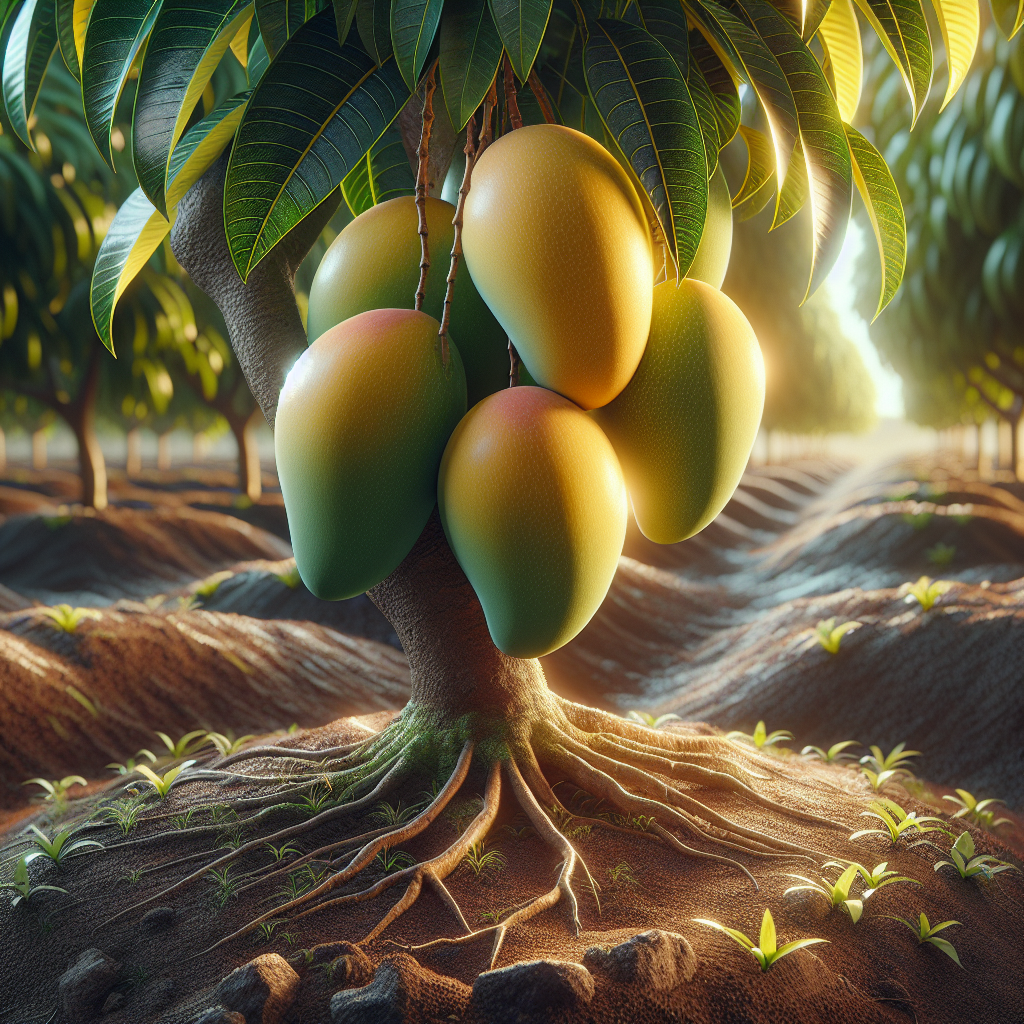
Introduction to Manila Mango
Known for its smooth, sweet, aromatic flesh and relatively low fiber, this mango type has become a favorite in home orchards and warm-climate specialty plantings. In many markets, the name refers both to a distinct cultivar tradition linked to the Philippines and to seedling lines derived from polyembryonic Philippine mangoes that perform well in California, Mexico, and other frost-free or nearly frost-free regions.
One of its most important practical traits is reliability under backyard conditions. Compared with some large commercial mango cultivars bred primarily for shipping, Manila types are often chosen for flavor first: rich sweetness, floral aroma, and flesh that is tender rather than stringy when harvested at the right maturity. Trees are typically vigorous, upright to spreading with age, and can become large if left unpruned, though they respond well to canopy management.
Manila mangoes also matter horticulturally because they are commonly used as rootstock. Polyembryonic seed produces multiple seedlings, many of which are nucellar clones of the mother plant. That means seed-grown rootstocks are more uniform than monoembryonic mangoes and often show strong vigor and adaptation to warm, dry conditions. For growers, this is a major advantage when establishing grafted orchards or top-working existing trees.
If you want a tree for premium fresh eating, resilience in warm regions, and long-term productivity, this variety is an excellent candidate. For broader mango basics, see our Mango guide. This article focuses specifically on how to grow Manila mango to professional standards, with attention to irrigation, nutrition, pruning, pest pressure, and harvest maturity.
Botanical Profile of Manila Mango
This crop belongs to the family Anacardiaceae, the same botanical family as cashew and pistachio. Like other mangoes, it is an evergreen tropical fruit tree with a deep taproot tendency in well-drained soils and a broad network of feeder roots concentrated in the upper 20-60 cm of soil, especially where irrigation and mulching are managed well.
Leaves are simple, leathery, lanceolate, and emerge with a reddish to bronze tint before maturing to glossy green. New vegetative flush is an important diagnostic feature in management because flowering, pruning, fertilization, and pest control all interact with flush cycles. Excess nitrogen, heavy irrigation, or late pruning can trigger vigorous vegetative growth at the expense of bloom.
Inflorescences are terminal panicles bearing hundreds to thousands of small yellowish or pink-tinted flowers. Only a small fraction set fruit, and a large natural drop is normal. Mango flowers include both male and hermaphroditic blooms, and fruit set is influenced by cultivar genetics, temperature, humidity, pollinator activity, and disease pressure during bloom.
Manila-type mangoes are generally polyembryonic. This matters greatly in propagation: seed often produces several sprouts, and the most vigorous shoots are commonly true-to-type nucellar seedlings rather than zygotic off-types. While seedling trees can fruit acceptably, commercial-quality uniformity is still best achieved by grafting selected scions onto healthy rootstock.
Fruit are usually medium-sized, oblong to somewhat slender, with yellow skin at maturity, often lacking the heavy red blush seen in some export cultivars. The flesh is deep yellow, aromatic, juicy, and notably less fibrous than many common market mangoes. In warm, dry ripening conditions, soluble solids can become very high, which is one reason Manila-type fruit are so highly regarded for dessert quality.
Soil, pH, and Climate Requirements for Manila Mango
Successful production begins below ground. The tree tolerates a range of soils better than many fruit crops, but it does not tolerate chronic root-zone saturation. The ideal soil is a deep, well-drained sandy loam or loam with moderate organic matter and good internal drainage. A soil depth of at least 1-1.5 meters without a hardpan is preferred for long-term tree stability and drought buffering.
Best pH is generally 5.5-7.5, with an optimum around 6.0-7.0. Trees can survive in slightly alkaline soils, but micronutrient lock-up becomes more common above pH 7.8, especially iron, zinc, and manganese deficiencies. In high-pH sites, leaves may show interveinal chlorosis on young flush: yellow tissue with greener veins. Where this appears, use chelated micronutrients and organic matter management rather than applying more nitrogen, which will not solve the underlying issue.
Drainage is non-negotiable. If water stands in a planting hole for more than 24 hours after heavy irrigation or rainfall, the site is poor for mango unless the tree is planted on a broad mound or berm 30-60 cm high. Root decline in mango often begins silently: leaves lose luster, flush weakens, twig dieback appears, and fruit set becomes inconsistent. Many growers mistake this for nutrient deficiency when the real cause is oxygen-starved roots.
Climatically, Manila mango performs best in tropical to warm subtropical areas with a pronounced warm season and minimal frost. Optimal growth occurs where daytime temperatures commonly range from 27-34°C and nighttime temperatures stay above 15°C during active growth. Mature trees can endure short dips near 0°C with damage, but young trees may be severely injured or killed by even light frost.
Flowering and fruit quality improve where winters are dry to moderately dry and not excessively cold. Wet, humid bloom periods increase Anthracnose risk and reduce fruit set. Hot, dry summers support sugar accumulation, but extreme heat above 40°C can sunburn exposed fruit and stress shallow-rooted young trees if irrigation is inadequate.
Wind exposure should be considered carefully. Persistent hot winds can desiccate new flush and flowers, while strong storms can break scaffold limbs loaded with fruit. In exposed orchards, windbreak planning is worthwhile, but do not create dense shelter that traps humidity in the canopy.
Step-by-Step Planting & Propagation
Start with the right plant material. For consistent fruit quality, use a grafted tree from a reputable nursery. Seedling Manila mangoes can be productive and are often vigorous, but they vary more in growth habit and fruit quality unless they derive from true nucellar embryos. If your goal is orchard uniformity, grafted stock is the standard.
For propagation by seed, select fully mature fruit from healthy, productive trees. Remove the husk carefully, extract the seed, and sow it promptly because viability drops with storage. Place seed horizontally or with the slightly convex side upward in a sterile, well-drained medium. Keep medium evenly moist, not wet; a good benchmark is moisture similar to a wrung-out sponge. Saturated media encourage fungal decay and weak root formation.
When multiple shoots emerge, the more vigorous central seedlings are often nucellar. These are commonly retained for rootstock production. Once seedlings reach pencil thickness, veneer grafting, cleft grafting, or side grafting can be performed using mature scion wood from a known productive Manila-type mother tree. Warm conditions, active rootstock growth, and clean sanitation are essential for take success.
For field planting, choose a site in full sun with at least 8 hours of direct light daily. Spacing depends on management intensity. Unpruned trees may need 8-10 meters between trees. In managed home orchards with annual heading and thinning, 5-7 meters can work. High-density commercial systems require rigorous pruning discipline and are less forgiving.
Dig a hole no deeper than the root ball and two to three times as wide. Do not bury the graft union. The finished soil line should sit at or slightly above the nursery container level. In heavier soils, set the root ball 5-10 cm proud of grade and build a broad basin outside the root crown rather than planting deep.
Backfill mostly with native soil rather than creating a rich pocket that discourages outward root exploration. If soil is extremely poor, incorporate modest compost into the wider planting area, not just the hole. Water immediately after planting to eliminate air pockets.
During establishment, create a watering basin 60-90 cm wide around the tree, but keep mulch 10-15 cm away from the trunk to prevent collar rot. Apply 5-10 cm of coarse organic mulch over the root zone to buffer temperature, suppress weeds, and stabilize moisture.
Best planting time is early spring in warm subtropical areas after frost danger has passed, or at the onset of the rainy season in tropical climates where drainage is excellent. Avoid planting into cold soil or during periods of extreme heat unless irrigation is highly dependable.
Care & Maintenance regimes for Manila Mango
Young trees need structured irrigation. For the first 2-3 months after planting, water deeply enough to moisten the root zone to roughly 20-30 cm depth, then allow the upper few centimeters to begin drying before the next irrigation. In sandy soil this may mean 2-3 irrigations per week in hot weather; in loam, once every 5-7 days may be enough. The goal is moist but aerated soil, not constant wetness.
A simple field test helps: dig 15 cm down near the wetting front. Soil should feel cool and slightly damp, hold together weakly when pressed, and break apart easily. If it is sticky, sour-smelling, or leaves water sheen on your hand, it is too wet. If it is dusty and cannot form a loose ball, the tree is too dry.
After establishment, mango benefits from deep, infrequent irrigation. Mature trees often perform best when watered thoroughly and then allowed a moderate dry-down, especially before bloom. Constant irrigation can push vegetative growth and reduce flowering intensity. In many soils, mature trees may be irrigated every 10-21 days in warm weather depending on canopy size, evapotranspiration, and soil type. During fruit expansion, do not allow severe drought stress, as fruit drop and undersized fruit can result.
Overwatering symptoms include pale leaves, weak flush, reduced flowering, blackened feeder roots, trunk collar problems, and fruit with diluted flavor. Underwatering shows as leaf folding, dull gray-green canopy, premature fruit drop, and marginal leaf burn. Repeated cycles of severe wilting followed by flooding are particularly damaging.
Nutrition should be balanced and age-specific. Young trees need modest but regular feeding to build canopy without forcing rank, weak growth. Use small split applications of a balanced fertilizer with micronutrients 3-4 times during the warm growing season. Excess nitrogen is a classic mistake: it produces lush shoots attractive to pests and delays reproductive maturity.
For bearing trees, shift toward lower nitrogen relative to potassium before flowering and fruiting. Potassium supports fruit fill, sugar movement, and overall fruit quality. Calcium and magnesium should be adequate in the soil, while zinc, manganese, boron, and iron are critical in trace amounts. Foliar micronutrient sprays timed to pre-bloom or post-harvest flush can be effective where deficiencies are confirmed.
Pruning is one of the most important professional practices. Mango fruits on terminal growth, so pruning must encourage a manageable number of well-exposed fruiting terminals. After harvest, remove dead wood, crossing branches, and overly vigorous upright shoots. Head back long scaffolds to outward-facing laterals to maintain a low, broad canopy. In home orchards, keeping the tree under 3-4 meters dramatically improves harvest safety, spray coverage, and fruit quality.
Avoid heavy pruning just before expected bloom, as the tree may respond with vegetative flush instead of flowering. Also avoid leaving dense interior shade; light penetration reduces disease pressure and improves flower and fruit distribution.
Fruit thinning is not always practiced, but where excessive set occurs, selective thinning can improve fruit size and reduce limb breakage. Support heavily laden branches if necessary.
Mulch and floor management are important. A biologically active root zone with leaf litter and coarse mulch helps moderate soil heat and supports feeder roots. Keep turfgrass away from the trunk area because it competes strongly for moisture and nutrients. For useful orchard floor strategies, see soil health tips.
Pests, Diseases & Organic Management
Anthracnose is the most significant disease in many humid mango-growing regions. It affects panicles, flowers, leaves, and fruit, often causing black lesions, blossom blight, and post-harvest rot. The disease is worst under frequent dew, rain, and poor airflow. Organic management begins with pruning for an open canopy, avoiding overhead irrigation during bloom, removing mummified fruit, and applying copper-based protectants preventively when conditions favor infection.
Powdery mildew can also damage bloom and young fruit, especially where days are warm and nights are cool with high humidity. White fungal growth on panicles or tiny fruit is the classic sign. Sulfur products can be effective in organic systems, but do not apply sulfur during extreme heat or too close to oil sprays.
Bacterial black spot occurs in some production regions and is worsened by wind-driven rain and mechanical injury. Sanitation, wind management, and copper-based programs may help reduce severity.
Mango seed weevil, Fruit flies, Scale insects, Mealybugs, and Mites may all become problems depending on region. Fruit flies are especially serious where they are established; sanitation is critical. Collect fallen fruit at least twice weekly during the season and destroy infested material. Bagging fruit on small trees can substantially reduce damage.
Scale and Mealybugs often build on shaded interior wood or on nitrogen-soft growth. Their honeydew encourages Sooty mold, reducing photosynthesis and fruit appearance. Control ants first, since ants protect these pests. Prune dense areas, use horticultural oils when temperatures are safe, and conserve beneficial insects.
Mites can bronze leaves and scar fruit during hot, dry periods. Good dust control, balanced fertilization, and targeted organic miticides where permitted are useful.
Birds and squirrels may target ripening fruit. Netting, harvest timing, and orchard hygiene are often more practical than repellents.
Integrated organic management works best when it is preventive rather than reactive: open canopy, dry bloom conditions where possible, sanitation, mulch without trunk contact, no excessive nitrogen, and frequent scouting during flush and bloom.
Harvesting, Curing & Optimal Storage
Mangoes do not develop best flavor when harvested immature, so maturity judgment is essential. Manila fruit are usually ready when shoulders near the stem begin to fill out, skin lightens from deep green toward yellow-green, lenticels become more visible, and the fruit develops a fuller aroma. Size alone is not enough.
Commercial growers often use dry matter, flesh color, or days from flowering for precision, but home and small-farm growers can use several practical cues together. A mature fruit will usually have a slight give only very late in ripening, not at harvest. Sap from the stem tends to be less aggressively watery than in immature fruit, and the cut stem area may exude milky sap that dries quickly.
Harvest with clippers, leaving a short stem stub of 0.5-1 cm to reduce sap burn on the skin. Do not pull fruit by hand if you can avoid it, as tearing the stem end increases latex injury and opens the way for rot organisms.
After harvest, de-sap fruit by placing them stem-end down on racks or padded surfaces for 20-30 minutes. Keep fruit shaded and well ventilated. Wash only if necessary, and if washed, dry them promptly.
Curing in mango is less formal than in onion or garlic, but a short conditioning period in a clean, warm, shaded area helps even ripening. Ideal ripening temperature is about 20-24°C. At lower temperatures, flavor development slows; at very high temperatures, fruit may soften unevenly and lose aroma.
Do not refrigerate hard, unripe fruit below about 10-13°C, as chilling injury can develop: uneven ripening, dull flavor, grayish flesh breakdown, and skin pitting. Once fruit are ripe, short-term storage at cool room temperature or slightly cooler conditions is acceptable, but they are best eaten promptly.
For peak quality, ripen fruit until skin shows more yellowing and the flesh yields slightly to gentle pressure near the shoulders. Properly grown Manila mango should have rich aroma, smooth texture, and very little fiber compared with coarser cultivars.
Companion Planting for Manila Mango
Companion planting around a mango tree should serve orchard function, not just aesthetics. Because mango has surface feeder roots, the best companions are shallow-rooted, low-competition species that support pollinators, beneficial insects, soil cover, or nitrogen cycling without creating dense humidity around the trunk.
Thai Basil is useful near but not directly under the trunk because its flowers attract pollinators and beneficial insects, while its compact growth makes management simple. Clover works well as a living mulch in wider orchard alleys or at the drip line where rainfall is adequate; it helps suppress weeds, protects soil, and can contribute biologically fixed nitrogen if managed by mowing rather than letting it overgrow. Nasturtium can function as a low groundcover and beneficial-insect plant in smaller plantings, while Yarrow is especially valuable for attracting predatory insects and improving biodiversity.
Keep all companions at least 30-60 cm away from the trunk flare to preserve airflow and prevent excess moisture at the collar. Avoid aggressive vines, tall annuals that shade the canopy edge, and heavy feeders directly within the young tree's root zone.
In commercial or semi-commercial systems, companion planting is often best implemented in strips or rings rather than dense mixed understories. The goal is to reduce erosion, improve beneficial insect habitat, and maintain workable irrigation and harvest access without increasing disease pressure.