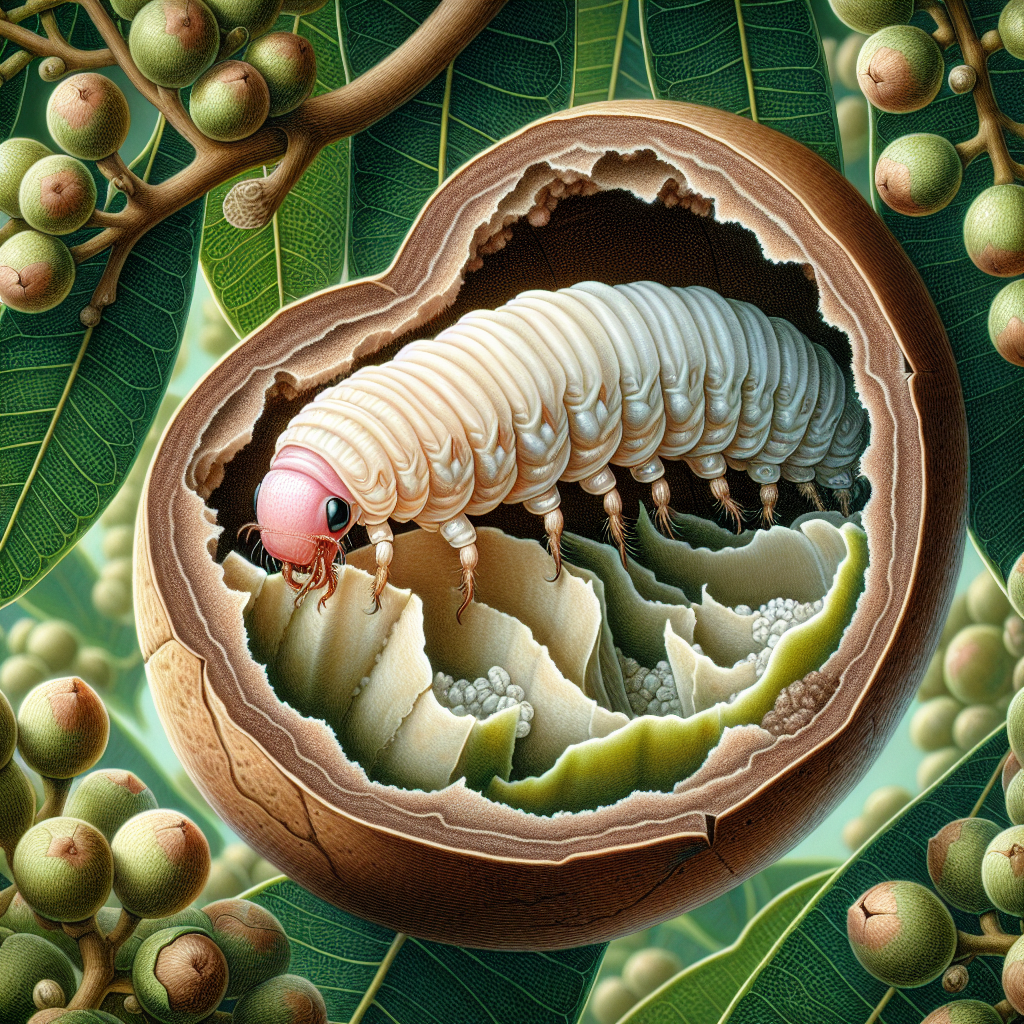
Introduction to Macadamia nut borer
The Macadamia nut borer, scientifically known as Cryptophlebia leucotreta (commonly referred to as the false codling moth or FCM), represents one of the most serious threats to macadamia production worldwide, particularly in subtropical regions like Australia, South Africa, Hawaii, and parts of California. This pest targets the developing nuts, boring into the husk and kernel, leading to premature nut drop, internal rot, and reduced marketability. Infestations can cause yield losses of up to 50% in unmanaged orchards, making timely diagnosis and intervention critical for commercial viability.
Adult moths are small, with a wingspan of 12-20 mm, featuring mottled brown and gray forewings with a distinctive coppery sheen on the hindwings. Larvae are creamy white to pinkish caterpillars reaching 15-20 mm in length, often frass-covered. Unlike other nut borers, FCM has a broad host range, attacking over 40 plant species, but macadamias are prime targets due to their high oil content and prolonged nut development period (up to 9 months). Macadamia (crop) growers must integrate monitoring with organic controls to sustain organic certification and premium pricing.
Economic impacts are profound: a single hectare can lose thousands in revenue from rejected nuts at processing. Climate change exacerbates risks by extending moth flight periods. This guide equips growers with professional-grade strategies, drawing from IPM research by institutions like the University of Hawaii and South African Macadamia Growers' Association.
Identifying Symptoms & Damage
Early detection of Macadamia nut borer is essential, as larvae feed internally, making external signs subtle until damage is advanced. Key symptoms include:
- Entry Holes and Frass: Small (1-2 mm) holes on the husk surface, often with reddish-brown frass pellets resembling rat droppings. Holes appear 4-8 weeks post-flowering.
- Premature Nut Drop: Infested nuts abscise early, with larvae visible upon dissection. Affected nuts feel lighter and may ooze gum.
- Internal Tunneling: Larvae bore into the kernel, creating silk-lined galleries filled with frass and necrotic tissue. Kernels turn brown, spongy, and rancid.
- Husk Discoloration: Yellowing or browning patches around entry points, progressing to full husk necrosis.
- Secondary Infections: Fungal entry via bore holes leads to anthracnose or Phytophthora (disease), worsening rot.
Damage severity correlates with infestation timing: early-season attacks (pre-shell hardening) cause total nut loss; late-season damage reduces kernel recovery by 20-40%. Scout by inspecting 100 nuts per tree from the canopy periphery, where moths prefer oviposition. Use a headlamp for night checks, as larvae are nocturnal. Differentiate from nut weevils by frass type—borer frass is finer and silk-associated.
Thresholds: 2-5% infested nuts warrant action. Dissect fallen nuts to confirm larvae presence. Digital imaging apps aid rapid field ID, boosting accuracy by 90% per recent studies.
Lifecycle and Progression of Macadamia nut borer
Understanding the lifecycle enables precise timing of interventions. FCM completes 3-6 generations annually, temperature-dependent (optimum 25-30°C).
- Eggs (2-4 days): Females lay 50-200 eggs singly on husks or leaves, 1-2 mm oval, white turning orange.
- Larvae (14-28 days): Six instars; neonate larvae mine husks, later bore nuts. Full-grown larvae exit to pupate.
- Pupae (10-15 days): Silken cocoons in soil, debris, or husks; reddish-brown, 10-12 mm.
- Adults (5-15 days): Nocturnal moths mate post-dusk; flight peaks at 20-25m canopy height.
Overwintering occurs as diapausing pupae in soil. Progression accelerates in humid summers; drought stresses trees, increasing susceptibility. Pheromone traps track adult emergence, with peaks aligning nut susceptibility windows (e.g., 40-100 days post-anthesis). Lifecycle models predict outbreaks using degree-day accumulations (base 12°C), aiding spray timing.
Environmental Triggers & Risk Factors
Macadamia nut borer thrives in warm, humid conditions (25-32°C, >70% RH), common in macadamia belts. Key triggers:
- High Humidity: Promotes egg hatch (>80% RH) and larval survival.
- Prolonged Leaf Wetness: Enhances oviposition; irrigation mismanagement spikes risks.
- Tree Stress: Water deficit, nutrient imbalance (low K), or root rot (disease) weaken defenses.
- Weed Hosts: Nearby guava or mango serve as reservoirs.
- Windbreaks: Dense foliage harbors pupae; poor pruning elevates infestation.
Risk mapping via GIS integrates weather data, identifying hotspots. El Niño years see 2x outbreaks due to warmth. Soil type matters—sandy loams retain pupae longer than clays.
Organic Control & Treatment Plans
Organic management emphasizes IPM, avoiding broad-spectrum synthetics. Spring Pest Patrol: Organic AI Strategies to Shield Your Crops from Common Invaders highlights tech integration.
Monitoring: Deploy delta traps with sex pheromone (E-8-dodecadienol) at 4/ha; threshold 5-10 moths/trap/week.
Cultural Controls:
- Prune for canopy openness (30% light penetration).
- Destroy fallen nuts weekly (flail mowing).
- Cover crops like clover suppress soil pupae.
Biological Controls:
- Release Trichogrammatid wasps (egg parasitoids) at 100,000/ha.
- Bacillus thuringiensis (Bt) kurstaki sprays at early larval stage (target 50% egg hatch).
- Predatory ants (e.g., Oecophylla) conserve via border plants.
Organic Treatments:
- Neem oil (azadirachtin 0.03%) weekly during flights.
- Spinosad (Entrust) at 0.2 L/ha, 7-day intervals, <5% infested.
- Kaolin clay barriers reduce oviposition by 70%.
Treatment Plan:
- Scout weekly from bloom.
- Trap counts trigger Bt/neem at egg hatch.
- Mid-season: sanitation + parasitoids.
- Harvest: strip-pick to remove stragglers. Efficacy: 85-95% control in trials.
Preventing Macadamia nut borer in the Future
Prevention builds resilience:
- Resistant Varieties: Plant Beaumont or Nelmac hybrids with thicker husks. Beaumont Macadamia (crop).
- Sanitation: Vacuum-harvest, deep-plow pupae zones.
- Barrier Methods: Protein bait stations + GF-120.
- Refugia: 5% wildflower strips boost predators.
- Timing: Synchronize irrigation to dry husks.
Annual IPM audits reduce populations 60% long-term. Quarantine infested stock; certify pest-free scions.
Crops Most Affected by Macadamia nut borer
Primarily macadamia, but polyphagous: avocado, citrus, mango, guava, cotton. Macadamias suffer most due to nut architecture. Diversified orchards risk spillover; isolate plantings.