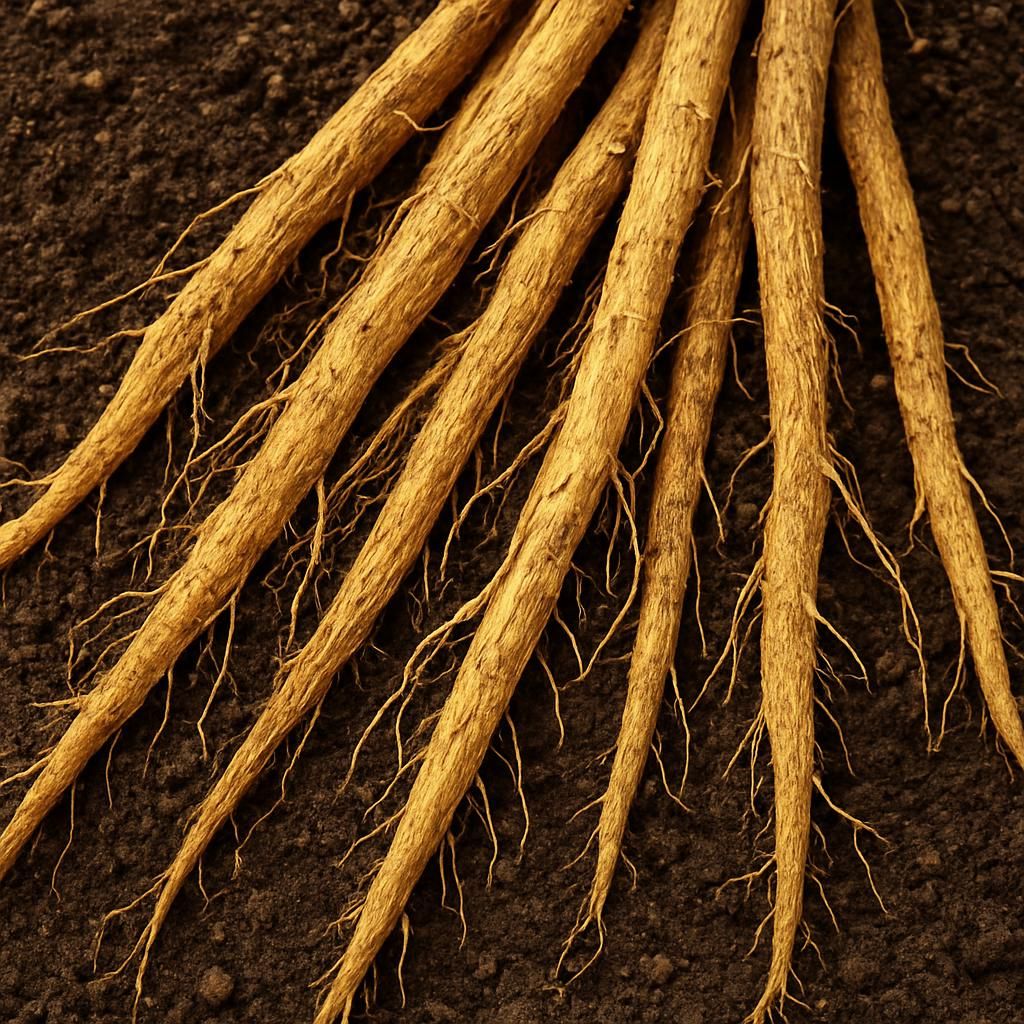
Introduction to Licorice Root (Glycyrrhiza glabra)
Licorice root has been cultivated for over 3,000 years for its sweet flavor and medicinal properties. The plant produces long, fleshy rhizomes rich in glycyrrhizin, used in confectionery, pharmaceuticals, and natural sweeteners. Modern growers value it both as a cash crop and for soil improvement due to its nitrogen-fixing ability.
Successful commercial production requires patience because rhizomes need three to four full growing seasons to reach marketable size. The crop performs best in Mediterranean or continental climates with hot summers and cold winters that promote dormancy and root development.
Botanical Profile of Licorice Root (Glycyrrhiza glabra)
Glycyrrhiza glabra is a herbaceous perennial in the Fabaceae family reaching 1–1.5 m in height. It features pinnate leaves with 9–17 leaflets and produces pale purple to violet pea-like flowers in summer. The plant develops an extensive network of horizontal stolons and vertical taproots that can penetrate 1–2 meters deep.
Rhizomes are cylindrical, 1–3 cm thick, with a yellowish-brown exterior and fibrous yellow interior. The sweet taste comes from glycyrrhizin, which is 50 times sweeter than sucrose. The plant spreads via underground runners, making containment important in small gardens.
Soil, pH, and Climate Requirements for Licorice Root (Glycyrrhiza glabra)
Licorice root demands deep, well-drained sandy loam or loam soils free of compaction. Heavy clay soils restrict root expansion and increase disease risk. The plant tolerates moderate salinity but performs poorly in waterlogged conditions.
| Parameter | Ideal Range | Notes |
|---|---|---|
| Soil Type | Sandy loam to loam | Deep, friable, stone-free |
| Soil pH | 6.5 – 8.0 | Slightly alkaline preferred |
| Temperature (Growing) | 20 – 30 °C daytime | Requires full sun and warm summers |
| Winter Temperature | -15 to -5 °C | Needs cold dormancy for rhizome quality |
| Annual Rainfall | 400 – 800 mm | Supplemental irrigation essential |
| Spacing | 60 cm between plants | 90–120 cm between rows |
Step-by-Step Planting & Propagation
Licorice is almost exclusively propagated from root divisions or rhizome cuttings rather than seed. Select healthy, disease-free segments 10–15 cm long with at least two buds. Plant in early spring once soil reaches 10 °C.
Prepare beds by incorporating 5–8 cm of well-rotted compost and correcting pH if below 6.5. Dig trenches 15 cm deep and place cuttings horizontally, spacing 60 cm apart. Cover with 8–10 cm of soil and water thoroughly. Germination of true seed is possible but slow; scarify and inoculate with rhizobia for better results.
Care & Maintenance regimes for Licorice Root (Glycyrrhiza glabra)
Consistent moisture during the first two seasons encourages establishment, while reduced irrigation in year three promotes root sweetness. Mulch with 5 cm of straw to suppress weeds and conserve moisture. Hand-weed or shallow cultivate to avoid damaging shallow runners.
| Growth Stage | Watering Schedule | Fertilizer Schedule | Pruning / Other Care |
|---|---|---|---|
| Year 1 (Establishment) | Keep top 15 cm moist; 25–30 mm/week | Low-nitrogen; apply 20 kg N/ha at planting | Remove flower stalks to direct energy to roots |
| Year 2 | Reduce to 20 mm/week once established | Side-dress with compost tea every 6 weeks | Cut back foliage to 20 cm after frost |
| Year 3–4 (Maturity) | Withhold water 4–6 weeks before harvest | No additional fertilizer needed | Remove dead tops in late autumn |
Pests, Diseases & Organic Management
Common pests include Aphids, Spider mites, and Root-knot nematodes. Monitor weekly and release beneficial insects such as lady beetles and predatory mites. Neem oil or insecticidal soap provides effective organic knockdown.
Diseases such as Root rot and Fusarium wilt are minimized by proper drainage and crop rotation. Solarize soil for 4–6 weeks before planting in high-risk areas. Avoid planting near Potato or Tomato to reduce shared pathogen pressure.
Harvesting, Curing & Optimal Storage
Harvest begins in the third or fourth autumn after planting when leaves yellow. Dig trenches alongside rows and lift entire root systems carefully to avoid breakage. Wash rhizomes, trim small laterals, and sort by diameter.
Cure by air-drying in a shaded, well-ventilated area at 25–30 °C for 7–10 days until moisture drops below 12 %. Store in breathable burlap sacks or wooden crates at 5–10 °C and 60–70 % relative humidity. Properly cured roots retain quality for 2–3 years.
Companion Planting for Licorice Root (Glycyrrhiza glabra)
Licorice pairs well with deep-rooted herbs such as Thyme and Yarrow that improve drainage and deter pests. It also benefits from nitrogen-fixing neighbors like Clover. Avoid planting near shallow-rooted vegetables that compete for surface moisture.
Licorice Root (Glycyrrhiza glabra) improves soil structure for following crops such as Garlic and Onion. Its deep roots break up compacted layers, making it an excellent green manure component in rotation systems.