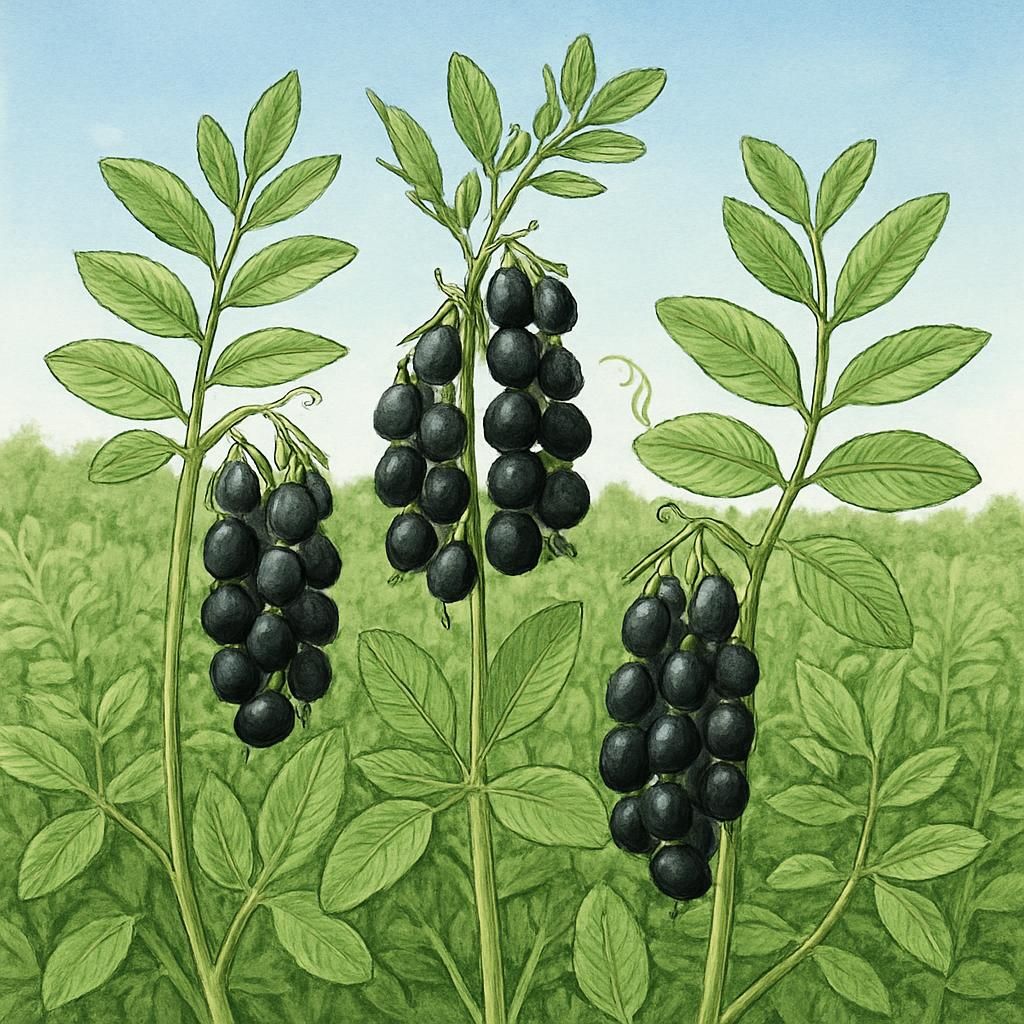
Introduction to Lentil (Beluga Black)
The Beluga Black Lentil, named for its similarity in appearance to caviar, is a nutrient-dense legume prized for its rich flavor and versatility. Known scientifically as Lens culinaris, this lentil variety boasts significant agricultural value due to its adaptability and high yield potential. Commonly used in soups and salads, it is an esteemed component in both gourmet and everyday cuisines.
Botanical Profile of Lentil (Beluga Black)
Lentils are part of the legume family, known for their ability to fix nitrogen in the soil, improving soil fertility. Beluga Black Lentils are small, round, and possess a glossy, black exterior. The plants grow to approximately 12-20 inches in height and have delicate compound leaves, usually pinnate with 5-15 leaflets, and small white flowers.
Soil, pH, and Climate Requirements for Lentil (Beluga Black)
Beluga Black Lentils thrive in a specific range of environmental conditions that must be met for optimal growth.
| Factor | Optimal Conditions |
|---|---|
| Soil Type | Well-drained, loamy or sandy soil |
| Soil pH | 6.0 - 7.5 |
| Climate | Cool temperate climate |
| Temperature | 18-22°C (64-72°F) |
Step-by-Step Planting & Propagation
- Preparation: Select a sunny location with well-drained soil. Conduct a soil test to ensure pH is between 6.0 and 7.5.
- Sowing: Plant seeds in early spring, about 0.5 inches deep and 1 inch apart in rows that are 12-18 inches apart.
- Thinning: Thin to 3 inches apart once seedlings are established.
- Field Management: Rotate with non-leguminous crops to prevent soil nutrient depletion.
- Irrigation: Ensure consistent moisture, especially during flowering and pod development.
Care & Maintenance Regimes for Lentil (Beluga Black)
Proper care leads to a successful harvest. The following table outlines key maintenance practices:
| Component | Schedule & Details |
|---|---|
| Watering | Moderate; 1 inch per week during critical growth phases |
| Fertilizing | Apply legume-specific fertilizer before planting, if necessary |
| Pruning | Minimal; remove any sickly or infested plants |
Pests, Diseases & Organic Management
Beluga Black Lentils are affected by common pests and diseases like Aphids and Spider Mites, as well as fungal issues like Fusarium and Root Rot. Organic management practices include regular monitoring, use of beneficial insects, and crop rotation.
Harvesting, Curing & Optimal Storage
Beluga Black Lentils are typically ready to harvest 80-110 days after sowing, when pods harden and lower leaves yellow. Allow the plants to dry in the field before threshing. Store the lentils in a cool, dry place with proper ventilation to ensure longevity.
Companion Planting for Lentil (Beluga Black)
Good companion plants include Carrot and Cabbage, which can deter pests and improve soil health. Avoid planting near Onion and Garlic as they can inhibit growth.
For more on integrating crops effectively, read our Summer Companion Planting: 10 Organic Pairings to Boost Small Farm Resilience.
For detailed information on lentil cultivation, visit the Lentils Wiki page.