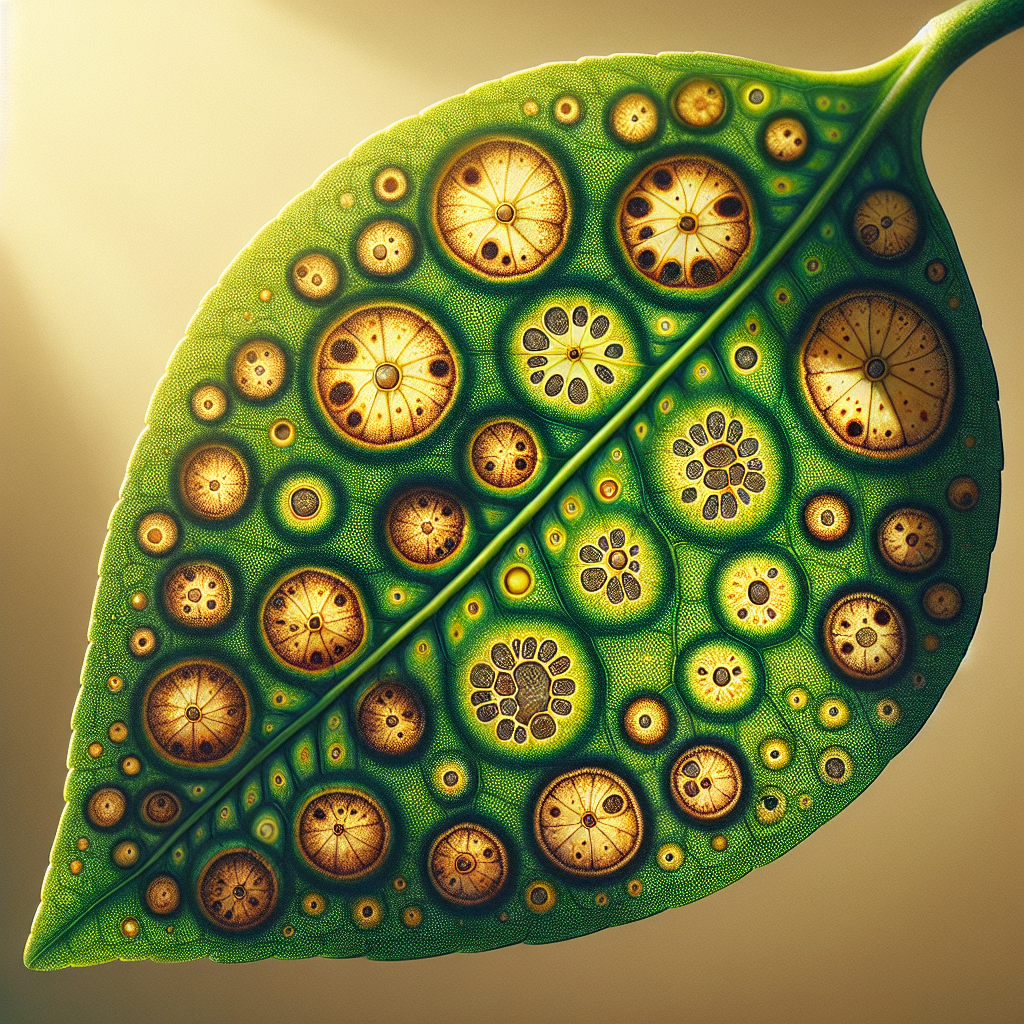
Introduction to Alternaria brown spot
Alternaria brown spot, caused by the fungus Alternaria alternata f.sp. citri, represents one of the most destructive foliar diseases in citrus production, particularly devastating to varieties like Mandarin (Satsuma) and other tangerines. First identified in Florida in the 1970s, this pathogen thrives in warm, humid conditions, leading to rapid defoliation, twig dieback, and fruit drop that can slash yields by up to 80% in unmanaged groves. Symptoms manifest as small, dark brown to black spots with yellow halos on leaves, often coalescing into blighted areas that mimic nutrient deficiencies or other leaf spot diseases.
This comprehensive guide equips growers with evidence-based protocols for prevention and control, drawing from decades of research by institutions like the University of Florida's Citrus Research and Education Center. Effective management hinges on cultural practices, resistant varieties, and targeted fungicide applications, transforming this yield-killer into a manageable challenge. For small farms, integrating these strategies with tools like hyper-local weather monitoring can prevent outbreaks before they start—check out Why 80% of Small Farms Battle Weather Disasters - And How Hyper-Local AI Forecasts Can Save Your Harvest for practical tips.
Economic losses from Alternaria brown spot exceed millions annually worldwide, underscoring the need for vigilant scouting and IPM (Integrated Pest Management). Early intervention preserves canopy health, boosts fruit size and quality, and maintains market competitiveness. Whether managing large orchards or backyard groves, understanding this pathogen's lifecycle—from conidia dispersal via wind and rain to infection under prolonged leaf wetness—is key to sustainable citrus cultivation.
Botanical Profile of Alternaria brown spot
Alternaria alternata f.sp. citri is a necrotrophic fungus specialized on citrus, producing multicellular conidia with distinctive transverse and longitudinal septa under microscopic examination. Unlike the general Alternaria alternata, this pathotype uniquely produces ACT toxin, a host-specific metabolite that induces rapid cell death in susceptible mandarins, distinguishing it from non-pathogenic strains. The fungus overwinters in infected debris, twig lesions, and as mycelium in bark, sporulating profusely when temperatures hit 20-30°C (68-86°F) with leaf wetness exceeding 8-12 hours.
Morphologically, lesions begin as 1-3 mm brown spots with a yellow halo, expanding to 10-20 mm with concentric rings resembling a target. On fruit, velvety brown spots with yellow halos appear near the stem end, cracking rind and inviting secondary rots. Severe infections cause massive defoliation by mid-summer, weakening trees and predisposing them to Phytophthora root rot. Genetic studies reveal high variability, with aggressive strains dominating in Florida and Australia.
Lifecycle completes in 7-10 days under optimal conditions, with conidia splashing up to 30 meters via rain or spreading kilometers via wind. This polycyclic nature demands proactive management. Differentiate from Cercospora leaf spot by PCR assays or symptom location—Alternaria favors young flush leaves, while Cercospora hits mature foliage.
Soil, pH, and Climate Requirements for Alternaria brown spot
Alternaria brown spot favors well-drained, sandy soils with pH 5.5-6.5, common in Florida's ridge regions where irrigation creates microclimates of high humidity. Avoid heavy clay soils that retain moisture, exacerbating infection; amend with organic matter to 3-5% for better aeration. Nitrogen-rich soils promote succulent flush, prime infection targets—maintain balanced nutrition via soil tests targeting 20-40 ppm N.
Optimal climate mirrors subtropical citrus belts: 24-28°C daytime, >80% relative humidity, and frequent summer rains. Disease severity index spikes above 25°C with 10+ hours leaf wetness; coastal areas with marine air see lower incidence due to drier canopies. In Mediterranean climates like California, outbreaks are rare without overhead irrigation.
Soil moisture at 60-80% field capacity supports sporulation; implement drip irrigation to minimize wetting. Mulch reduces splash dispersal but monitor for increased humidity. For marginal sites, select resistant rootstocks like Cleopatra mandarin, tolerant to both Alternaria and root rot. Annual soil solarization kills overwintering inoculum in debris.
Step-by-Step Planting & Propagation
Site Selection: Choose elevated, wind-swept sites with full sun; avoid low-lying humid pockets. Test soil for nematodes (root-knot nematodes) and pH.
Variety Selection: Plant resistant cultivars like Honey or Orlando tangerines; avoid ultra-susceptible Sunburst. Use certified, disease-free nursery stock.
Planting: Space 4.5-6 m apart in rows; plant in spring post-frost. Incorporate 50-100 g triple superphosphate per hole.
Propagation: Budwood from indexed sources; micrografting reduces contamination. Avoid wounding during humid periods.
Establishment: Irrigate deeply but infrequently; prune to open canopy for drying. Apply copper pre-planting.
Follow with monthly scouting using 10x hand lens for early lesions.
Care & Maintenance regimes for Alternaria brown spot
Irrigation: Drip or micro-sprinkler to keep foliage dry; avoid overhead. Time watering for midday evaporation.
Fertilization: Split applications: 1/3 post-harvest, 1/3 spring flush, 1/3 summer. Foliar micronutrients (Mn, Zn) at 2-4 kg/ha.
Pruning: Remove deadwood annually; maintain 30-40% canopy openness. Strip lower leaves to 1 m trunk height.
Sanitation: Rake and destroy fallen debris quarterly; shred and compost off-site at >60°C.
Monitoring: Weekly inspections during flush; use sticky traps for spore counts. Threshold: 5% leaf infection triggers action.
Integrated with Soil Health Mastery: 5 Proven Strategies for Small Farms to Build Fertile Ground Without Breaking the Bank.
Pests, Diseases & Organic Management
Primary: Alternaria itself. Secondary: exacerbates anthracnose, Botrytis.
Organic Controls:
- Neem Oil: 0.5-1% weekly sprays suppress sporulation.
- Potassium Bicarbonate: 2-5 g/L for pH disruption.
- Bacillus subtilis: QST 713 strain at 1 L/ha.
- Copper Octanoate: OMRI-approved, 1-2 L/ha.
Rotate products; tank-mix with hort oil. Cultural IPM: windbreaks, reflective mulches reduce spore deposition. Beneficials: predatory mites indirectly aid by stressing fungal mats.
Chemical: Strobilurin + DMI (azoxystrobin + difenoconazole) at 7-14 day intervals, 4-6 apps/season. Resistance management essential.
Harvesting, Curing & Optimal Storage
No direct harvest for pathogen, but manage for healthy fruit: pick at color break, avoid rind wounds. Post-harvest drench in fludioxonil.
Infected fruit cull via flotation; store sound fruit at 10-13°C, 85-90% RH, 4-6 weeks shelf life. Monitor for Alternaria fruit rot.
Companion Planting for Alternaria brown spot
Beneficials: Marigold (Tagetes spp.) repels thrips vectors; Thyme antifungal volatiles. Interplant Thai Basil for aphid control.
Avoid: Dense Tomato or Eggplant that harbor general Alternaria. Use Clover cover crop for soil health without humidity trap.
See Why Companion Planting Feels Like Guesswork for Small Farms - And How AI Makes It Foolproof.