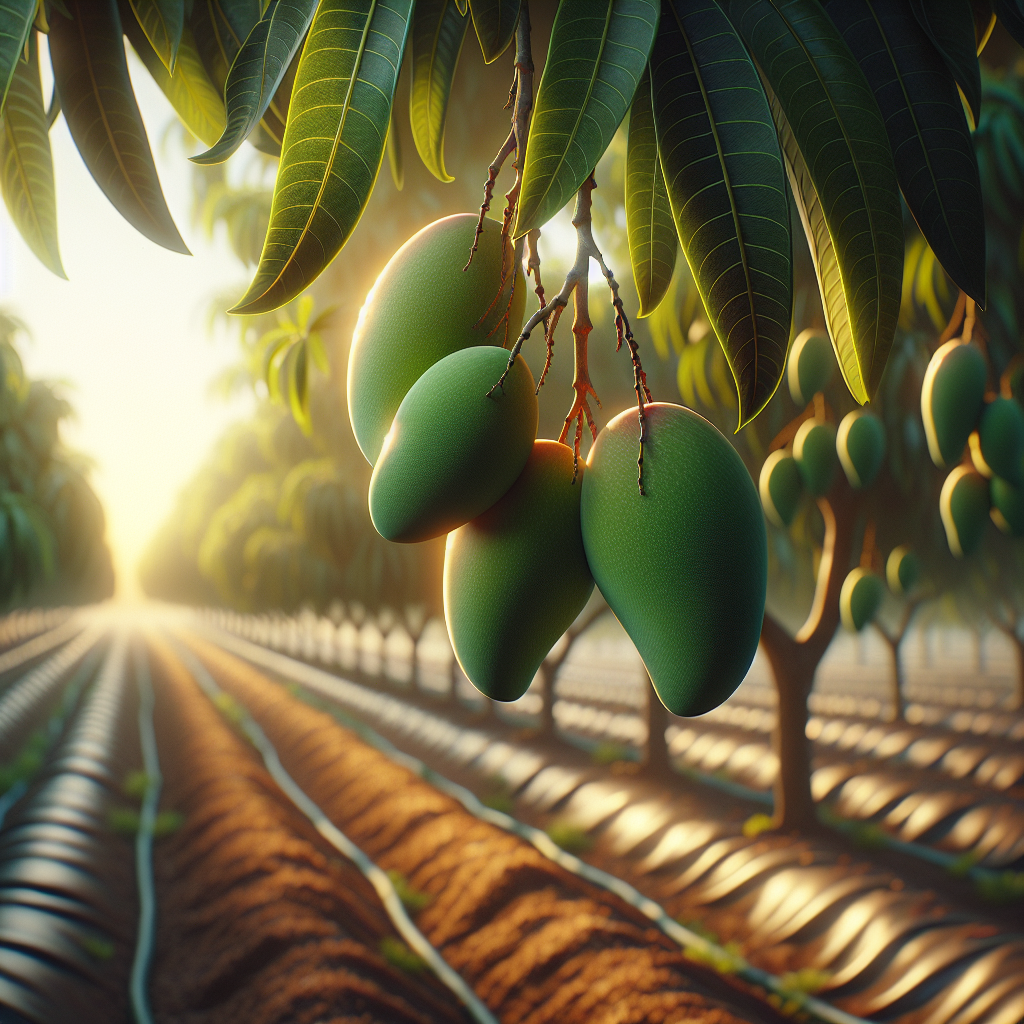
Introduction to Langra Mango
Believed to have originated in the Varanasi region of northern India, this historic cultivar is one of the most respected table mangoes in South Asia. Its name is traditionally linked to an orchard owner known as “Langra,” and over generations it became famous for a distinctive flavor profile: deep sweetness balanced by refreshing acidity, a strong resinous-fruity aroma, and soft, nearly fiberless flesh.
Unlike many commercial mangoes that turn yellow, this cultivar often remains green or greenish-yellow even when physiologically mature. That trait can confuse inexperienced growers and traders, but seasoned producers rely on shoulder development, specific gravity, days from fruit set, and internal flesh color rather than peel color alone. Trees are generally vigorous, capable of producing a dense canopy, and they reward disciplined pruning and nutrition with excellent fruit quality.
For broader background on species-level management, habit, and physiology, see our Mango guide. In mixed-orchard systems, Langra is often favored where markets value aroma and eating quality over long-distance shipping durability. Because the fruit is delicate compared with some export types, precise harvest timing and careful handling are especially important.
Botanical Profile of Langra Mango
This cultivar belongs to the Anacardiaceae family and is a selection within Mangifera indica, an evergreen tropical fruit tree. Under orchard conditions, mature trees commonly reach 8-15 meters if left unmanaged, but commercial canopies are usually maintained much lower through training and annual pruning. Langra tends to form a rounded, spreading crown with dense foliage, which is advantageous for photosynthesis but can create humidity pockets that favor Anthracnose and Powdery mildew if the canopy becomes too compact.
Leaves are leathery, lanceolate, and dark green at maturity, while flush growth emerges coppery to reddish depending on season and nutrient status. Flower panicles are terminal, pyramidal, and heavily branched. As with other mangoes, flowers are mostly male with a smaller proportion of hermaphrodite flowers, so fruit set can appear heavy at bloom yet drop substantially in the weeks that follow. This is normal; only a small percentage of flowers ever become marketable fruit.
Langra fruit is medium to medium-large, usually oval to oblong-ovate, with a relatively full shoulder and green skin that may show a dull yellow cast when ripe. The flesh is pale yellow to yellow, very juicy, aromatic, and notably low in fiber. The stone is medium-sized, and edible pulp percentage is generally high when trees are well nourished and harvested at proper maturity. The cultivar is strongly associated with premium fresh consumption rather than processing because its aroma and texture are the primary value drivers.
From a phenological standpoint, it benefits from a cool or relatively dry rest period before flowering, then warm conditions during fruit development. Excessively humid bloom weather can sharply reduce pollination efficiency and increase floral disease pressure. Alternate bearing can occur if trees are allowed to overcrop one year and are not nutritionally restored afterward.
Soil, pH, and Climate Requirements for Langra Mango
Deep, well-drained loam to sandy loam is ideal. The root system needs both moisture and oxygen, so the best orchard soils are at least 1.5-2 meters deep, friable, and free from a hardpan that traps water around the root zone. Heavy clay can be used only if drainage is improved by mounding, subsoiling, surface shaping, and strict irrigation control. Mango roots are far more tolerant of short dry periods than of prolonged saturation.
The preferred soil pH is 5.5-7.5, with the sweet spot near 6.0-7.0. At pH below about 5.0, aluminum and manganese toxicity risks rise and calcium, magnesium, and phosphorus uptake can suffer. At pH above 7.8, iron, zinc, and manganese deficiencies become common, often seen as interveinal chlorosis on young leaves, small leaf size, weak flushing, and poor fruit set. If soil is alkaline, repeated organic matter incorporation, elemental sulfur where appropriate, and foliar micronutrient sprays are more effective than trying to force rapid pH shifts in the entire profile.
Langra performs best in tropical to warm subtropical climates with temperatures of 24-32°C during active growth. Short periods of slightly cooler weather can help floral induction, but frost is highly damaging, especially to young trees, panicles, and marble-stage fruit. Below about 2-4°C, injury risk rises sharply; below 0°C, severe damage or death is possible.
Rainfall of 750-2500 mm can be workable, but distribution matters more than annual total. The ideal pattern is a dry spell before flowering, limited rainfall during bloom and fruit set, then moderate moisture during fruit enlargement. Persistent rain and heavy dew at flowering encourage Anthracnose, wash pollen, and reduce bee activity. During fruit maturation, sudden heavy irrigation or rainfall after drought can promote fruit splitting, internal breakdown, or reduced flavor concentration.
Soil moisture should be maintained in the active root zone at roughly field capacity to moderately depleted levels, not muddy saturation. In practical terms, soil at 15-30 cm depth should feel cool and slightly moist, forming a weak ball in the hand that crumbles easily; if it smears, smells sour, or remains sticky for days, it is too wet. Chronic overwatering shows up as yellowing leaves, reduced new flush, blackened feeder roots, gum exudation at the collar, poor fruit retention, and in severe cases, decline from root rot.
Wind protection is valuable. Strong hot winds can desiccate panicles and scorch leaves, while storm winds break limbs carrying a heavy fruit load. Shelterbelts placed far enough away to avoid shading, or temporary wind barriers for young trees, can significantly improve establishment.
Step-by-Step Planting & Propagation
Commercial growers should establish this cultivar using grafted plants, not seedling trees. Seed propagation does not preserve cultivar identity, and seedling trees show variable fruit quality, delayed bearing, and inconsistent canopy form. Veneer grafting, epicotyl grafting, and softwood grafting onto vigorous, disease-free rootstocks are the standard methods.
Select planting material carefully. Choose healthy grafted saplings 8-18 months old with a well-healed union, straight stem, 3-5 mature flushes, and no Gummosis, scale insects, or root circling. Reject plants with split graft unions or root-bound containers.
Choose the right season. In monsoonal climates, plant at the onset of rains only if the site drains quickly. In wetter zones, post-monsoon planting is safer because it reduces waterlogging risk while still allowing establishment before hot weather. In irrigated subtropical areas, early spring planting is also suitable.
Mark spacing by system. Traditional orchards may use 10 x 10 m spacing. Moderate-density systems often use 8 x 8 m or 8 x 6 m depending on pruning commitment and soil vigor. Langra develops a substantial canopy, so avoid over-dense planting unless annual size control is guaranteed.
Prepare pits properly. Dig pits about 1 x 1 x 1 m in poorer soils, smaller in deep fertile loams. Refill with topsoil mixed with 20-30 kg well-rotted farmyard manure or compost, 1-2 kg neem cake, and if soil tests indicate need, phosphorus and micronutrients. Do not place raw manure in direct contact with roots.
Plant slightly high, not low. Set the grafted tree so the root collar remains at or slightly above the final soil line. The graft union must stay well above soil level to prevent scion rooting and collar infection.
Water in immediately. Apply enough water to settle soil around roots without puddling the basin for days. A first irrigation should wet the root ball and surrounding soil to 30-45 cm depth.
Mulch but keep a gap. Apply 5-10 cm organic mulch in a 60-100 cm circle, leaving 10-15 cm clear around the trunk. This moderates soil temperature, suppresses weeds, and stabilizes moisture.
Stake if wind-exposed. Tie loosely with soft material; remove or adjust before girdling occurs.
Train the framework early. Head back weak top growth only if necessary, then select 3-4 scaffold branches starting 60-100 cm above ground, evenly spaced around the trunk.
For top-working established but inferior trees, bark grafting or veneer grafting onto headed-back branches can convert an orchard to Langra faster than replanting. This is useful where root systems are sound and irrigation infrastructure already exists.
Care & Maintenance regimes for Langra Mango
Young trees need consistent but not excessive moisture. In light soils during hot weather, irrigate every 5-7 days for the first season; in heavier soils, every 7-12 days may suffice. Each irrigation should moisten the root zone deeply rather than merely wetting the surface. By year two and three, extend intervals and increase volume to encourage deeper rooting. A common professional target is to wet soil to 45-60 cm depth for young trees and 60-90 cm for bearing trees, then allow partial drying before re-irrigating.
For bearing orchards, irrigation strategy should follow phenology:
- Pre-flowering rest: Reduce or withhold irrigation for several weeks where climate allows to encourage floral induction, but do not stress trees to the point of leaf wilt or twig dieback.
- Flowering to fruit set: Maintain mild, even moisture. Severe dryness during bloom can cause panicle desiccation and fruit drop; excessive moisture increases disease pressure.
- Fruit development: Supply steady water, particularly from pea stage to final swell. Irregular watering causes fruit drop and weak sizing.
- Pre-harvest: Slightly moderate irrigation near final maturity can improve flavor concentration, but avoid abrupt drought followed by heavy watering.
Nutrient demand increases sharply once trees begin cropping. Exact rates should follow leaf and soil analysis, but a professional regime includes nitrogen for vegetative vigor and yield, phosphorus mainly for root and reproductive support, potassium for fruit filling and quality, calcium and magnesium for tissue strength, and zinc-boron sprays for flowering and fruit set. Split nitrogen and potassium into 2-4 applications rather than one heavy dose. Excess nitrogen late in the cycle drives vegetative flush at the expense of flowering and can increase pest susceptibility.
Typical deficiency clues in Langra include zinc deficiency causing small leaves and rosetting, boron deficiency contributing to poor fruit set and misshapen fruit, and potassium shortage reducing size, sweetness, and disease tolerance. Foliar micronutrient sprays before flowering and after harvest are often more efficient than soil applications in high-pH soils.
Pruning should be light but regular. The main goals are canopy opening, deadwood removal, height control, and renewal of productive terminals. Remove inward-growing branches, crossing wood, and low, shaded limbs. After harvest, tip-pruning long shoots by 10-20 cm can help maintain a compact, well-branched canopy. Avoid severe pruning immediately before expected flowering because it may delay or suppress bloom.
Mulch management is highly beneficial. Use composted leaf litter, straw, or other clean organic materials. Maintain a weed-free basin of at least 1-1.5 m radius around young trees because weeds directly compete for water and nutrients during establishment. Living groundcovers between rows can be valuable if mowed and kept from competing at the trunk line.
Fruit retention can be improved by preventing tree stress during the first 6-8 weeks after fruit set. Sudden water deficit, heat spikes, micronutrient deficiencies, and disease on panicles are the most common causes of excessive drop. In very heavy crop years, light thinning may improve size and reduce limb breakage.
For orchard floor ecology and moisture-conserving intercrops in young plantings, principles similar to those outlined in Soil health strategies can help maintain structure, biological activity, and nutrient cycling.
Pests, Diseases & Organic Management
Fruit flies are among the most serious pests, especially as fruit approaches maturity. Monitor with methyl eugenol or cue-lure traps depending on local species. Collect and destroy fallen fruit at least twice weekly during the season, because neglected drops act as breeding chambers. Protein bait sprays, sanitation, and timely harvest are the backbone of organic suppression.
Mango hoppers attack panicles and young shoots, sucking sap and encouraging Sooty mold through honeydew deposition. Their damage is most severe at flowering. Use yellow sticky monitoring, prune to improve air movement, avoid overuse of nitrogen, and apply neem-based products or entomopathogenic fungi where permitted. Sprays should target early infestation and the undersides of panicles.
Mealybugs, Scales, and Stem borers can also occur. Sticky bands on trunks before crawler movement, destruction of egg masses in soil cracks, release or conservation of natural enemies, and sanitation around the trunk reduce mealybug pressure. Stem borer attack is signaled by frass and gummy exudate from holes; physically remove larvae with a wire and seal cleaned tunnels if infestation is localized.
Anthracnose is the major fungal disease in humid production zones. It affects leaves, flowers, and fruit, producing black lesions, blossom blight, and postharvest rot. The pathogen thrives in wet canopies and prolonged leaf wetness. Organic management depends on three pillars: open canopies, sanitation, and protective sprays such as copper formulations or approved biofungicides timed before and during wet bloom periods. Avoid overhead irrigation that wets flowers and fruit.
Powdery mildew is more common when nights are cool and humid but days are dry. It appears as whitish growth on panicles, flowers, and small fruit, often causing abortion and heavy fruit drop. Sulfur-based organic sprays can be effective if applied preventively and not during very hot conditions that may burn tissues.
Bacterial black spot and Gummosis become more likely where wounding, poor drainage, or excessive humidity are common. Keep tools sanitized, prevent trunk injury from machinery, and do not heap mulch against bark. Any tree showing persistent collar wetness, cracking bark, and gum exudation should be checked immediately for drainage failure.
The most reliable organic disease prevention routine is:
- maintain a ventilated canopy,
- remove diseased twigs and mummified fruit,
- avoid excess nitrogen,
- keep irrigation off foliage,
- spray protectants before forecast wet periods,
- harvest gently to prevent skin injury.
Harvesting, Curing & Optimal Storage
Harvest maturity in this cultivar should never be judged by peel color alone. Look for filled shoulders near the stem end, a slight flattening of the beak, reduced latex aggressiveness, and the expected number of days from flowering or fruit set under local conditions. Mature fruit will often have well-developed pulp even while remaining predominantly green.
For premium quality, harvest with clippers rather than pulling fruit. Leave a short pedicel initially to reduce sap burn, then de-sap fruit stem-end down on racks or absorbent material. Sap injury is one of the main causes of downgraded appearance in mangoes and can be severe in green-skinned cultivars where blemishes show clearly.
Handle fruit as though it bruises easily, because it does. Never drop into baskets. Use padded field crates and keep them shaded. Harvest during the cooler part of the day if possible. Fruit harvested overheated from afternoon sun has higher respiration and shorter shelf life.
Curing in mango production usually means drying surface moisture, allowing latex drainage, and stabilizing fruit before packing rather than the curing process used for bulbs or tubers. Keep fruit in a clean, airy shaded area for several hours after harvest. Wash only if packinghouse hygiene allows rapid drying and clean water management; otherwise superficial wetting can spread disease.
Langra is best marketed ripe or near-ripe for local and regional chains because its eating quality is outstanding but storage life is moderate. Mature-green fruit may be held around 12-13°C with 85-90% relative humidity for a limited period. Below about 10-12°C, chilling injury can develop, seen as skin pitting, uneven ripening, dull flavor, and increased decay. Ripe fruit stores best for only a few days under cool conditions and should be moved quickly.
To ripen evenly after harvest, hold fruit at about 20-24°C with good ventilation. Avoid sealed humid rooms that encourage fungal growth. Mature fruit should soften gradually, develop stronger aroma, and shift internally to full yellow flesh. Once ripe, refrigeration can slow further softening for short periods, but extended cold storage degrades flavor.
Companion Planting for Langra Mango
The best companions are those that improve pollinator activity, suppress weeds, stabilize soil, and avoid aggressive competition with the tree’s feeder roots. In young orchards with wide spacing, low-growing, shallow-rooted, or seasonally managed companions are preferable to perennial heavy feeders.
Thai Basil is useful near orchard edges and pollinator strips because its flowers attract beneficial insects while its growth habit stays manageable. Clover works well as a living groundcover between rows, contributing nitrogen fixation, reducing erosion, and improving trafficability when mowed regularly. Marigold is not actually marigold, so do not substitute by name; instead, use Nasturtium only where a soft, seasonal insectary is desired and irrigation is available. Yarrow is especially valuable in biodiversity strips because its umbels support parasitoids and predatory insects.
Keep companion plants at least 50-100 cm away from young trunks so the immediate basin remains competition-free. In mature orchards, companion strips should be placed in alleys rather than tight around the base. Avoid tall intercrops that cast shade on the lower canopy, and avoid species requiring frequent irrigation that would keep the mango root zone constantly wet. Legume covers and insectary plants are generally better choices than thirsty vegetable companions.
A practical layout is a mulch ring around each tree, a weed-free drip zone for the first years, and managed companion strips in row middles. Mow before seed set if self-seeding is undesirable, and terminate covers before peak dry season if they begin competing for soil moisture.