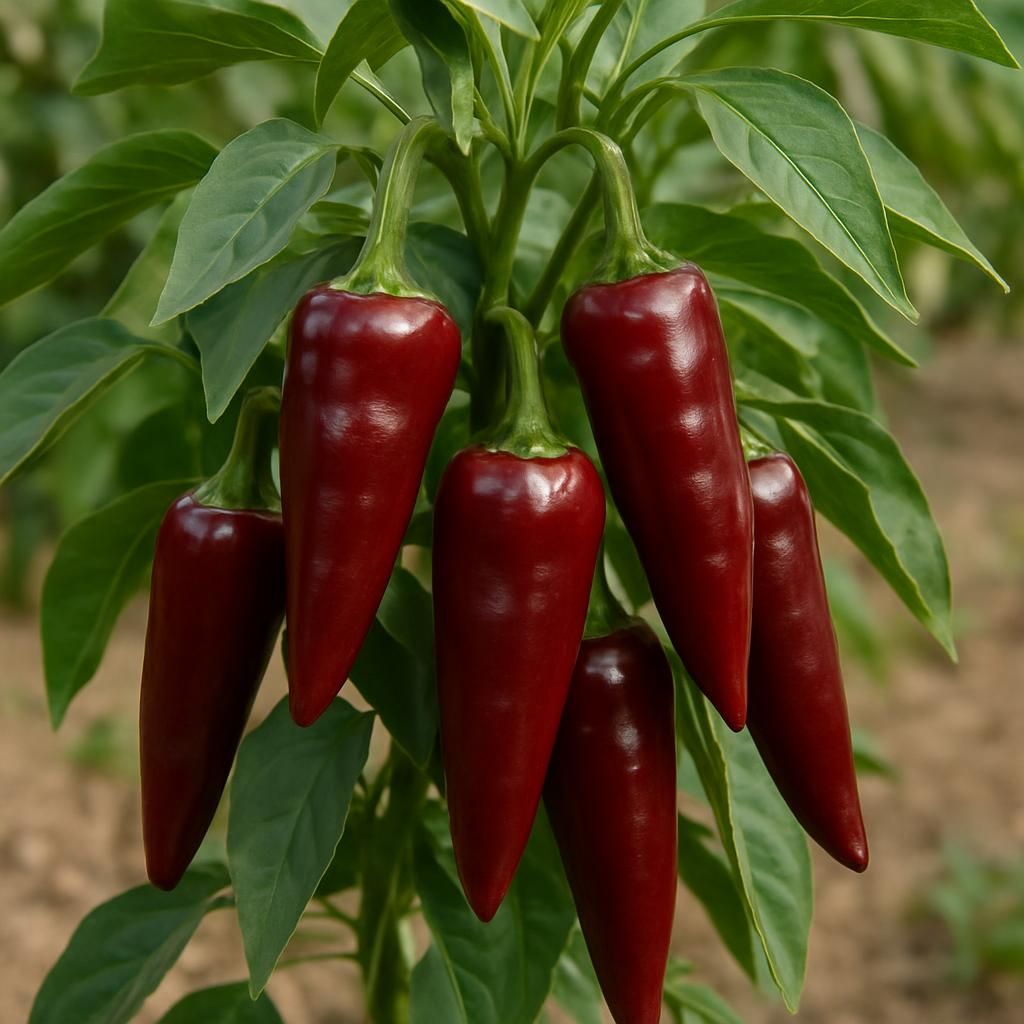
Introduction to Kashmiri Mirch
Kashmiri Mirch (Capsicum annuum) is one of the most valued chili varieties in South Asian cuisine and global spice markets. Grown primarily in the temperate valleys of Jammu and Kashmir, this pepper is renowned for its brilliant red hue and mild pungency rather than intense heat. Farmers prize it for both fresh use and dried powder production, where its high carotenoid content delivers rich color without overwhelming spiciness. Commercial cultivation has expanded to similar agro-climatic zones worldwide, offering smallholders a high-value cash crop with relatively straightforward management once soil and climate conditions are optimized.
Botanical Profile of Kashmiri Mirch
Kashmiri Mirch belongs to the Solanaceae family and exhibits an indeterminate growth habit with erect, bushy plants reaching 60–90 cm in height. Leaves are ovate-lanceolate, dark green, and slightly pubescent. Flowers are small, white, and hermaphroditic, typically self-pollinating although insect activity can enhance fruit set. The fruit is elongated, conical, and thin-walled, measuring 8–12 cm at maturity, with a smooth, glossy skin that turns from green to deep crimson. The pericarp contains high levels of capsanthin and capsorubin, giving the characteristic vibrant color, while capsaicin content remains low (300–800 Scoville Heat Units). Seeds are flat, cream-colored, and number 80–120 per fruit.
Soil, pH, and Climate Requirements for Kashmiri Mirch
Successful cultivation begins with matching site conditions to the crop’s physiological needs. Kashmiri Mirch performs best in fertile, well-drained sandy loam to loam soils rich in organic matter. Heavy clay soils should be amended with compost or raised beds to prevent waterlogging. The crop is moderately sensitive to salinity and requires consistent moisture without water stress during flowering and fruit development.
| Parameter | Ideal Range | Notes |
|---|---|---|
| Soil Type | Sandy loam to loam | Well-drained; avoid heavy clays |
| Soil pH | 6.0 – 7.0 | Slightly acidic to neutral |
| Temperature (Day) | 22 – 30 °C | Optimal fruit set occurs within this range |
| Temperature (Night) | 15 – 20 °C | Cooler nights improve color development |
| Annual Rainfall | 600 – 900 mm | Supplemental irrigation needed in dry spells |
| Altitude | 1,200 – 2,200 m | Mimics native Himalayan conditions |
| Frost Tolerance | None | Protect seedlings from late spring frosts |
Step-by-Step Planting & Propagation
Propagation is almost exclusively by seed. Begin by selecting certified, disease-free seed of a locally adapted Kashmiri Mirch strain. Sow seeds 6–8 weeks before the last expected frost in a sterile seed-starting mix at 1 cm depth. Maintain soil temperature at 25–28 °C for rapid germination (7–10 days). Transplant seedlings when they have 4–6 true leaves and nighttime temperatures remain above 15 °C. Space plants 45 cm apart in rows 60 cm apart on raised beds or ridges to ensure good drainage and airflow. Pre-plant incorporation of well-rotted farmyard manure at 10–15 t/ha improves soil structure and provides slow-release nutrients.
Care & Maintenance regimes for Kashmiri Mirch
Consistent cultural practices maximize both yield and color intensity. Mulching with straw or black plastic conserves moisture and suppresses weeds. Stake plants in windy locations to prevent lodging. Remove basal suckers to direct energy into fruit production. Monitor soil moisture with tensiometers or the “finger test” to avoid both drought stress and waterlogging.
| Growth Stage | Watering Frequency | Fertilizer Application | Pruning/Maintenance |
|---|---|---|---|
| Seedling (0–4 wks) | Light daily misting | ¼ strength balanced liquid fertilizer weekly | None |
| Vegetative | 2–3 times per week | 10-10-10 NPK at 150 kg/ha split applications | Remove lower leaves touching soil |
| Flowering | Every 3–4 days | High-potassium fertilizer (5-10-20) | Pinch first flower to encourage branching |
| Fruiting | Deep watering twice weekly | Side-dress with compost tea every 3 weeks | Remove diseased or damaged fruits |
| Pre-harvest | Reduce to avoid cracking | Stop nitrogen applications | Final sanitation pass |
Pests, Diseases & Organic Management
Major insect pressures include Aphids, Thrips, and Spider Mites. Monitor weekly and apply neem oil or insecticidal soap at the first sign of infestation. Whiteflies can transmit viruses; yellow sticky traps provide early detection. Fungal threats such as Powdery mildew and Phytophthora are mitigated by proper spacing, drip irrigation, and resistant rootstocks when available. Crop rotation with non-solanaceous crops every 3–4 years reduces soil-borne pathogen buildup. Encourage beneficial insects by planting flowering borders such as Marigold.
Harvesting, Curing & Optimal Storage
Harvest begins 90–110 days after transplanting when fruits reach full red color but remain firm. Pick in the cool morning hours to preserve turgor. For drying, spread fruits in single layers on clean mats in a shaded, well-ventilated area or use solar dryers at 45–50 °C. Target moisture content of 8–10 % for long-term storage. Store dried pods in airtight containers away from light and humidity. Properly cured Kashmiri Mirch retains color and pungency for 12–18 months.
Companion Planting for Kashmiri Mirch
Strategic companions enhance pest suppression and nutrient cycling. Tomato and Eggplant share similar cultural requirements but should be rotated to avoid shared diseases. Aromatic herbs such as Thai Basil and Coriander deter aphids and improve flavor profiles. Leguminous cover crops like Clover fix nitrogen and improve soil tilth when incorporated before planting. Avoid planting near Fennel which may inhibit growth. Interplanting with Marigold provides season-long protection against nematodes and whiteflies while adding beneficial insect habitat.